Canada is one of the top destinations for immigration through entrepreneurship. Canada Provincial Entrepreneur Program enable investors and entrepreneurs to obtain permanent residency in Canada for themselves, their children, and family members by investing in any province. Here, we have a comprehensive guide to the provincial entrepreneurship process in Canada to help answer all your questions.

What is Provincial Entrepreneurship in Canada?
Canada Provincial Entrepreneur Program (PNP Entrepreneur Programs) allow prospective entrants with management experience and sufficient capital to establish their business in various provinces of Canada. They are solely for the purpose of provincial economic development and operate by targeting foreign entrepreneurs to create employment opportunities and stimulate the economy.
Unlike federal programs, which require massive investments and stricter requirements, provincial programs are more accommodative and attract investors based on the particular needs of each province. This means that each province has its own set of eligibility terms, application process, and economic requirements that applicants will need to consider.
General Requirements for Canada Provincial Entrepreneur Program
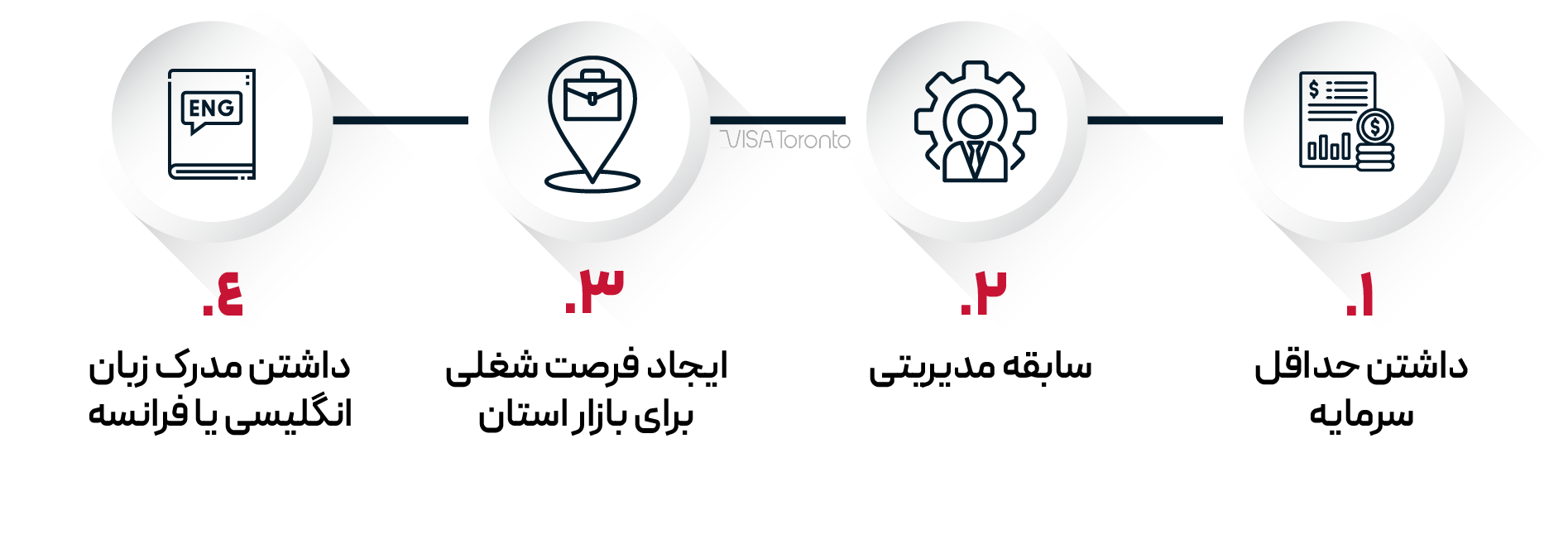
In order to be eligible for Canada Provincial Entrepreneur Program, the candidates must meet various requirements. Though each province determines its own requirements, the following are the typical conditions:
- Minimum Net Worth
The candidates must have a minimum amount of net assets, typically ranging from CAD 300,000 to CAD 1,500,000 depending on the province. The net assets may be in the form of real estate, stocks, bank deposits, and other verifiable assets. - Managerial Experience
Candidates must have ownership or management of a business in the last five years. The experience should be relevant, demonstrating the ability to run a business in Canada. - Investment Amount
The investment range is CAD 150,000 to CAD 600,000. The investment is to be placed in an active, profitable business that will result in economic growth in the province. - Job Creation
Entrepreneurs are required to establish at least one full-time job for a Canadian permanent resident or citizen. Some provinces, however, may require the establishment of more than one job. - Residence in the Province
Applicants must demonstrate their intention to live in the chosen province. This is usually demonstrated by signing a residence commitment and by providing evidence such as a lease agreement or property purchase in that province. - Language Skills
Certain provinces demand a language certificate (CLB 4 or more). Language skills are necessary in order to guarantee the applicant is able to communicate well with customers, employees, and government officials.
Provincial Entrepreneur Programs in Different Provinces of Canada
Each province, based on its labor market needs, economic situation, and overall conditions, has a specific framework for its provincial entrepreneur program to attract skilled workers and investors. Some of these programs are outlined below:
British Columbia Entrepreneur Immigration (BC PNP Entrepreneur)
British Columbia is one of the most popular destinations for entrepreneurs immigrating to Canada. With its stable economy, diverse population, and wide range of business opportunities, the province is considered an ideal choice for entrepreneurship.
| General Requirement | Criteria |
|---|---|
| Minimum Net Worth | CAD 600,000 |
| Minimum Investment | CAD 200,000 |
| Managerial Requirement | Business management experience |
| Processing Time | 18–24 months |
| Suitable Sectors | Technology, Tourism, Manufacturing |
Ontario Entrepreneur Stream (OINP Entrepreneur)
Ontario, as the economic hub of Canada, hosts many international companies and diverse industries. Ontario’s entrepreneur program generally includes the following:
| General Requirement | Criteria |
|---|---|
| Minimum Net Worth | CAD 800,000 – 1,500,000 |
| Minimum Investment | CAD 200,000 – 600,000 |
| Managerial Experience | At least 2 years |
| Processing Time | 24–36 months |
| Suggested Sectors | Industry, Technology, Health, Financial Services, Manufacturing |
Alberta Entrepreneur Immigration (AINP Entrepreneur Immigration)
Alberta, due to its abundant natural resources and strong economy, is an attractive destination for investors. The general requirements are shown below:
| General Requirement | Criteria |
|---|---|
| Minimum Net Worth | CAD 500,000 |
| Minimum Investment | CAD 200,000 |
| Language Proficiency | At least CLB 4 |
| Processing Time | 18–30 months |
| Suggested Sectors | Energy, Agriculture, Technology |
Quebec Entrepreneur Program
Quebec, with its French culture and dynamic economy, offers a unique program for entrepreneurs. The main criteria are listed below:
| General Requirement | Criteria |
|---|---|
| Minimum Net Worth | CAD 900,000 |
| Minimum Investment | CAD 300,000 |
| Language Requirement | French (and in some cases English) |
| Processing Time | 24–36 months |
| Suggested Sectors | Cultural Industries, Technology, Tourism |
Steps to Apply for Canada Provincial Entrepreneur Program
To immigrate through a Provincial Nominee Program (PNP), you first need to check if you are eligible for the specific PNP stream you are interested in. Once you confirm eligibility, you can apply to your selected PNP stream. If the province approves your nomination, the next step is to submit a paper application for permanent residence to IRCC (Immigration, Refugees and Citizenship Canada). As part of the process, you will also need to complete a medical examination and provide a police clearance certificate to demonstrate that you meet Canada’s health and security requirements.

Benefits of Canada Provincial Entrepreneur Program
Canada Provincial Entrepreneur Program offers multiple advantages for applicants, with some of the most important including:
- Obtaining permanent residency in Canada
- Diverse investment opportunities depending on the province
- No requirement for large initial capital compared to some investment programs
- Ability to bring family members along
- Access to Canada’s education and healthcare systems
- Financial and government support programs
- Opportunity to expand your business in one of the world’s strongest economies with unique growth prospects
- Stable and low-risk business environment in terms of investment security, supportive regulations, and economic stability
How Long Does the Canadian Entrepreneur Visa Process Take?
Processing time for the Canadian Entrepreneur Visa also depends on the province the applicant chooses and the complexity of the case. Generally speaking, the Canada Provincial Entrepreneur Program follows the following stages:
1. Submission of the Preliminary Application to the Province
The applicant must complete the initial paperwork and submit financial and managerial documents. This takes usually 2–6 months.
2. Invitation to Apply (ITA)
Once the preliminary application is accepted, the applicant is invited to make the full application. This procedure is done within a span of 1–3 months.
3. Submission of Business Plan and Financial Documents
Once invited, the applicant is required to submit their business plan. This process may take 2–4 months. Provinces also ask applicants to go through an interview process to judge managerial skills and commitment to business, which adds another 1–2 months.
4. Securing a Temporary Work Permit and Establishing the Business
Once the province provides final approval, the applicant receives a temporary work permit to enter Canada and begin their business. The process is 3–6 months.
5. Performance Assessment and Permanent Residency Application
After the business has been operating for 12–24 months, the provincial government evaluates its performance. Successfully, the applicant may apply for permanent residency (PR), which requires 6–12 months of processing.
The entire process — from registration right through to being granted permanent residence — takes 2 to 4 years.
Business Plan Requirements of Canada Provincial Entrepreneur Program
The best element of the entrepreneur visa application is the good business plan. The business plan must be tailored to the targeted province and describe how the proposed business will be a contributor to the economic growth of the province.
Key Features of a Successful Business Plan:
- Clearly define the type of business, products or services, and revenue model.
- Describe how the business will compete within the Canadian market and stimulate growth.
- Provide transparent information about initial capital, operating costs, revenue estimate, and profitability.
- Ensure the business creates at least one job (or more, by province) for Canadian citizens or permanent residents.
- Show how the business will be an economic contribution to growth and social development in the province.
- Outline customer acquisition strategies, marketing campaigns, and sales strategies for enhancing sales.
- Provide an elaborate launch and implementation schedule of the business.
- Talk of issues that can be encountered and recommendations on how to overcome them.
An attractive and robust business plan can significantly raise the approval rate and speed up the immigration process.
Most Profitable Business Industries for Entrepreneurship in Canada
Selecting the correct industry is perhaps one of the most important decisions an entrepreneur needs to make. Certain industries in Canada are very lucrative and provide foreign entrepreneurs with excellent chances to earn greater income as well as more readily obtain residency.
1.Startups & Technology – Canada is now a global tech hub, with Toronto, Vancouver, and Montreal hosting successful startups in IT, fintech, and artificial intelligence. Steady market demand and government support make this category extremely profitable.
2. Healthcare & Medical Equipment – Due to the growing aging population in Canada, the demand for healthcare services and medical equipment is rising quickly. Investments in clinics, geriatric care centers, and medical equipment firms are profitable and secure.
3. Agriculture & Food Industry – As one of the world’s largest producers of agricultural products, Canada has potential in advanced farming, organic farming, and agri-tech technology.
4. Real Estate & Construction – Growing population generates need for residential and commercial property, and residential and commercial enterprises become extremely profitable investments.
5. Hospitality & Tourism – Canada’s popularity as a tourist destination makes hotels and resorts, tour operators, and tour-related services extremely profitable enterprises.
6. Green Energy – The Canadian government is interested in encouraging clean energy businesses such as wind and solar, offering tax relief to entrepreneurs.
7. Online Business & E-commerce – Since the trend of shopping online is growing very fast, beginning e-commerce websites and online businesses is the most rewarding option for new entrepreneurs.
Participating in Canada Provincial Entrepreneur Program with Aval Visa
Canada Provincial Entrepreneur Program are among the most effective channels to gain permanent residency and start afresh in Canada. Due to demands, charges, and documentation involved, it is highly recommended to seek Aval Visa’s professional guidance to avoid money and time waste. If you are looking for more information or professional immigration services, contact us today. We will guide you through every step toward successful Canada Provincial Entrepreneur Program.
FAQs
- Can I apply for Canada Provincial Entrepreneur Program as a partnership?
Yes, some provinces, such as British Columbia, allow partnerships. However, each partner must individually meet the required financial and managerial experience criteria. - Can I use a bank loan to provide the required investment capital?
The initial investment must come from the applicant’s personal funds, but afterward, you may use bank loans to expand the business. - What types of businesses are not eligible for Canada Provincial Entrepreneur Program?
Businesses such as currency exchange offices, automated car washes, real estate brokerages, and home-based businesses are generally not eligible.