

If you have a trade, a profession or solid work experience, a Canada work permit can be the first legal step towards building a life here for you and your family. The rules have tightened. Canada is no longer recruiting general labour; it is looking for people who fill real shortages in health care, construction and technology. We advise you on the routes you genuinely qualify for, and tell you plainly when none of them fit.
In some cases
Not always required
3 to 9 months
CAD 340 to 450
Canadian citizens and permanent residents can sponsor close relatives for permanent residence, including a spouse or partner, dependent children and, through the annual intake, parents and grandparents.
This group covers the self-employed, start-up and provincial entrepreneur streams. Applicants are expected to run or invest in a real Canadian business in manufacturing, services or technology, and to contribute to the local economy.
Canada is a leading destination for international students. A study permit at a designated learning institution can also lead to Canadian work experience after graduation.
For an employer-specific work permit you normally need a genuine job offer, supported in most cases by a positive Labour Market Impact Assessment. Some routes do not require one: open work permits, International Experience Canada, the post-graduation work permit, spousal open work permits and certain LMIA-exempt or provincial categories.
How long a work permit is valid usually depends on:
In practice this ranges from a few months to several years.
Yes. If you still meet the requirements, you can apply to extend before your current permit expires. Applying before the expiry date lets you keep working under maintained status while IRCC processes the new application.
In most cases, yes. Almost every foreign national needs a work permit to work legally in Canada. A short list of activities is exempt under section 186 of the Immigration and Refugee Protection Regulations, including business visitors, some performing artists, news crews and certain guest speakers.
Ask us to review your profile before you apply. An honest look at your occupation, experience and documents helps you avoid a weak application and the cost of doing it twice. No one can promise a result: the decision belongs to IRCC and, for provincial streams, to the province.
Canada is one of the most sought-after destinations for skilled workers. A stable economy, genuine labour shortages and a high standard of living draw tens of thousands of foreign workers every year. This guide covers the Canada work permit in full: the types available, who qualifies, the documents you need, the official fees in Canadian dollars, processing times and how a work permit can lead to permanent residence.
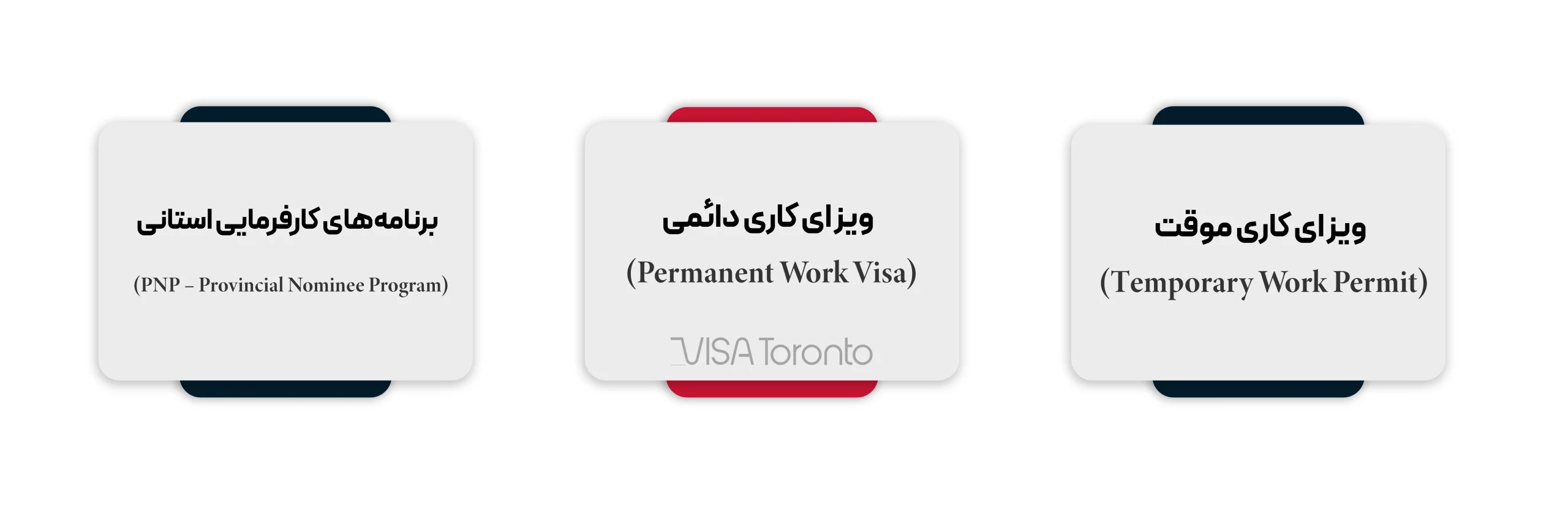
1. Temporary work permits (Temporary Work Permit)
Issued to people who will work in Canada for a fixed period. They fall into two groups:
2. There is no permanent work visa
Canada does not issue a permanent work visa. What is usually meant by the term is permanent residence, obtained through Express Entry or another economic programme. A permanent resident can work for any employer without a permit.
3. Provincial Nominee Programs (PNP)
Most provinces and territories run their own streams for the workers they need. A nomination is a route to permanent residence, and some streams also support a work permit so you can start working while the permanent residence application is processed.
These are the fees set by the Government of Canada. They are reviewed periodically, so check the IRCC website on the day you apply. All amounts are in Canadian dollars.
Work permit, including extensions, per person: CAD 155
Biometrics: CAD 85 per person, capped at CAD 170 for a family of two or more applying together
Open work permit holder fee: CAD 100 on top of the work permit fee, so CAD 255 in total
Restoration of status as a worker: CAD 246.25 plus CAD 155 for the new work permit, so CAD 401.25 in total
Fees the employer pays, not you: the employer compliance fee of CAD 230 and, where an LMIA is needed, CAD 1,000. Under Canadian law these amounts are the employer’s responsibility and must never be recovered from the worker. If a recruiter asks you to pay them, treat it as a warning sign.
Processing depends on the type of permit and the visa office handling your file. As a rough guide, work permit applications take between 3 and 12 months. IRCC publishes current processing times online and updates them regularly; treat those figures as an estimate, not a commitment.
Express Entry is the main federal route for skilled workers and one of the faster ways of immigrating to Canada. Candidates are ranked by the Comprehensive Ranking System (CRS), which scores age, education, work experience and language ability. Canadian work experience and a provincial nomination both add points. Candidates who score above the cut-off in a round of invitations may be invited to apply for permanent residence.
Most provinces and territories run immigration streams designed around their own labour shortages. A nomination adds 600 points to an Express Entry profile, or supports a separate paper-based application. This route works well if your occupation is in demand in one particular province.
The Canadian Experience Class is for people who already have at least one year of skilled work experience in Canada within the past three years. It suits post-graduation work permit holders and temporary workers who want to stay.
Related: If your temporary status in Canada has lapsed, you have 90 days to apply to restore it: Restoration of status in Canada
Related: Moving from study to work? Check the PGWP field-of-study rule first: The PGWP field-of-study requirement
A stable economy: Canada has one of the largest economies in the G7 and continues to recruit abroad for shortage occupations.
Openings across sectors: particularly in IT, engineering, health care, the skilled trades and education.
Pay and benefits: employees are covered by provincial health care, statutory paid leave and the Canada Pension Plan.
A route to permanent residence: Canadian work experience counts towards several economic immigration programmes.
Real workplace protection: provincial employment standards set minimum wages, hours and termination rights for foreign workers as well as Canadians.
A Canada work permit is a serious opportunity for skilled people, but it is also a legal process with strict evidence requirements and no guaranteed result. Hadi Imani is a Regulated Canadian Immigration Consultant (RCIC #R522575), regulated by the CICC, and can advise on Canadian immigration matters and represent you before IRCC. Every decision rests with IRCC or the nominating province; if a file ever reaches the Federal Court, judicial review is work for a Canadian lawyer rather than a consultant. Book a consultation or call +98 21 59307 to have your case assessed on the facts.