
The Parents and Grandparents Program (PGP) is one of the main family routes for immigration to Canada, used by people who want to bring close family members to live with them. Family class sponsorship lets Canadian citizens, permanent residents and persons registered under the Indian Act support a parent, grandparent, spouse, partner or dependent child for permanent residence, by filing an undertaking and the required evidence.
The sections below cover the details of parent and grandparent sponsorship, the documents, the application steps and the costs involved. Note at the outset that IRCC decides every application; a sponsor’s eligibility is only one half of the assessment.
Who can use family sponsorship in Canada?
Canadian citizens, permanent residents and persons registered under the Indian Act who are 18 or older can apply to sponsor close family members under Canadian family sponsorship. The family class covers:
- A spouse, common-law partner or conjugal partner
- Parents
- Dependent children, including adopted children
- Grandparents
Parent and grandparent sponsorship works differently from the rest of the family class. IRCC runs it as a limited intake: sponsors submit an Interest to Sponsor form during an open window, and IRCC then issues invitations from that pool. In the 2024 intake round, IRCC issued 35,700 invitations to apply and set a target of 20,500 complete applications; everyone else stayed in the pool. Both figures are set fresh at each intake. According to the official IRCC application guide, the program operates on that invitation basis. Update: IRCC has not reopened the Interest to Sponsor form. Until it does, no new expressions of interest are accepted, invitations are issued only to people already in the existing pool, and IRCC publishes the number of complete applications it will accept each year. Sponsorship of a spouse, common-law partner or dependent child is not affected and remains open year-round.
Read more: Spousal sponsorship in Canada: a complete guide to immigrating through marriage

If the sponsor lives in Quebec, Quebec’s own income rules replace the federal ones. Quebec sets its own income scale, its own undertaking length and its own intake rules, so a Quebec sponsorship is prepared differently from one in the rest of Canada.
What does a sponsor have to meet?
A sponsor for the Parents and Grandparents Program must file a sponsorship application with IRCC and prove a minimum level of income to support the people being sponsored. Outside Quebec, income is proven through Canada Revenue Agency (CRA) Notices of Assessment, and the sponsor must meet the required threshold for each of the three taxation years immediately before the application. If the sponsor lives in Quebec, MIFI assesses income instead, against Quebec’s own scale and over the 12 months before the application.
Beyond the income test, a sponsor must also:
- Be at least 18 years old
- Meet the minimum necessary income for the size of the combined household
- Be able to support the sponsored parents financially while they live in Canada
A spouse or common-law partner can act as co-signer, and their income is then counted toward the threshold - Not be inadmissible on criminal grounds, and be up to date on tax filings
- Meet every other sponsorship requirement set by IRCC
What is the sponsor actually promising?
Outside Quebec, a sponsor of a parent or grandparent signs an undertaking to support that person financially for 20 years, starting from the day they become a permanent resident. In Quebec the undertaking for a parent or grandparent is 10 years. If the sponsored person receives provincial social assistance during the undertaking period, the sponsor is liable to repay it, and the sponsor cannot sponsor anyone else until that debt is settled.
The income requirement exists because the sponsor is expected to cover ordinary living costs, including housing, food and any care that public programs do not fund, without the sponsored person needing social assistance. The undertaking is binding: it does not end because of separation, divorce, job loss, a drop in income or a change in the family relationship.
Minimum income for a sponsor
| Minimum necessary income in CAD - 2024 / 2023 / 2022 tax years (all three must be met) | Number of Persons Supported |
|---|---|
| CAD 47,549 / 44,530 / 43,082 | 2 persons |
| CAD 58,456 / 54,743 / 52,965 | 3 persons |
| CAD 70,972 / 66,466 / 64,306 | 4 persons |
Cost of sponsoring parents and grandparents
| Fee (CAD) | Service |
|---|---|
| CAD 90 | Sponsorship fee per person |
| CAD 570 | Application processing fee (principal applicant) |
| CAD 600 | Right of Permanent Residence Fee (biometrics extra: CAD 85 per person, maximum CAD 170 per family) |
How the application process works
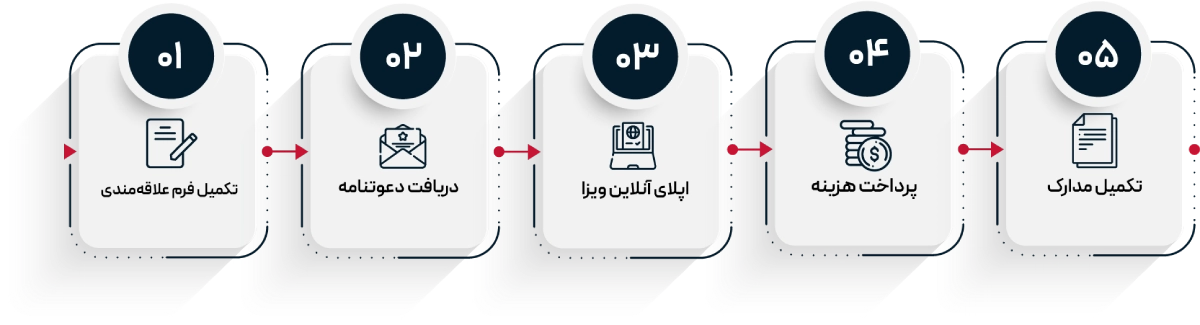
During an open intake window for parent and grandparent sponsorship in Canada, the first step is to complete the Interest to Sponsor form and submit it through the IRCC portal. IRCC then issues invitations to apply from that pool, and only invited sponsors can file an application.
Once invited, the sponsor and the sponsored person complete the application in the Permanent Residence Portal, pay the fees and upload the supporting documents. Both halves of the application, the sponsorship and the permanent residence application, are submitted together.
Documents for a sponsorship application
To sponsor parents or grandparents for Canadian permanent residence, IRCC’s official guide (Guide 5772) sets out the documents required. Always check the current version of the guide and the document checklist before you file, because forms are updated regularly.
Documents for the sponsor:
- Valid proof of status, such as a permanent resident card or Canadian passport
- Form IMM 1344, the application to sponsor and the undertaking
- Form IMM 5768, the income sources and financial evaluation form
- Proof of income, being CRA Notices of Assessment for the three preceding taxation years
- Proof of marital status, where relevant
- A signed undertaking covering the applicable support period
Documents for the parent or grandparent:
- A valid passport
- Birth certificates or other proof of the family relationship
- Form IMM 0008, the generic application for permanent residence
- Form IMM 5669, Schedule A, covering background and security history
- Form IMM 5406, the additional family information form
- A police certificate from each country of residence, as required by IRCC
- The immigration medical examination, when instructed by IRCC
- Recent photographs and biometrics as instructed
Points worth knowing before you apply
As noted above, an application can only be filed inside the window IRCC opens. If you are in the pool but have not been invited, the practical alternative is the Canadian super visa. The super visa is a multiple-entry visa valid for up to 10 years; a parent or grandparent can stay for up to 5 years per entry and can apply from inside Canada to extend that stay by up to a further 2 years. It requires an invitation letter from the child or grandchild, proof that the host meets the minimum income threshold, and medical insurance that meets IRCC’s coverage and duration requirements. A super visa gives temporary status only; it is not a route to permanent residence.
If you are already in the pool, keep in mind that IRCC announces each year how many complete applications it will accept from existing expressions of interest. That number changes year to year, so check the current announcement rather than relying on a figure from a previous round.
The Parents and Grandparents Program covers your own parents and grandparents only. Even as a permanent resident, you cannot sponsor your spouse’s parents. In that situation your spouse can apply as the sponsor once they hold permanent resident status, and you can act as co-signer so that both incomes count toward the threshold.
If you are still in the pool and have not been selected, keep your details current. Report any change in family composition, income or address to IRCC, because the invitation and the eventual assessment are based on your circumstances at the time.
IRCC’s published processing time for parent and grandparent sponsorship is around 24 months outside Quebec and considerably longer for Quebec, where recent figures have been close to 48 months. These times are updated regularly and are estimates, not commitments.
Sponsoring parents to Canada with Aval Visa
Sponsoring a parent or grandparent is one of the more meaningful routes of family immigration to Canada, and also one of the slowest. The long wait for an invitation, the paperwork, the timing of the intake window and the financial evidence all make it demanding to prepare.
If you want the application put together carefully and filed correctly, the Aval Visa team can prepare and submit it with you, and explain honestly where the risks in your file are. We cannot influence the outcome; only IRCC decides. To start, contact us or complete the free assessment form on the site and we will tell you where you stand.
Frequently asked questions
- Can I still sponsor if my parents or grandparents are divorced? Yes. Where the parents or grandparents are divorced, IRCC requires a separate application for each of them rather than one joint application.
- If a parent remarries, can the new spouse be included? Yes. Where a divorced parent has remarried, the current spouse can be included as an accompanying family member on that parent’s application, subject to the usual admissibility requirements.
- Apart from a criminal record, what makes a sponsor ineligible? A sponsor can be found ineligible for reasons including: not holding Canadian citizenship, permanent residence or registered Indian status; not living in Canada; failing to meet the minimum necessary income; being in default on a previous sponsorship undertaking or on an immigration loan; being an undischarged bankrupt; receiving social assistance for a reason other than disability; being in prison; or having been removed from Canada. Eligibility is assessed against the rules in force at the time the application is decided.
Related: the way super visa income is calculated changed on 31 March 2026: what you now have to provide
This article is general information, not legal advice, and it describes published official rules rather than any individual case. Hadi Imani is a Regulated Canadian Immigration Consultant, licence R522575, practising in Toronto; that licence covers Canadian immigration only.