

The US tourist visa is issued to people entering the United States temporarily for a defined purpose: tourism, visiting family, medical treatment or short business trips. Proving that you intend to return home, and backing it with solid financial and employment evidence, is what drives the consular officer’s decision.
Allowed
Not required
60 to 150 working days
USD 185
International students can apply for an F-1 visa to study at accredited US universities. It allows limited on-campus work during the programme, and OPT and the H-1B can open a longer-term route afterwards.
US work visas come in several forms, among them the H-1B for specialty occupations, the L-1 for intra-company transfers and the EB-3 for skilled and other workers.
1Assess your profile and choose the right route
2Sign the retainer and open your file
3Prepare and translate documents, then book the consulate appointment
4Visa issued, then arrival and settling-in support
A refusal is not a permanent bar in itself, but it is recorded on your immigration record. If you reapply without fixing whatever caused the refusal, a second refusal is likely.
The most common are failing to prove you will return home, insufficient funds, an incomplete file, or inconsistent answers at the interview. Under US law every applicant is treated as an intending immigrant until they show otherwise, so the burden of proof sits with you.
It can help, but on its own it guarantees nothing. The consular officer weighs your employment, your finances and your ties at home far more heavily.
No. The US tourist visa application fee is non-refundable and is not returned if the visa is refused.
Have your chances of a US visa reviewed now, free of charge. A careful check before you apply is what keeps you from a refusal and the cost of applying twice.
The US tourist visa has a reputation for being hard work, and the reputation is earned. The United States is one of the most sought-after destinations in the world, and demand for this visa reflects that. It allows people who want to enter the country temporarily, with no intention of settling, to travel and spend time there.
1. The B-1 visa
This category is issued to people travelling to the United States for business: consulting with business associates, attending scientific, educational, professional or commercial conferences, settling an estate, or negotiating a contract.
2. The B-2 visa
This category is issued for tourism, holidays, visiting friends or relatives, medical treatment, social events, or short recreational courses that carry no academic credit.
In most cases the B-1 and B-2 are issued together as a combined visa, which lets the holder travel to the United States for either purpose.
Note: the cost of a US tourist visa is not fixed. It can change with US government policy and with exchange rates. Check the current figures on official US government sites before you apply.
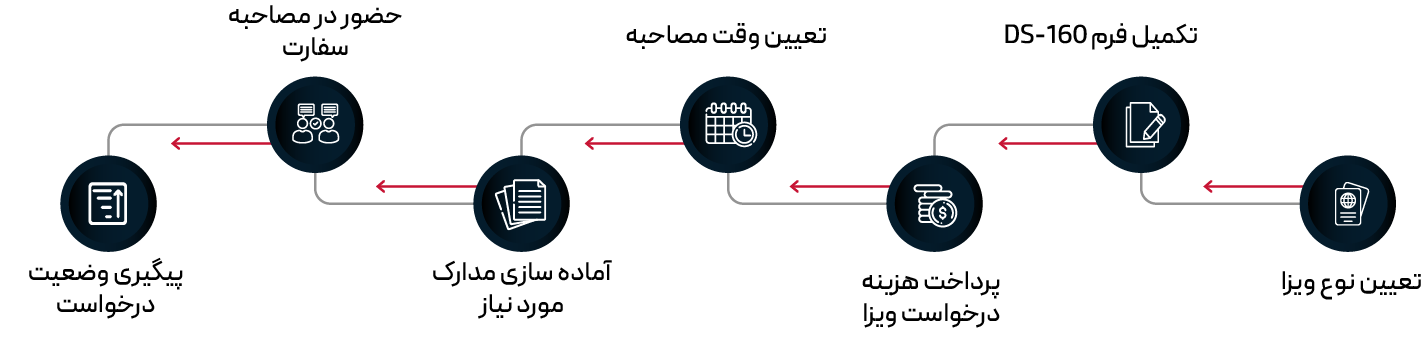
To obtain a US tourist visa, work through the following stages:
Two separate things decide how long a US tourist visa is good for. The visa itself is a travel document, and its validity is set by reciprocity between the United States and your country of nationality. For many nationalities it runs for several years with multiple entries; for others it is much shorter and may allow only a single entry. How long you can actually stay is a different decision, made by the border officer at the port of entry and recorded on your I-94, normally as a period of up to six months. If you need longer, you apply to US Citizenship and Immigration Services (USCIS) on Form I-539 before the date on your I-94 expires, and you have to give a convincing reason. Staying beyond that date, even briefly, damages every application you make afterwards.
A tourist visa carries no work authorisation, and holders have no right to take a job in the United States. Working without authorisation invalidates your status and can block future US visa applications.
Changing to another status is possible in limited circumstances. Some people already lawfully in the United States apply to USCIS to change status to a work visa such as the H-1B.
Others apply for an F-1 student visa. Both routes are complex and depend on meeting the requirements of the new category in full. One point matters more than the rest: entering on a B1/B2 visa with a pre-formed intention to remain is a misrepresentation, and it can lead to a long-term bar. A tourist visa is not an immigration route and should not be treated as one.
A refused application is the main worry for most US visa applicants. The most common reasons are these:
A US tourist visa is a genuine opportunity to travel and spend time in the United States, but getting one means meeting the conditions precisely, filing complete documents and preparing properly for the interview. Many applicants are refused over common mistakes or missing paperwork. Careful preparation is what changes the odds. If you want specialist help with that, talk to the Aval Visa team. We will answer your questions and get your file in order before you apply.