If you want a secure professional future in Europe, it is time to look at the French labour market: active, varied and open to skilled people from outside the EU.
A France work visa is the starting point for a well-paid professional career in the middle of Europe. France combines a powerful economy, a high standard of living and a broad range of job opportunities, which is why it stays high on the list for people moving for work. It also sets its own conditions, and they need to be met precisely.
This guide covers the advantages of working in France, the visa categories, the best-paid occupations and the route to permanent residence. It takes a few minutes to read and will save you far longer than that.
Why work in France
The case for working in France goes well beyond living in the country or travelling visa-free across the EU and Schengen. Moving to France and working in French society brings the following:
- A large and varied labour market with openings across many sectors
- Strong worker protection, including health cover and social benefits
- Competitive pay, particularly in specialist and management roles
- A route to permanent residence and citizenship after several years of formal employment and tax contributions
- Access to an advanced transport network and public services across the country
- The chance to learn French and live in one of the most beautiful countries in Europe
- An international, multicultural working environment for professional growth and networking
Types of France work visa
France issues several work visa categories for specialists and skilled workers. They are set out in the table below:
| Visa type | Description | Validity |
|---|---|---|
| Short-stay work visa | For business assignments, meetings or training courses | Up to 90 days |
| Temporary work visa | For employment contracts of 3 to 12 months | 3 to 12 months |
| Long-stay visa (Type D) | For long-term employment and specialist occupations | Over 12 months |
| Passeport Talent visa | For highly skilled or highly qualified people (academic, research, technical, etc.); several sub-categories start with a one-year long-stay visa before the multi-year card is issued | Up to 4 years (multi-year card) |
| International organisation work visa | For work at large international organisations | Matches the contract length |
| Volunteer work visa | For humanitarian work | 3 months to 1 year |
| Long-stay sports visa | With authorisation to carry out sporting activity | Maximum one year |
| Entrepreneur / profession liberale long-stay visa, or Passeport Talent - creation d'entreprise | Setting up and running a business or company in France (France has no visa named 'company registration visa') | 1 to 4 years |
France work visa requirements
Anyone living outside the European Union needs a visa to work in France. Nationals of EU member states do not: they can travel freely across the bloc and look for work without a permit.
Getting the visa is the first step, so what does it take? The single most important document is a formal job offer from a recognised French employer.
To secure one, you approach employers through job boards, LinkedIn or your own network and identify roles that match your experience. At interview you have to do two things: convince the employer to hire you, and obtain the written offer that makes a work visa application possible.
Documents for a France work visa
| Documents | Details |
|---|---|
| CV | All employment and education history |
| Completed visa application form | All required information provided |
| Job offer and work contract from a French employer | Approved and stamped by the French authorities, the labour office and the foreign nationals office |
| Proof of funds | France sets no fixed bank balance for the salaried work route; the employment contract and its salary are what is assessed |
| Employer guarantee | Covering all costs and proof of income |
| Health insurance cover | For the period of stay in France |
| French work visa application fee | EUR 99 |
The employer carries its own document burden. A French employer hiring from outside the EU has to write a formal letter explaining why the role requires a non-EU worker and complete the corresponding form. As a legal entity, the employer also has to produce its business registration documents and identity and establishment records for the position in question.
The best-paid jobs in France
| Occupation | Average annual income | Notes |
|---|---|---|
| Doctors and surgeons | Varies by sector, region and experience; see INSEE for current figures | Specialties such as cardiology, neurosurgery, orthopaedics and dentistry |
| Finance directors and senior executives | Varies by sector, region and experience; see INSEE for current figures | Large-scale financial responsibility and strategic decision-making |
| IT and cybersecurity specialists | Varies by sector, region and experience; see INSEE for current figures | Artificial intelligence, data science and information security roles |
| Financial analysts and bankers | Varies by sector, region and experience; see INSEE for current figures | Corporate finance advisory and investment fund management |
| Pharmacists and pharmaceutical industry managers | Varies by sector, region and experience; see INSEE for current figures | Major pharmaceutical companies, regulatory affairs and quality control of key products |
| Electrical, mechanical and aerospace engineers | Varies by sector, region and experience; see INSEE for current figures | Automotive, aerospace, energy and high-tech manufacturing |
Permanent residence through a France work visa
A France work visa can lead to permanent residence after several years. The rules are published on the French government’s official page and are updated each year, so check the official source before you commit to any route.
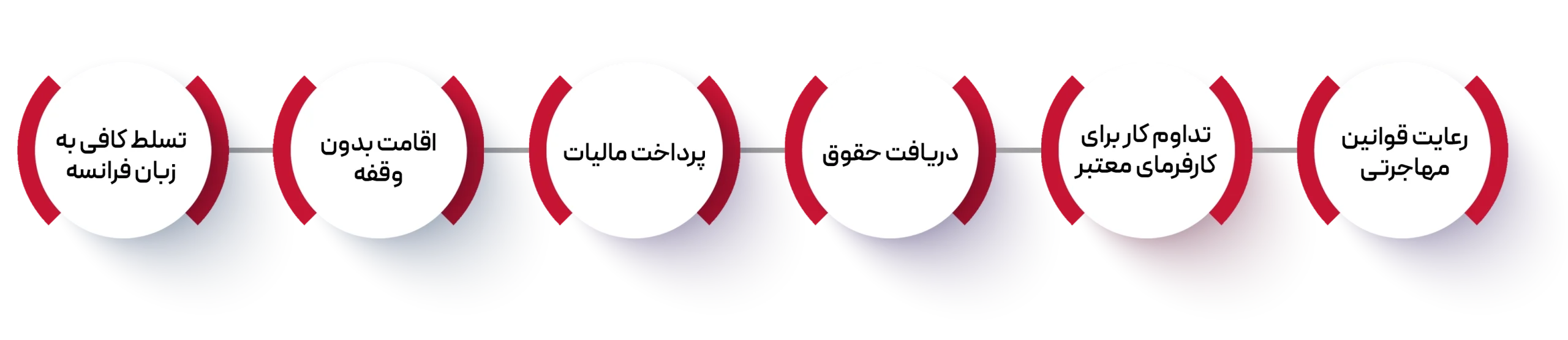
If you are working in France on a lawful work visa, after five years of continuous residence you can apply for the ten-year resident card. That permit lets you carry on working and living in France without renewing a visa each time. Meet conditions such as:
- Compliance with the law
- Payment of taxes
- Continuous residence without interruption
- Command of French at the level the current rules require
and you can apply for long-term residence and, in time, French citizenship. The forms and supporting documents are all on the public services website.
Your France visa with Aval Visa
If you are planning a move to an advanced European country, France is a smart choice. The student visa and the work visa are two reliable, lawful routes into Europe, and both allow you to bring your family and start a new chapter.
With a range of visa categories, occupations in genuine demand and strong salaries, France is a serious destination for skilled professionals. Aval Visa is the partner that makes the first step a solid one. Complete the free assessment form and we will call you to review your case. In the meantime, put your energy into your French and your professional skills.
Frequently Asked Questions
- What does a France work visa cost? The long-stay visa fee is set by the French authorities and revised periodically. Check the current fee on France-Visas before you apply, and note that a separate residence-permit tax may fall due after you arrive.
- Can family members come on a France work visa? Yes. A spouse and children can apply for accompanying visas.
- How long does permanent residence in France take? Usually five years of lawful work and residence. Some Passeport Talent holders reach it sooner, so check the current rule for your category before you plan around it.