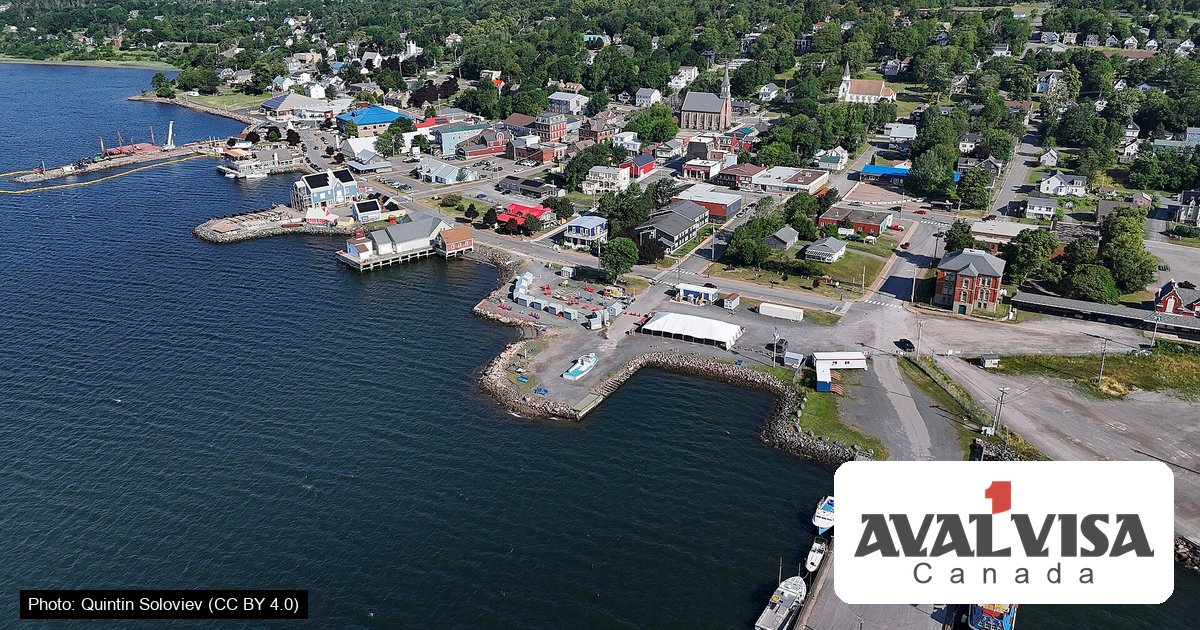
Canada has made the Rural Community Immigration Pilot (RCIP) a permanent program. Lena Metlege Diab, the Minister of Immigration, Refugees and Citizenship, announced the change on 9 November 2026 in Pictou County, Nova Scotia. This is already law: the regulation, SOR/2026-217, has been in force since 22 October 2026 and was published in the Canada Gazette on 4 November.
The pilot closes on 1 January 2027, and the permanent Rural Community Immigration Program opens the same day. If you hope to settle in one of the RCIP communities, the route works as before. You need a job offer from an approved local employer, then a recommendation from the community, and then you apply for permanent residence. The difference is that it is no longer a time-limited trial, and its rules are now part of Canada’s immigration regulations.
Why “permanent” matters
The RCIP runs under ministerial instructions, which let the Minister set up time-limited pilots. A pilot created this way can run for only five years, and then it must end or become a permanent program. Economic pilots of this kind can also admit no more than 2,750 people a year. The government’s analysis published with the regulation adds that one pilot after another creates repeated uncertainty for employers, communities and candidates.
The model has a track record. From January 2025 to August 2026, RCIP communities designated more than 1,950 employers, who issued over 4,700 job offers and community recommendations. Under the earlier Rural and Northern Immigration Pilot (RNIP), which ran from 2019 to 2024, over 12,500 candidates and their families were admitted.
Canada’s Immigration Levels Plan for 2027–2029 sets targets for how many people become permanent residents each year. For the permanent program, the targets are:
| Year | Target | Range |
|---|---|---|
| 2027 | 5,500 | 4,000–6,500 |
| 2028 | 6,000 | 5,000–7,000 |
| 2029 | 6,500 | 4,000–7,000 |
The range is the lowest and highest number planned for each year. These figures count everyone admitted, including spouses and children, and they include RCIP and RNIP applications still being processed. So the 5,500 for 2027 does not mean 5,500 places for new workers. The 2028 and 2029 figures are notional: IRCC confirms or adjusts them each year. For the wider picture, see our post on Canada’s Immigration Levels Plan 2027–2029.
What stays the same
The permanent program continues the pilot’s model. The route still has three steps, in this order:
- A job offer from a designated employer. A designated employer is a business the community has checked and approved to hire through this program. Only designated employers in the community’s priority sectors can use it.
- A community recommendation. Your employer sends your application for a recommendation to the community’s economic development organization, the local body that handles recommendations. This organization checks that the job is in a priority sector or occupation, that the offer is genuine and that you meet the requirements. If it agrees, it issues a certificate of recommendation. You need this certificate before you can apply for permanent residence.
- An application for permanent residence. You apply to Immigration, Refugees and Citizenship Canada (IRCC), which makes the final decision. This includes checking whether you are admissible, that is, allowed to enter Canada. A recommendation on its own is not permanent residence.
The 14 communities in the pilot are expected to take part in the permanent program, though none has been formally designated under the new regulation yet. The government plans to add more communities in the future and will announce the criteria for them later.
| Province | Communities |
|---|---|
| Nova Scotia | Pictou County |
| Ontario | North Bay, Sudbury, Timmins, Sault Ste. Marie, Thunder Bay |
| Manitoba | Steinbach, Altona/Rhineland, Brandon |
| Saskatchewan | Moose Jaw |
| Alberta | Claresholm |
| British Columbia | West Kootenay, North Okanagan Shuswap, Peace Liard |
Some of these are regions of several towns rather than single cities. Quebec is not part of the program. Each community sets its own priority sectors and occupations every year. It also decides when it accepts applications and how many recommendations it issues, and it lists its designated employers and jobs on its own website.
What you need to qualify
The requirements in the regulation follow those of the pilot. You must meet all of them from the day you apply for permanent residence until you become a permanent resident.
| Requirement | What you need |
|---|---|
| Intent to live there | You intend to live within the boundaries of the community that recommends you. |
| Community recommendation | A valid certificate of recommendation from that community. |
| Job offer | An eligible offer from a designated employer in the community (rules below). |
| Work experience | At least 1 year of paid work (1,560 hours, full-time or the part-time equivalent) in the past 3 years. It must match the main description and most of the main duties of your occupation in the National Occupational Classification (NOC). Self-employment does not count, except as a licensed medical practitioner. Work in Canada counts only if you were authorized to work and held temporary resident status. |
| Language | An approved test less than 2 years old, at your job’s minimum level in reading, writing, listening and speaking. English: CELPIP-General, IELTS General Training or PTE Core. French: TEF Canada or TCF Canada. |
| Education | A Canadian high-school diploma or post-secondary credential. Or a foreign credential at least equal to a Canadian high-school diploma, plus an educational credential assessment (ECA) less than 5 years old. An ECA is a report from an organization IRCC has approved, such as WES or IQAS, that confirms what your credential is equal to in Canada. Doctors need theirs from the Medical Council of Canada, and pharmacists who need a licence to practise need theirs from the Pharmacy Examining Board of Canada. |
| Settlement funds | Enough money to support yourself and your family, unless you are authorized to work and already working in Canada (see below). |
| Status in Canada | If you are in Canada, valid temporary resident status. |
Every NOC code belongs to a TEER category (Training, Education, Experience and Responsibilities), numbered 0 to 5. The TEER of your job offer sets the language level you need. Levels are measured on the Canadian Language Benchmarks (CLB), the scale your test scores are converted to. The levels below are the pilot’s. Under the regulation, the Minister sets the levels for the permanent program, so check the program page before you book a test.
| TEER of your job offer | Minimum level in each ability |
|---|---|
| 0 or 1 | CLB 6 |
| 2 or 3 | CLB 5 |
| 4 or 5 | CLB 4 |
On IELTS General Training, these levels mean at least:
- CLB 6: 5.0 in reading and 5.5 in writing, listening and speaking;
- CLB 5: 4.0 in reading and 5.0 in writing, listening and speaking;
- CLB 4: 3.5 in reading, 4.0 in writing, 4.5 in listening and 4.0 in speaking.
Your work experience must also be in a TEER that matches your job offer:
| TEER of your job offer | TEER your work experience can be in |
|---|---|
| 0 or 1 | 0, 1, 2 or 3 |
| 2 | 1, 2, 3 or 4 |
| 3 or 4 | 2, 3 or 4 |
| 5 | The same five-digit NOC code as the job offer |
One exception: experience as a registered nurse (NOC 31301) can count for a job offer as a nurse aide (NOC 33102) or a home support worker (NOC 44101).
Settlement funds equal half of Statistics Canada’s low-income cut-off for rural areas. IRCC updates the table every year; these amounts date from 29 July 2025 and may change for 2027.
| People in your family (including you) | Funds you need (CAD) |
|---|---|
| 1 | $10,507 |
| 2 | $13,080 |
| 3 | $16,080 |
| 4 | $19,524 |
| 5 | $22,143 |
| 6 | $24,975 |
| 7 | $27,806 |
| Each additional person | $2,831 |
Count yourself, your spouse or common-law partner, and all your dependent children and your partner’s. Count them even if they are Canadian citizens or permanent residents, or are not coming with you. The money must be available when you apply and again when IRCC issues your permanent resident visa.
You do not need to show these funds if, on the day you apply, you are authorized to work in Canada and already working here. Holding an open work permit, such as a spousal open work permit, is not enough: if you are not working when you apply, you still need to show the funds.
If you graduated from a public college or university in the community
You do not need the year of work experience if all of these are true:
- Your degree, diploma, certificate, trade or apprenticeship credential is from a Canadian public post-secondary institution in the same community as your job offer.
- You were authorized to study in Canada and held temporary resident status for the whole program.
- You studied full-time for the whole program.
- You received the credential within the 18 months before you apply for permanent residence.
- One of these is true:
- the program lasted at least 2 years, and you were physically in the community for at least 16 of the 24 months before you received the credential; or
- it was a master’s or doctoral degree of less than 2 years, and you were physically in the community for the whole program.
The exemption does not apply to a program if:
- English or French as a second language made up more than half of its credits;
- distance learning made up more than half of its credits; or
- you had a scholarship or fellowship that requires you to return to your home country to use what you learned.
What the new regulation says
A recommendation lasts one year. Under the program, a certificate of recommendation is valid for one year from the day it is issued, unless the community cancels (revokes) it sooner. Under the pilot, it was valid for six months.
The job offer must meet these rules. Your offer must:
- come from an employer that is designated when the offer is made and actively runs the business;
- not come from a business that you, or your spouse or common-law partner, control or own most of;
- be full-time, non-seasonal and permanent;
- require at least 75% of your working hours to be spent in the community;
- pay a wage within or above the range that the federal Job Bank website lists for your occupation;
- pay at least the minimum wage, and at least any higher local wage the community has set;
- not require a language other than English or French;
- be a job your past work experience or education shows you can do.
Communities can choose whom to recommend first. To meet local labour needs, a community may prioritize applications by occupation, wage, work experience, English or French ability, education and connection to the community.
Employers are checked and trained. A designated employer must run a genuine business in at least one of the community’s priority sectors or occupations. Someone from the business must complete onboarding training, which covers the program’s requirements and the employer’s responsibilities. They must also complete intercultural competency training, which helps employers build an inclusive workplace and support newcomers. The employer must commit to helping the workers it hires, and their families, settle in. A community can cancel an employer’s designation if the employer, or anyone recruiting for it, charges you fees, and any recommendation based on that employer’s offer is then cancelled too. So never pay anyone for a job offer. If you have already applied for permanent residence and played no part in what the employer did, you can replace your offer with a new one from a different designated employer. Designated employers also get federal guidance on the program’s requirements through a Dedicated Service Channel.
There is no fee for the recommendation. You pay nothing to apply for a community recommendation. The community’s economic development organization may not charge fees for issuing, changing or cancelling a recommendation, or for designating an employer or cancelling a designation.
Work permit details are not yet published. Under the pilot, once you had applied for permanent residence, you could get a 2-year work permit tied to your employer. Your spouse or common-law partner could get an open work permit limited to the same community. IRCC has not yet published work permit details for the permanent program.
If you are already in the RCIP process
Communities have until 31 December 2026 to finalize recommendations under the pilot. The pilot closes on 1 January 2027, but its rules (the ministerial instructions) stay in force until 30 June 2027. This means people recommended under the pilot can still apply to IRCC under the pilot’s rules.
| Your situation | What it means |
|---|---|
| Your community recommendation is dated 31 December 2026 or earlier | Apply for permanent residence before your recommendation expires. Pilot recommendations are valid for six months. Use IRCC’s application package (the set of forms) for recommendations dated on or before 31 December 2026. |
| You hope to use a pilot recommendation for the new program | You cannot. A recommendation issued under the pilot does not count for the permanent program. |
| You have already applied for permanent residence | IRCC keeps processing applications it has already received. If you are eligible, you can still apply for the pilot work permit. |
| You are still looking for a job offer | From 1 January 2027, communities can issue recommendations under the permanent program. If you are recommended from that date, use the package for recommendations dated on or after 1 January 2027. Check the community’s own website for its intake dates and priority occupations. |
Who this route suits
You must intend to live in the community, and at least 75% of your working hours must be there. This route suits people who are ready to build their life in a smaller community. It fits best for:
- People with experience in the sectors communities are hiring for. IRCC’s early results show that in 2025 and 2026, newcomers helped fill shortages in sectors such as health care, education, and sales and services. Priorities differ by community and are set every year, so check each community’s current list of priority occupations on its website.
- International students at a public college or university in one of these communities. If you meet the conditions of the graduate exemption above, you do not need the year of work experience. You still need a job offer from a designated employer in the same community, and you must meet every other requirement.
- People already working in one of these towns. If you are authorized to work and working in Canada when you apply, you do not need to show settlement funds. Your current employer can make the offer only if the community has designated it.
For most people, the hard part is the job offer: without one from a designated employer, there is no application. Before you rely on an offer, check that the employer is on the community’s own list of designated employers.
For community-by-community details and how to look for jobs with designated employers, see our complete guide to rural immigration to Canada.
To review your own options for this program and other routes to Canada, complete the free assessment form.
Official sources
- IRCC news release: Canada creates a permanent immigration pathway for rural communities, 9 November 2026
- Backgrounder: Overview of the Rural Community Immigration Program, 9 November 2026
- Regulation SOR/2026-217 (Rural Community Immigration), Canada Gazette Part II, 4 November 2026
- IRCC page for the Rural Community Immigration Program (the program opens 1 January 2027)
- IRCC page for the Rural Community Immigration Pilot (the pilot closes 1 January 2027)
- Who can apply under the pilot
- Work experience and the exemption for local graduates
- Settlement funds table, updated 29 July 2025
- Job offer, community recommendation and links to each community
- Supplementary information for the 2027–2029 Immigration Levels Plan, 5 November 2026
This article is general information, not legal advice, and it describes published official rules rather than any individual case. Hadi Imani is a Regulated Canadian Immigration Consultant, licence R522575, practising in Toronto; that licence covers Canadian immigration only.