
Applying for a Canadian work permit or for permanent residence starts with one small piece of data that carries a lot of weight: your NOC code. It is the code that tells IRCC what you actually do for a living.
Choosing the code that genuinely matches your duties is not a formality. An officer compares the code you claimed against the duties in your reference letters, and a mismatch is a common reason for a refusal. This article explains what the National Occupational Classification is, how the TEER system works, how to find your own NOC code and how to handle the cases where nothing seems to fit.
What is the NOC code in Canada?
The National Occupational Classification, usually shortened to NOC, is the national system the Government of Canada uses to describe and code every occupation in the Canadian labour market. It gives applicants, employers and government departments a common definition of what each job involves, what skills it requires and what training or education sits behind it.
Every occupation in the NOC has a five-digit code. That code carries information about the occupational field, the level of training and education normally required, and the main duties of the job.
The NOC is maintained jointly by two federal bodies:
- Statistics Canada
- Employment and Social Development Canada
How NOC codes are used in Canadian immigration
NOC codes are one of the primary tools used to assess work experience in Canadian immigration applications. They let officers assess a claimed occupation against a published standard rather than against a job title. The main uses are:
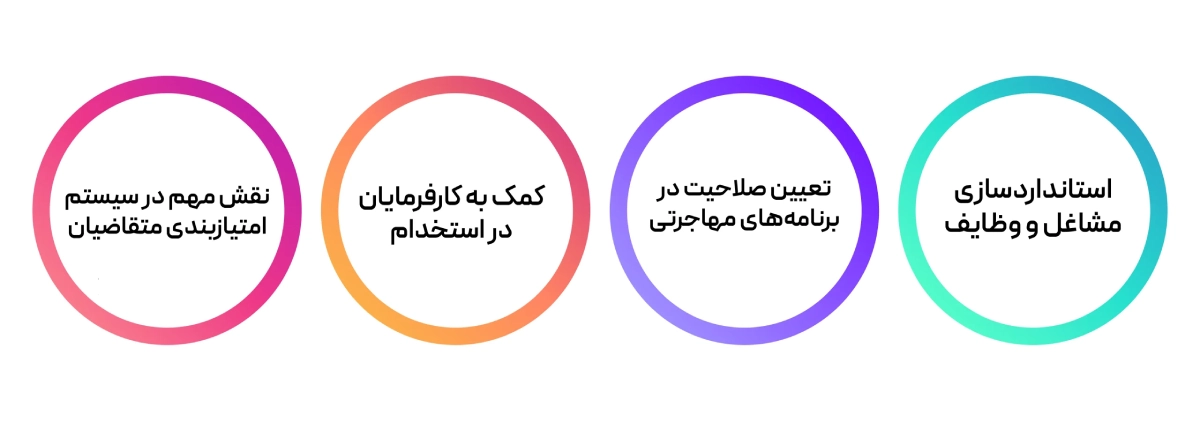
- Standardising occupations and duties across the Canadian labour market
- Determining eligibility for immigration programs such as Express Entry and the Provincial Nominee Programs
- Supporting employers through the Labour Market Impact Assessment process when hiring a foreign worker
- Feeding into eligibility and points assessment for skilled worker programs
Choosing the right NOC code matters. A code that does not match the duties described in your employment letters can lead to a refusal.
Who uses the NOC?
The NOC is a core reference for the Canadian labour market, and it is not only immigration applicants who use it. It gives anyone a reliable description of an occupation, the skills it needs, the education normally expected and how it connects to related jobs.
These are the main groups that rely on it:
- Students choosing a field of study and mapping out career paths
- Employers writing job advertisements, defining duties and assessing candidates
- Colleges and training providers designing programs that match labour market demand
- Career advisers helping people choose or change occupation
- Researchers, statisticians and economists analysing the labour market and identifying skills shortages
- Immigration applicants checking how their occupation is treated in programs such as Express Entry or the Atlantic Immigration Program
- Job seekers reviewing duties, skills and education requirements for a given occupation
Full occupational descriptions are published on the official NOC website. You can search by job title or by code and read the complete profile.
Read more: A complete guide to job interviews in Canada
NOC skill levels: how TEER replaced skill levels A, B, C and D
This is the point most out-of-date articles get wrong, so it is worth being precise. Under the older NOC 2016 structure, occupations were grouped into skill levels 0, A, B, C and D. That structure no longer exists. With NOC 2021, the skill level categories were replaced by six TEER categories numbered 0 to 5, and IRCC now assesses eligibility on TEER, not on skill level.
The rough mapping between the old and the new system is as follows, but treat it only as a rough guide, because a number of occupations were reclassified when the change was made:
- Old Skill Level 0 (management occupations) is now TEER 0. Examples: financial managers, human resources managers, information systems managers.
- Old Skill Level A (occupations that usually require a university degree) is now TEER 1. Examples: physicians, dentists, architects, engineers.
- Old Skill Level B was split. Occupations requiring a college diploma or an apprenticeship of two years or more are now TEER 2; those requiring a shorter college program or less than two years of apprenticeship are TEER 3. Examples: electricians, plumbers, cooks.
- Old Skill Level C (occupations requiring secondary school or on-the-job training) is now TEER 4. Examples: long-haul truck drivers, industrial butchers, food and beverage servers.
- Old Skill Level D (occupations with short work demonstration and no formal education requirement) is now TEER 5. Examples: farm labourers, cleaning staff, oil and gas field workers.

Broad occupational categories in the NOC
Alongside the TEER category, every occupation belongs to a broad occupational category that describes its general field of work. The broad category is given by the first digit of the NOC code. The ten categories are:
- Category 0: Legislative and senior management occupations
- Category 1: Business, finance and administration occupations
- Category 2: Natural and applied sciences and related occupations
- Category 3: Health occupations
- Category 4: Occupations in education, law and social, community and government services
- Category 5: Occupations in art, culture, recreation and sport
- Category 6: Sales and service occupations
- Category 7: Trades, transport and equipment operators and related occupations
- Category 8: Natural resources, agriculture and related production occupations
- Category 9: Occupations in manufacturing and utilities
What is TEER in the Canadian NOC system?
| TEER level | Definition |
|---|---|
| TEER 0 | Management and senior roles (for example, sales manager, project manager) |
| TEER 1 | Requires a university degree (bachelor's, master's or doctorate) |
| TEER 2 | A 2- to 3-year college diploma, or experience in a supervisory role |
| TEER 3 | Under 2 years of training, or short technical training |
| TEER 4 | Requires a high school diploma or on-the-job training |
| TEER 5 | Simple roles with no formal education requirement |
How to find your own NOC code
Identifying the NOC code that genuinely matches your work is one of the most important steps in a Canadian immigration file. Here is how to do it.
Step one: start from your real duties, not your job title
The same work carries different titles at different employers. Ignore the title on your business card and focus on what you actually do day to day, then compare those duties against the descriptions in the NOC database.
Step two: use the official NOC database
The Government of Canada publishes the full classification, organised by field of work and TEER category. Search your occupation on the official Government of Canada website and read the full profile, including the lead statement, main duties and employment requirements.
Step three: note the code and the TEER category
Once you have found the profile that fits, record the five-digit code and its TEER category. The second digit of the code is the TEER. For example, NOC 72302, gas fitters, has a second digit of 2, so it sits in TEER 2.
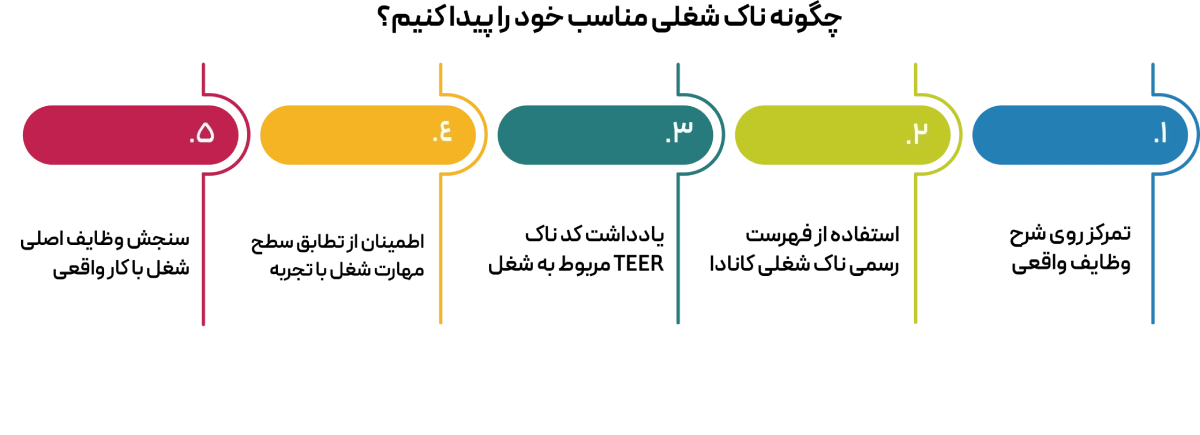
Step four: check that the TEER category matches your experience
The TEER category tells you the level of training, education and responsibility the occupation normally requires. Make sure your documented experience genuinely sits at that level. Claiming a TEER 1 occupation on the strength of TEER 4 duties will not survive an officer’s review.
Step five: match the main duties against your reference letters
Read the main duties listed in the NOC profile and check that your employment reference letters describe the same work. If they do not, look for a code that fits better. The reference letters are the evidence; the code is only the label.
In-demand occupations in Canada and their NOC codes
The table below lists occupations that are consistently in demand across Canada, along with their NOC codes. Demand varies by province and changes over time, and being on a demand list does not by itself make anyone eligible for a program:
| Canadian NOC code | Job title |
|---|---|
| 10010 | Financial managers |
| 10011 | Human resources managers |
| 20010 | Engineering managers |
| 20012 | Computer and information systems managers |
| 70010 | Construction managers |
| 11100 | Financial auditors and accountants |
| 11101 | Financial and investment analysts |
| 11109 | Other financial officers |
| 12010 | Supervisors, general office and administrative support workers |
| 14101 | Receptionists |
| 21310 | Electrical and electronics engineers |
| 21233 | Web designers |
| 21234 | Web developers and programmers |
| 31301 | Registered nurses and registered psychiatric nurses |
| 41402 | Business development officers |
| 62101 | Retail and wholesale buyers |
| 64101 | Sales and account representatives |
| 72401 | Heavy-duty equipment mechanics |
| 72106 | Welders and related machine operators |
| 72600 | Air pilots, flight engineers and flying instructors |
| 73300 | Transport truck drivers |
| 73400 | Heavy equipment operators |
| 75110 | Construction trades helpers and labourers |
How to choose between several possible NOC codes
Sometimes your experience appears to fit more than one code. Here is how to decide.
- Each period of work is matched to the one code that best describes it. You can list different codes for different jobs across your work history, but you cannot claim two codes for the same job, and you nominate one primary occupation.
- You need reference letters from your former employers confirming your duties, hours and dates, written in terms that line up with the code you claim.
- Compare the lead statement and main duties of each candidate code and choose the one that describes the majority of your actual responsibilities.
- Officers assess the claimed code against the evidence in the file. If the code does not match the documented work, the application can be refused, and a misrepresented claim carries far more serious consequences than a mistaken one.
What to do when your job title is not in the NOC
Sometimes a job title does not appear in the classification at all, or the closest match is imperfect. The answer is to search the official database properly rather than rely on summary lists. Follow these steps:
- Open the NOC search page on the official website.
- Select the NOC version the program you are applying under uses. IRCC currently assesses eligibility under NOC 2021 Version 1.0.
- Enter your job title, or your code if you already have one, in the search field.
- Review the results and open the profiles that look closest to your work.
- Read the lead statement and main duties and confirm they describe what you actually did.
- If they do not, try a different title. Occupations are grouped by duties, so the right profile may sit under a name you would not have thought of.
- Record the five-digit code and the official occupation title.
- Check the TEER category for that code, which the profile displays and which the second digit of the code confirms.
Frequently asked questions
- Which version of the NOC applies to my application?
IRCC currently assesses eligibility under NOC 2021 Version 1.0. Statistics Canada revises the classification on a regular cycle, and the next major revision is expected to change both content and structure for a substantial share of occupational groups. Always confirm on the IRCC page for your program which version applies on the day you submit. - How do I get a NOC code, and how long does it take?
A NOC code is not something you apply for or receive. There is no issuing body and no waiting period. You identify the code yourself by matching your duties against the published profiles, and you declare it in your application. If you are unsure between two codes, that is a question for a Regulated Canadian Immigration Consultant or an immigration lawyer, not an administrative process. - Do I need a licence for my occupation?
Many occupations in Canada, in health, engineering, trades and other fields, are regulated, and you need provincial certification to work in them. That is a licensing question separate from your NOC code. For most immigration programs you do not need a licence to claim an occupation, although some programs, such as the Federal Skilled Trades Program, do require a certificate of qualification or a qualifying job offer. What always matters is that your documented duties match the code you claim.
This article is general information, not legal advice, and it describes published official rules rather than any individual case.