For most people who move to Germany to study or work, a settlement permit is the goal that sits behind everything else. It looks out of reach from the outside. It is not, if you know which legal routes exist and get proper advice early.
German permanent residence, the Niederlassungserlaubnis, is the right to live and work in Germany indefinitely. It is granted against a defined set of conditions and documents, a German language certificate among them. If immigrating to Germany is the plan, this is the full guide to the permanent side of it.
What is German permanent residence?
The Niederlassungserlaubnis is the settlement permit Germany issues to non-EU nationals. Unlike a temporary residence permit (Aufenthaltserlaubnis) it never needs renewing. Holding one gives you:
- The same rights as German citizens in most areas of daily life.
- The freedom to work in any job or to continue studying.
- The right to live in Germany with your spouse and children.
- A route to bring your parents on a dependent visa.
- The ability to sponsor family members, subject to the legal undertakings involved.
- Visa-free travel across the Schengen area and the European Union.
Types of German residence permit
Germany issues two kinds of residence permit to people who want to live in the country: temporary and permanent.
Temporary residence is issued for a fixed period and renewed when specific conditions are met. A student whose course runs longer than planned can extend it. So can a worker who brings a new job offer.
Permanent residence has no time limit and does not expire.
Non-EU applicants who have held temporary residence in Germany for five years, on any lawful basis such as a student visa or a job seeker visa, and who have no criminal record, may apply for a settlement permit. Sound finances and a handful of other conditions come with that, and they are set out below.
German permanent residence requirements
You will generally need:
- Temporary German residence for work or study
- Or an EU Blue Card
- Proof of at least 5 years of lawful, continuous work in Germany
- Approval from the Federal Employment Agency (BA), where your permit type requires it
- A German language certificate at B1 or above
- Valid health insurance, public or private
- A clean criminal record
- Adequate housing for you and your family
- Enough income to cover your living costs
- No reliance on state support such as welfare benefits
Once the settlement permit is granted, you can apply for your spouse and children to join you. Your spouse has the right to work, and your children enrol in school and access education on the same terms as everyone else.
Routes to residence in Germany
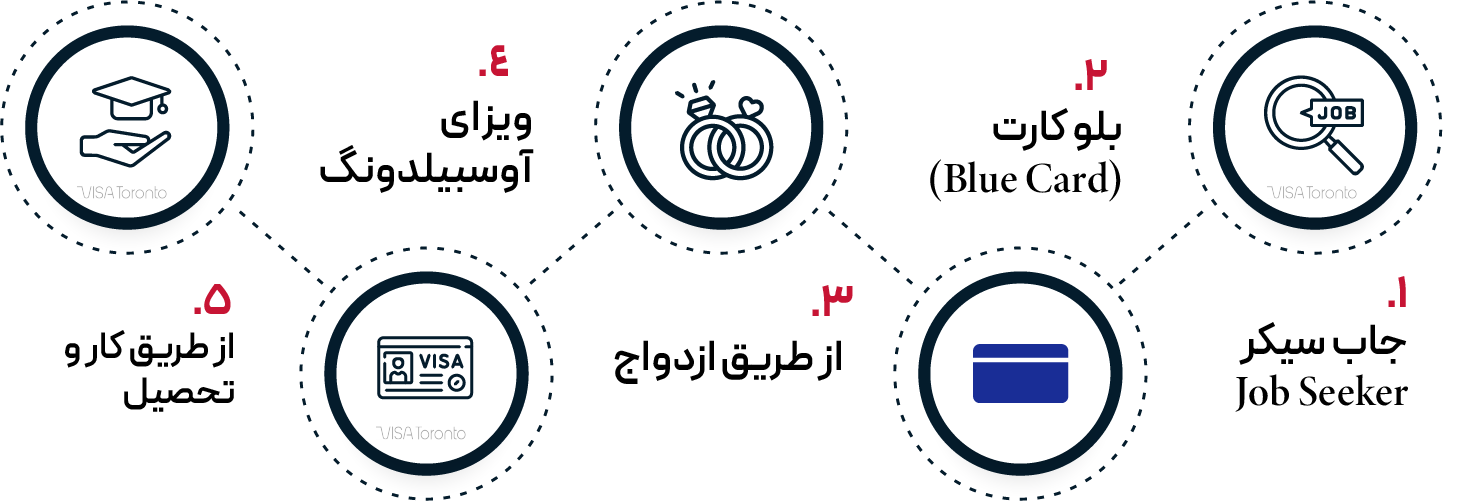
With the conditions clear, here are the routes non-EU applicants actually use: get a temporary permit first, then convert it. The job seeker visa is the most common starting point.
Permanent residence through the job seeker visa
Non-EU nationals with a solid work history and a German language certificate can enter Germany on a job seeker visa and spend six months looking for work. Find a suitable role at an acceptable salary inside that window and you can move to a German work visa, then keep renewing it alongside your contract until you qualify for a settlement permit.
Permanent residence through the EU Blue Card
Specialists with a job offer from a German employer can apply for the German Blue Card and take up temporary residence on it. What the Blue Card actually tests is a recognised university degree and a gross annual salary above the threshold Germany sets each year, which currently stands at EUR 50,700 gross a year, or EUR 45,934.20 for shortage occupations and career starters. Only that lower threshold needs approval from the Federal Employment Agency (BA). There is no German language requirement for the Blue Card itself.
Residence in Germany through marriage
Marriage to a German citizen is one of the simpler routes. The foreign spouse needs German at A1 to get a temporary residence permit, which carries the right to work from the start. After three years of marriage and residence, a settlement permit becomes available.
The Ausbildung visa for younger applicants
School leavers with a German language certificate who want to work in Germany are usually better served by an Ausbildung visa. You enrol on a two to three year dual vocational programme, then move to a work permit and temporary residence. As with every other route, several consecutive years of paid, taxed work opens the door to permanent residence.
Permanent residence through work or study
The last route is the oldest one: a work visa, or a German student visa. For a work visa you need a German employer and a formal job offer letter, issued for at least a year and stating your salary and duties.
That route takes time, and because many employers hesitate to sponsor a foreign hire, advisers often point applicants at Ausbildung or the job seeker visa instead. Students, meanwhile, need a German language certificate and an admission letter from a recognised university.
While studying, you can work up to 140 full days or 280 half days a year, and you can stay on to look for work after you graduate. Find a job related to your degree, get the offer in writing, and your student visa converts to a work visa that carries you through to permanent residence.
Documents for German permanent residence
Beyond meeting the conditions above, you file a document set and wait for the decision. The checklist below reflects current practice, but check the immigration office and the German Federal Ministry of the Interior for updates before you file.
- Passport
- Your current residence permit
- Proof of income such as a job offer or payslips
- Tax assessment (Steuerbescheid) for the self-employed and for employers
- Proof of 5 years of pension contributions to the German scheme (Rentenversicherung)
- Proof of housing, such as a purchase deed or a tenancy agreement
- A German language certificate at B1 or above (Goethe, telc, ÖSD and TestDaF only)
- Certificate of completion of an integration course (Integrationskurs), where required
- Police clearance certificate
- Health insurance
- Proof of funds in the form of bank statements (Kontoauszüge)
- Evidence of Kindergeld or Elterngeld payments, where these apply to you
German permanent residence costs
What you pay depends on your status:
| Category | Fee in EUR |
|---|---|
| Standard applicants | EUR 113 |
| Self-employed applicants | EUR 124 |
| Highly skilled applicants | EUR 147 |
| Children under 18 | Set by Section 44 Aufenthaltsverordnung; check the current rate |
| Refugees, persons under humanitarian protection, and family members of German citizens | Reductions and exemptions cover only narrowly defined categories in the Aufenthaltsverordnung; ask the Auslaenderbehoerde whether you qualify |
How to apply for permanent residence
| Step | Details |
|---|---|
| Initial consultation on eligibility for permanent residence | Review of requirements and documents at the local immigration office (Ausländerbehörde) |
| Register your address | At the residents' registration office (Einwohnermeldeamt) |
| Complete the application | Antrag auf Erteilung der Niederlassungserlaubnis form |
| Book an appointment | At the local immigration office (Ausländerbehörde) |
| Attend the appointment | Submit documents and a short interview |
| Receive the decision | Electronic permanent residence card |
Benefits of immigrating to Germany
Living in Germany carries real advantages, and securing your family’s future is the one most applicants name first. A settlement permit adds the following:
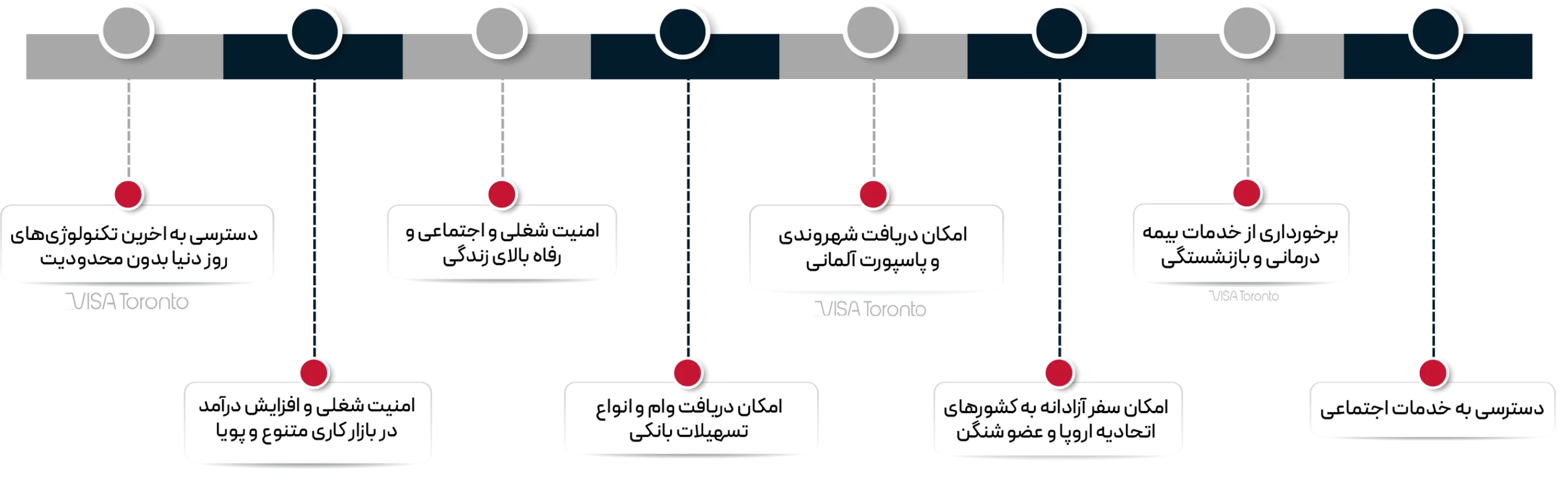
- Access to social services
- Health insurance, pension entitlements and social support
- Free movement across the European Union and the Schengen area
- A path to German citizenship and a German passport
- Access to loans and banking facilities
- Job security and a high standard of living
- A varied, active labour market with room to grow your income
- Unrestricted access to advanced technology and infrastructure
Getting your German visa with Aval Visa
If Germany is the plan, everything follows from choosing the right route and getting the visa right. Picking the wrong route, filing without advice, submitting an incomplete document set or ignoring a rule change at the immigration office is what stops people short of permanent residence.
At Aval Visa we do not simply file a visa application. We read your circumstances and your documents, then design the immigration plan that actually fits them. Our team handles the route decision, the full document preparation, the administrative follow-up and the embassy stage, so your file is as strong as it can be when it is assessed. Germany is closer than most people think. It just has to be started correctly.
Frequently asked questions
- Which routes to German residence are the most straightforward? A student visa, and marriage to a German citizen, are the simplest and fastest. Every other route asks for more time, more patience and more money.
- Can any of these routes be used without a German language certificate? No. All of them require German, including marriage to a German citizen, where the spouse visa asks for A1.
- How long does German permanent residence take? You can apply after three to five years of residence, depending on your route, and a decision usually arrives within 4 to 6 working weeks.