Germany is a popular destination for people looking to build a working life abroad, but anyone considering immigration to Germany runs into the same question early on. Which city is the right one to settle in? Where is the cost of living lower, and where is the quality of life better?
This article answers that question: which are the best cities in Germany to live, work and study in without an unmanageable cost of living? Here is the case for each of them.
The best cities in Germany, as rated by residents and new arrivals
The statistics portal Statista, using factors such as company culture, average salary and employer ranking, published the following list of the best German cities to work in:
- Munich
- Dusseldorf
- Hamburg
- Frankfurt
- Stuttgart
- Erlangen
- Darmstadt
- Cologne
- Berlin
- Bremen
InterNations, the international network for people living abroad, surveyed its members and new arrivals and published this list of the best cities to live and work in:
- Aachen
- Dusseldorf
- Hamburg
- Frankfurt
- Cologne
- Munich
- Berlin
Which German city is best to live in depends on your needs, your circumstances and how you want to live, and opinions differ. So alongside what residents and new arrivals say, it is worth looking at the numbers, which are set out below:
| City | Average annual salary | Average rent per m² | Average monthly cost for one person, excl. rent |
|---|---|---|---|
| Aachen | EUR 42,172 | EUR 11.47 | EUR 861 |
| Munich | EUR 56,132 | EUR 27.69 | EUR 1,017 |
| Düsseldorf | EUR 53,301 | See the city Mietspiegel | EUR 853 |
| Frankfurt | EUR 55,751 | EUR 16.47 | EUR 1,200 |
| Cologne | EUR 49,665 | EUR 13.64 | EUR 934 |
| Berlin | EUR 46,928 | EUR 17.23 | EUR 997 |
| Hamburg | EUR 49,809 | EUR 17.29 | EUR 961 |
The best cities in Germany to work and live in
With that in mind, here are the cities worth considering as a destination. If you want living costs broken down line by line, check the cost of living in Germany on Numbeo, select your city at the top of the page and work through the detail, from internet to groceries.
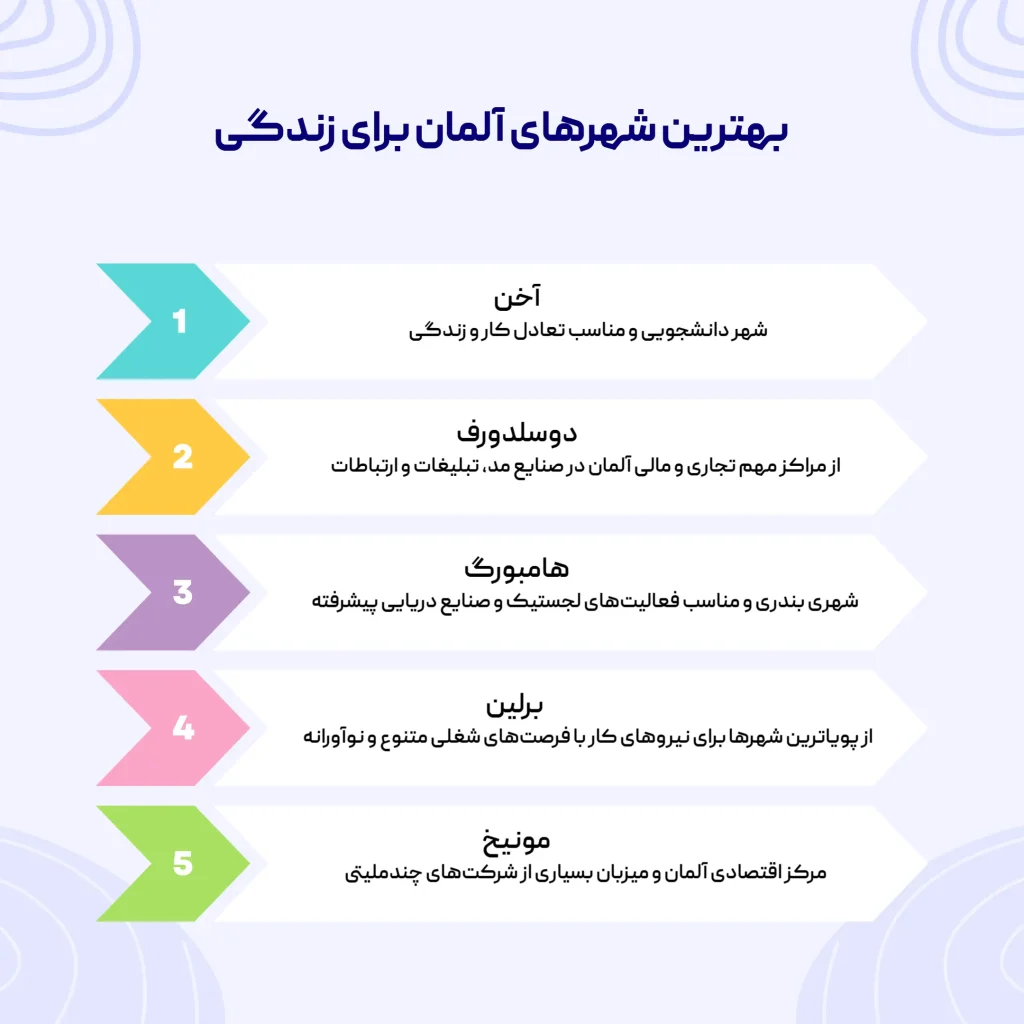
Aachen: a university city with unusual openings
Aachen sits in the west of Germany and is known for its architecture and its historic centre. In the InterNations survey, more than eighty per cent of foreign residents in Aachen said they were satisfied with life there. The survey covered:
- Job opportunities
- Career progression
- Work-life balance
Aachen suits new arrivals. Most residents work in administration, retail, automotive manufacturing, particularly electric vehicle production at StreetScooter, IT, and healthcare. The city is also home to RWTH Aachen and other technical institutions, so students make up a large part of the population.
Read more: The cost of living in Germany
Munich: a city to work and live in
Germany’s third-largest city, and the cultural and historical heart of Bavaria, Munich is also one of the best German cities to study in. It is an economic centre and home to a long list of multinationals. People working in IT, finance and the automotive industry, on an average salary of around EUR 57,000 a year, can find work and settle there.
On the Expat Essentials index, more than 50 per cent of foreign residents say they are satisfied with life in Munich, though the cost of public transport and of renting draws consistent complaints.
Dusseldorf: the commercial and financial centre
Dusseldorf is one of Germany’s significant commercial and financial centres, with real weight in fashion, advertising and communications. It sits in one of Europe’s largest economic regions and is a strong choice for job seekers, engineers and technical specialists.
Engineering firms, banks and construction companies are the main employers, so work is not especially hard to find. Dusseldorf also has a low crime rate, a modern transport system and a reasonable cost of living.
Frankfurt: a city for people in finance
Frankfurt is Germany’s financial capital, home to the European Central Bank and to a great many financial institutions, which makes it the obvious choice if you work in finance, accounting or the markets. It also has a real presence in media and advertising.
Compared with other German cities, average salaries in Frankfurt sit slightly lower, while social life is busy and varied, with good leisure facilities and restaurants.
Read more: How to secure a German job offer
Living in Cologne
Cologne is one of the best German cities to live in, with steady demand for skilled workers. It is known as Germany’s television capital, with a large concentration of advertising, radio and television studios. That makes it a natural fit for people in media, content specialists, editors, artists and film-makers.
Working in the capital: Berlin
The German capital draws people from all over. Berlin is one of the country’s most dynamic cities for work, with a wide and inventive range of openings. Freelancers and digital nomads, people who work remotely rather than from a fixed office, also base themselves in Berlin.
Berlin is multicultural and a great many people speak English, so finding work is not especially difficult, and you can work in English while you learn German. There is also demand in medical technology, pharmaceuticals, logistics, mechanical engineering and the chemical industry.
Working in the port city of Hamburg
Hamburg is a port city, well suited to logistics and advanced maritime industry. It offers a wide range of work in logistics, trade, aerospace and shipping, and is one of Germany’s wealthiest cities, with among the highest GDP per head and employment rates in the country.
Hamburg is also one of the more attractive German cities to live in, with advanced transport infrastructure, a high standard of urban life and a clean environment. That said, foreign residents and new arrivals describe the social life as hard to break into and complain about the difficulty of dealing with local administration.
German visas with Aval Visa
In a move to Germany, the destination itself does a lot to determine your quality of life and how satisfied you end up being with the decision. Among the best cities in Germany, Aachen has a student and technology character, and Munich is the place to go for higher earnings. Berlin is a busy capital that suits creative people, founders and new arrivals, while Frankfurt, Cologne, Hamburg and Dusseldorf each carry their own advantages and drawbacks, depending on what you need and how you want to live.
If you are not yet sure which city fits, or you want firmer detail on German visas, the job market and living costs, we at Aval Visa can help. Complete the assessment form, or contact our Germany advisers during office hours.
Frequently asked questions
- Which German city is best for automotive engineers? Stuttgart. The cost of living is high, but it is home to Porsche, Bosch and Mercedes-Benz, and to the University of Stuttgart, which makes it the strongest base for technical specialists in the automotive sector.
- Which German cities are best for studying? Munich, Berlin, Frankfurt and Aachen combine good universities with a manageable cost of living. Stuttgart and Dresden are also strong academically, though more expensive.
- Which German cities have the largest international communities? Berlin, Hamburg and Frankfurt, along with the wider North Rhine-Westphalia region, host the largest populations of foreign residents, which is one reason new arrivals often start in those cities.
This article is general information, not legal advice, and it describes published official rules rather than any individual case.