Alongside the study route, a work visa is one of the main ways to move to Germany. The country has a large economy, a high standard of living and a stable labour market, which means it offers a wide range of vacancies and one of the most active job markets in Europe. That is why getting a German job offer has become a popular first step for people planning a move to the heart of Europe. But here is the question that matters: is a skill set or a university degree on its own enough to enter the German labour market?
The short answer is no. On top of your qualifications, you need a job offer from a registered German employer before you can apply for a work visa and start working legally. This article is a practical starting point for that process.
What is a German job offer?
A written job offer, or Stellenangebot, is the central requirement for a German work visa. It is a formal offer of employment from a company in Germany inviting you to come and work there for a defined period, for example one year or longer.
The offer shows that a company, a group or a workshop in Germany intends to hire you as a skilled worker, and that the employer is satisfied with your experience. A German job offer is not simply a signed letter. It has to set out the following:
- The exact job title, for example web developer or UI specialist
- A description of duties and responsibilities (Job Description)
- Monthly or annual gross salary and benefits
- Place of work and weekly working hours
- Start date and contract length, for example one or two years
- Full company details, including its field of business
- Signature of the HR manager or the employer on official letterhead
An offer of that quality shows the visa officer that you took part in an interview, that your skills were assessed, that your language level was checked and that the company is satisfied you can carry out the duties described in the letter. For many applicants this is the turning point of the whole plan, because a work visa application can only be filed once a genuine offer is in hand. It does not, on its own, decide the outcome of the visa.
Requirements for a German job offer
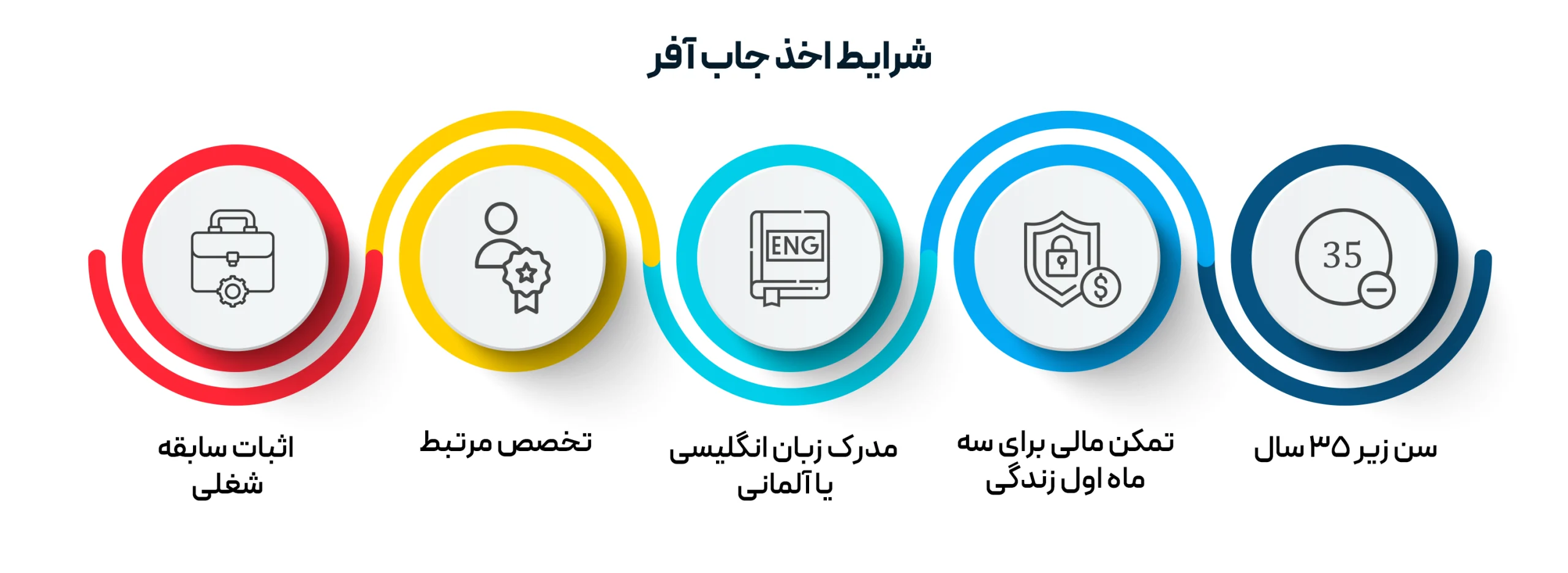
Let us start with the conditions attached to a German job offer. Beyond the professional skills the role calls for, applicants are usually assessed on age, finances and qualifications.
German law sets no general upper age limit. In practice, employers and the immigration authorities are most comfortable with candidates under 45. There is a legal reason for this: a skilled worker who is 45 or older and applying for a German residence permit for the first time must either earn above a set salary floor or show adequate pension provision. That floor is recalculated every year as a percentage of the German pension contribution ceiling, so check the figure that applies in the year you file. If you are over 45, plan for a senior role, a higher salary, or a different route into Germany.
Next comes proof of funds. If your offer states a salary that covers your living costs, a separate maintenance guarantee is usually not required. Even so, be ready to show the consulate that you can cover your first three months before your salary starts. Bank statements showing the balance and the flow of your account are the usual evidence, and you should bring them to the appointment.
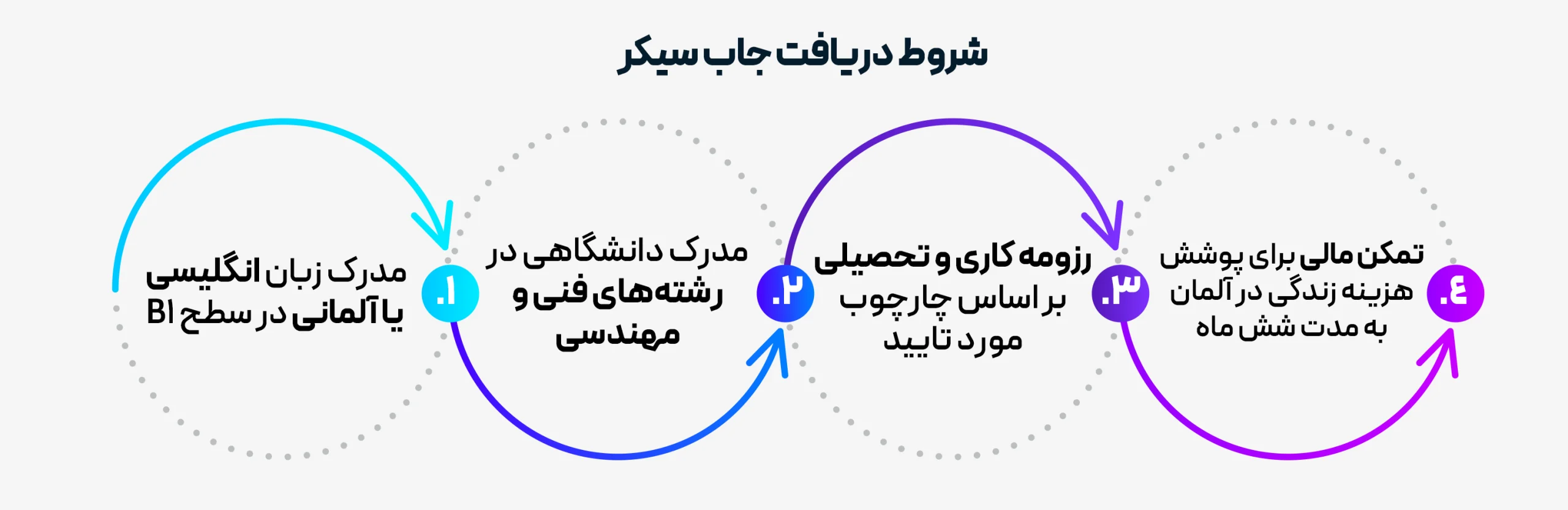
The next point is language. German or English at B1 or above is what most employers ask for. For engineering and technical roles inside large companies, working English is often enough. For healthcare, care work, teaching, public-facing and regulated professions, German is normally required, and professional recognition (Anerkennung) of your qualification will usually depend on it.
The last point is work experience. Most German employers will interview a specialist who has two to five years of relevant experience and can document it. With that in mind, here is a summary of the paperwork.
Documents needed for a German job offer
With the documents listed below you can apply for vacancies, sit interviews and ask for a written offer.
| Documents | Details |
|---|---|
| Professional and academic CV | In German or English |
| Academic and employment certificates | Originals and translations |
| Language certificate | English or German |
| Proof of work experience | Such as references or employment contracts |
| Skills certificates | For every course or specialisation completed |
How to get a genuine job offer
At this point one question tends to come up: how do you actually get a German job offer, and where do you start?
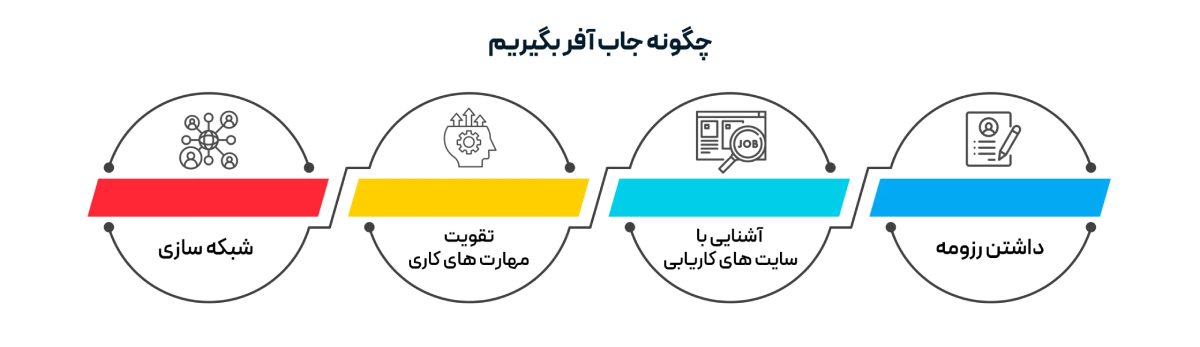
It looks complicated from the outside, but the process is manageable if you work through it in order. Keep in mind what German employers mean by a strong candidate:
- A well-built CV
- A recognised qualification
- A usable level of German or English
- Work experience you can document
- Command of the specific skills in the job ad
If you are not comfortable communicating in a new working environment, or you do not have a clearly marketable skill, this is not the route we would suggest.
Second, alongside your CV, build a LinkedIn profile and put your full work history and skills on it. Read up on the German labour market, the occupations in demand and the working culture, then approach the companies you are targeting. Knowing the employer, the market and the conditions of the role makes you far more convincing in an interview.
Read more: A step-by-step guide to booking a German embassy appointment
Start with the CV
The first thing a German employer sees is your CV. Write it to the format recruiters there expect, in German or English, with your full education, employment history and skills. Send a personalised cover letter (Anschreiben) with every application, and attach scans of your key certificates.
Know the job boards
The second thing that matters is knowing the German job boards. They let you compare vacancies and hiring conditions, send applications and get invited to interviews. The best known are listed below:
- The German government portal for international skilled workers
- The official site of the Federal Employment Agency
Private job boards such as:
- Stepstone.de
- Indeed.de
- Monster.de
- LinkedIn Jobs
Networking and reading the market
Use professional networks throughout the search. They put you in front of vacancies earlier, let you speak directly to HR managers at German companies, and give you access to groups built around working in Germany. An employer who has already seen your profile through a mutual contact is easier to convince.
What the German labour market is short of
Build your skills and your CV around what the German market is actually short of, and take a course if there is a gap. The German authorities publish a shortage occupation list each year, and candidates with experience in those fields have a clearer path to an offer. The occupations that appear consistently are below, and the list is revised regularly:
-
- Civil, mechanical, electrical and industrial engineers
- Developers and IT specialists
- Software engineers
- Nurses and healthcare staff
- Technicians
- Sales and digital marketing specialists
- Truck drivers and machine operators
- Industrial technicians and welders
- Renewable energy specialists
What working in Germany gives you
It is worth setting out what a skilled worker gains beyond the job itself. The main points are below:
- Eligibility for the EU Blue Card (EU Blue Card)
- A route to a German settlement permit, with German at B1
- Family reunification for a spouse and children
- Access to the education, health and legal systems
- Solid pay, transparent salary rules and strong employment protection
- Career progression and professional development
- Good infrastructure and regulated working conditions in one of the world’s largest economies
From a work visa to permanent residence
Skilled workers who have held a German residence permit for work and paid into the pension system throughout can apply for a settlement permit after three years of continuous employment, provided they are still working and can show:
- A clean criminal record
- Salaried employment in a qualifying role
- Taxes and social contributions paid on time
- No financial irregularities
That permit is the Niederlassungserlaubnis. German language at B1 and secure accommodation are part of the test. Throughout the period you can live in Germany with your spouse and children by applying for dependant visas for them, and family members build their own path to permanent status as lawful residents with the same rights.
Job offer versus the EU Blue Card
A question that comes up often is the difference between a job offer and the Blue Card. As set out above, a job offer is a written offer of employment from a registered German employer. It is the document that lets you apply for a work visa, not a visa in itself.
The Blue Card is different. It is a specific EU-wide residence permit for graduate-level jobs paid above a salary floor. The German Blue Card is aimed at people qualified in engineering, IT, medicine and other fields Germany is short of. To qualify you need:
- A bachelor’s degree or higher, recognised in Germany
- A job offer from a registered German employer in a matching field
- A gross annual salary at or above the Blue Card threshold
The salary floor is reset every year. It is set at half the annual contribution ceiling for the German general pension scheme, with a lower floor for shortage occupations and for graduates in their first three years after qualifying. The general threshold is 50% of that ceiling and the reduced one is 45.3%. On the current ceiling of EUR 101,400 those figures are EUR 50,700 and EUR 45,934.20. The ceiling is reset each year, so always check the amount published for the year you apply.
Job offer versus the job seeker route
The second common question is the difference between a job offer and the German job seeker route. Both lead to work in Germany, but they work in opposite directions.
The job seeker visa is a temporary permit of up to six months that lets you enter Germany without an offer, attend interviews in person and look for an employer. It has since been joined by the Chancenkarte, or Opportunity Card, a points-based permit of up to one year for the same purpose, and most applicants now compare the two. For the job seeker visa you need:
- German or English at around B1
- A recognised university degree or vocational qualification
- A CV and education record in the accepted format
- Proof of funds to cover your living costs in Germany for the whole stay
Both routes forbid you from taking up full employment before the permit is converted.
Once in Germany on a job seeker visa, you have to find work within the period granted and take the contract to the immigration office to switch to a work permit. If you do not, the permit cannot be extended and you have to leave.
Moving to Germany with Aval Visa
Securing a German job offer and applying for a work visa is one of the more solid routes into the country, but it takes time, careful planning and patience through a run of online interviews.
Because some hires require approval from the Federal Employment Agency, many employers prefer to recruit inside Germany first and only look abroad for specialised roles. That is why it helps to run the process with an experienced team. Aval Visa can review your profile, tell you honestly whether the route fits, and help you prepare the file.
Frequently asked questions
- Does a German work visa need approval from the Federal Employment Agency (ZAV)? Not always. Where the salary in the offer is at or above the general Blue Card threshold, approval is not required. Blue Cards issued at the reduced shortage-occupation rate, and most other work permits, do go through the agency.
- If the contract runs for six months, how long is the visa issued for? The residence permit normally tracks the contract, with a short buffer added, up to a maximum of four years. A six-month contract produces a short permit, so a longer contract gives you a longer permit and an easier renewal.
- How long does a work visa take? German work visas are usually decided one to three months after the file is submitted to the embassy or consulate, though busy posts take longer.
- What does a German work visa cost? Asking an employer for a job offer costs nothing. The national visa fee payable to the embassy is EUR 75, and it is not refunded if the application is refused.
This article is general information, not legal advice, and it describes published official rules rather than any individual case.