
The University of Sassari is one of Italy’s older universities. It teaches a wide range of subjects at bachelor’s and postgraduate level and takes both Italian and international students.
Teaching quality is what draws applicants from abroad. If you are planning to apply for an Italian student visa and study at Sassari, this article covers the entry requirements and the enrolment steps in full.
About the University of Sassari
The University of Sassari (Universita degli Studi di Sassari) is based in the city of Sassari, in the Italian region of Sardinia. It was founded in 1562 and is among the oldest higher education institutions in the country.
With more than 18,000 students and 700 academic staff, the university runs 13 departments and a broad catalogue of programmes. Strong teaching, active research centres, well-stocked libraries and a functioning student welfare system are the main reasons people choose it.
University website: https://www.uniss.it/
Read more: A complete guide to studying in Italy
University of Sassari admission requirements
Here is how international admission to the University of Sassari works, step by step:
1. Pre-enrolment through the Universitaly portal
Non-EU applicants living outside Italy have to complete pre-enrolment through the Universitaly portal within the windows set by the Italian Ministry of University and Research. This step is a precondition for a long-stay study visa.
2. Language certification
- For programmes taught in Italian: applicants have to prove their Italian, either by passing the university’s Italian language test or by presenting a CLIQ certificate at B2 or above.
- For programmes taught in English: an English certificate at B2 or above is required. IELTS, TOEFL and recognised equivalents are accepted.
3. Academic documents
Applicants need a secondary school diploma, or an equivalent qualification that gives access to university in the country where it was issued. Master’s applicants need a bachelor’s degree or equivalent.
All academic documents have to be officially translated into Italian or English and accompanied by a Declaration of Value issued by the Italian consulate in the country of origin, or by a CIMEA statement of comparability where the university accepts one.

4. Entrance tests and interviews
Some programmes require an entrance test or an interview. The master’s in management of innovation in sustainable tourism, for example, sets a multiple-choice test covering management, economics and law, plus a written English test as part of the selection.
5. Student visa and the legal steps
Once pre-enrolment is complete, the applicant books an appointment at the Italian consulate covering their place of residence to apply for a study visa. After arriving in Italy, non-EU students have to apply for a residence permit within 8 working days. You will also need an Italian tax code (Codice Fiscale) for almost every administrative task.
Read more: Studying at the University of Milan
University of Sassari tuition fees
Tuition and the cost of student life are the first thing most applicants want to pin down. Estimates for both are below:
Tuition fees at the University of Sassari
| Level | Annual Tuition Range (EUR) | Additional Notes |
|---|---|---|
| Bachelor's | EUR 1,000 – 3,000 | Can be reduced depending on the programme and financial status (ISEE) |
| Master's | EUR 1,500 – 4,000 | Fields such as management or humanities carry lower fees |
| Lowest possible tuition | About EUR 820 | With a fee waiver or scholarship, for students on low incomes |
Student living costs in Sassari
| Expense category | Monthly cost (EUR) | Notes |
|---|---|---|
| Shared room rent | 230 - 380 | In a student or shared apartment with other students |
| One-bedroom apartment rent | 500 - 800 | In the city centre; about EUR 400 in the outskirts |
| Food and groceries | 200 - 300 | Depending on lifestyle (supermarket shopping or eating out) |
| Public transport | 30 - 35 | Monthly bus pass |
| Utility bills and internet | 100 - 150 | Electricity, gas, water, internet |
| Leisure and other costs | 100 - 200 | Leisure, sport, books, insurance, healthcare and miscellaneous items |
Courses at the University of Sassari
Before anything else, check that the University of Sassari teaches your subject at the level you want.
Read more: The University of Verona
1. Bachelor’s programmes
Sassari runs around 34 three-year bachelor’s programmes, covering fields including:
- Agricultural sciences and technologies
- Animal and agricultural sciences
- Forestry and environmental science
- Urban design and environmental planning
- Architecture and design
- Legal services
- Strategic and legal studies in defence and security
- Political science
- International cooperation and security
2. Master’s programmes
The university runs 22 two-year master’s programmes, 6 single-cycle master’s degrees of five or six years, and 7 international programmes taught in English:
- Chemical Sciences
- Economics
- Agricultural systems
- Animal production science
- Urban and environmental planning
- Management of innovation in sustainable tourism
- Migration management
- Wildlife management
- Architecture and design
Single-cycle master’s degrees (5 to 6 years)
- Medicine and Surgery – 6 years
- Veterinary Medicine – 5 years
- Pharmacy and Pharmaceutical Chemistry – 5 years
- Law (Giurisprudenza) – 5 years
3. PhD programmes
The University of Sassari runs around 10 doctoral programmes, among them:
- Economics, Management and Quantitative Methods (EMQM)
- Doctoral programmes in the sciences
- Doctoral programmes in agriculture
- Doctoral programmes in veterinary science
- Other doctoral programmes, depending on the department
Read more: Italian regional scholarships: what they actually cover
Scholarships at the University of Sassari
The University of Sassari offers international students a range of scholarships covering financial support, tuition waivers, living grants and accommodation. They are available at bachelor’s, master’s and doctoral level.
1. UNISS university scholarships
The university publishes calls for funding each year, open to international students at bachelor’s, master’s and doctoral level. They are designed to support students financially through their programme.
2. Italian government scholarships (MAECI)
The Italian Ministry of Foreign Affairs and International Cooperation (MAECI) offers scholarships to foreign students and to Italians living abroad. They cover tuition and a living allowance.
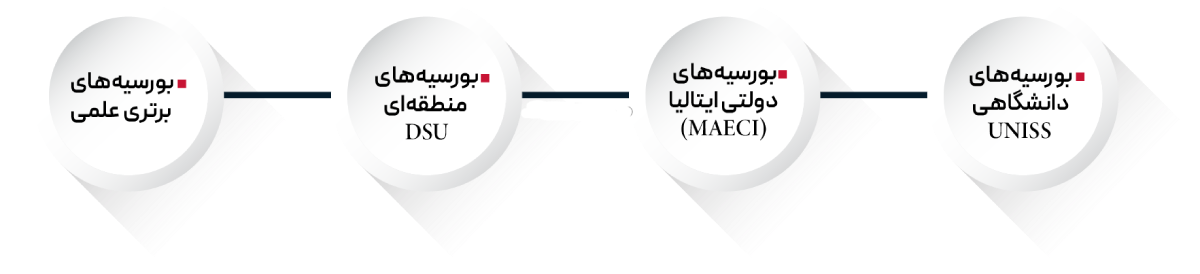
3. Regional DSU scholarships
DSU scholarships are awarded by the Italian regional authorities to domestic and international students. They cover tuition exemption, accommodation and a living grant. Eligibility is means-tested.
4. Excellence Scholarships
These go to students admitted to particular programmes, such as medicine, veterinary medicine, architecture and urban planning. Awards are usually between EUR 7,000 and EUR 10,000 a year. Amounts and eligibility are set in each year’s call.
Why Sassari is a sensible choice
Studying at the University of Sassari can be a turning point academically and professionally. The university combines a varied and current catalogue of programmes with a focus on practical and research skills.
Alongside that, the financial support available through scholarships, the advisory services, the skills workshops and a well-run academic system make Sassari a realistic option for motivated students. If you want good teaching in a supportive environment at a manageable cost, it is worth putting on your shortlist.
Frequently asked questions
- How is tuition at the University of Sassari calculated?
Tuition is set on household income through the ISEE assessment. If you do not submit an ISEE certificate, or do not authorise the university to retrieve it, you are charged the highest fee band. - Can I enrol on individual courses?
Yes. International students can register for up to 36 credits of individual courses. A fixed fee and certain conditions apply. - How are foreign qualifications recognised?
The university recognises foreign qualifications in full or in part. Documents have to be submitted with a Declaration of Value and an official translation. The application window normally runs from 1 August to 30 October.
This article is general information, not legal advice, and it describes published official rules rather than any individual case.