Families who want a child to finish school in Canada and continue to university there apply for a study permit on the child’s behalf. Canada’s school system, its research facilities and the range of universities that follow it are the reasons parents look at moving to Canada at the school stage rather than waiting for undergraduate study. A Canada study permit for a minor lets a child attend a Canadian school and, in most cases, carry the same permit forward into post-secondary study.
This guide covers the school types, the requirements for a school-level study permit, the documents IRCC expects, what tuition and living costs run to, and a shortlist of schools that take large numbers of international students. Every decision on a study permit rests with IRCC.
Types of school in Canada
Before looking at the permit, it helps to know how Canadian schools are organised. Schools follow provincial curricula and fall into roughly three groups: public schools, private schools and boarding schools.
Public schools are run by local school boards and are the cheaper option. They are free for Canadian children; international students pay roughly CAD 20,000 to CAD 30,000 a year, depending on the board and the province. Because public schools take international students alongside local ones, they tend to be the more mixed environment. Applications open months ahead, and a board will normally want the child’s transcripts and, in some cases, an interview before it issues a letter of acceptance.
The second group is private and non-profit schools, together with the boarding schools, where fees are considerably higher. Tuition runs roughly CAD 40,000 to CAD 80,000 a year, and the fee usually buys academic advising, pastoral support, small-group and one-to-one teaching from the first term. These schools also tend to offer:
- Residence accommodation
- Advising on university course choice
- Structured university pathway programmes
- Social skills and personal development programmes
as part of the package.
Requirements for a Canada study permit for a school student
Now that the school types are clear, look at what is needed to get an acceptance and then a permit. Knowing the admission requirements and the document deadlines early is what keeps the process from stalling, so treat the research into schools, their entry rules and their academic framework as part of the work.
If a parent is a Canadian citizen or permanent resident, or the child was born in Canada, the child can enrol in any school as a resident of the province and no study permit is involved. Where the family lives outside Canada and wants a Canada study permit for the child, the following conditions apply.
| Requirement | Details |
|---|---|
| Acceptance at a Designated Learning Institution (DLI) | Required in order to apply for a study permit |
| Proof of financial support | To cover school fees + living costs + return airfare |
| Proof of intent to return after studies | Through educational and employment documents |
| Health and clean criminal record | No criminal record + medical insurance or completion of a medical exam |
| Guardian or custodian | Required for students under 17 not accompanied by a parent or legal guardian; at 17 an officer may still ask for one |
Documents for a Canada study permit for a school student
Once the child has an offer of admission from a Canadian school, the application is made through an IRCC online account. These are the documents to prepare.
-
- A letter of acceptance from a designated learning institution (DLI)
- A provincial attestation letter (PAL) or, in Quebec, a CAQ, where one applies. Primary and secondary school students are currently exempt from the PAL requirement, but Quebec’s CAQ rules are separate, so confirm what applies to the child’s province and programme
- A valid passport, plus originals and certified translations of identity documents
- The completed study permit application forms
- A recent photograph meeting the IRCC format and size specification
- Proof of funds covering one year of tuition and living costs plus return travel
- Four to six months of bank statements for the parents or the sponsor
- A custodianship declaration for a minor studying without a parent or legal guardian in Canada. The age of majority is 18 in some provinces and 19 in others
- Identity documents for both parents
- All prior school records, transcripts and reports
- A study plan explaining why the child is studying in Canada and what the plan is afterwards
- A medical examination, where the officer or the country of residence requires one
- A police certificate, original and translated, where required
- Proof that the fees were paid: the study permit fee of CAD 150 plus the biometrics fee of CAD 85. Fees are revised from time to time, so check the current amounts
Cost of a Canada study permit and school fees in Canada
With the requirements and documents covered, here is what a year at a Canadian school actually costs. Education is free for resident children; international students pay tuition, living costs and incidentals, and the family has to show funds for the study permit to match.
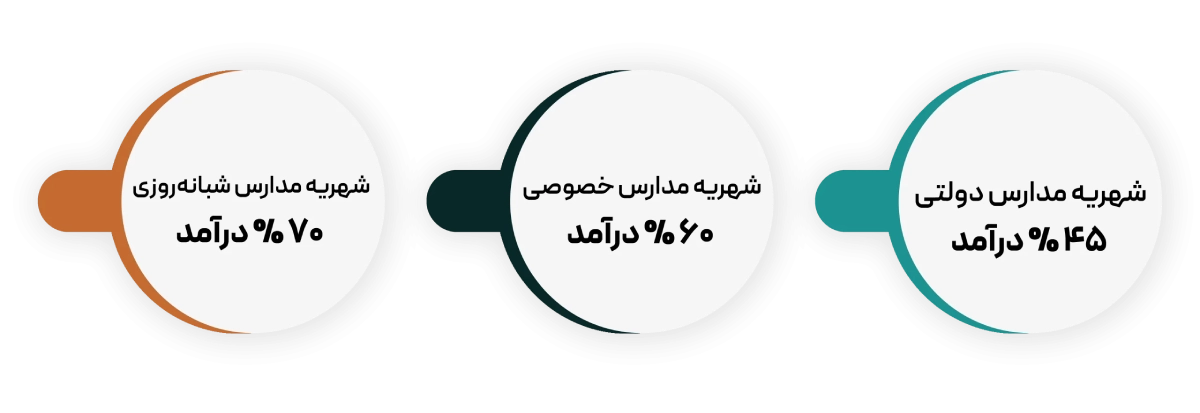
The EduCanada site run by the Government of Canada breaks down what an international student spends in a year, covering day-to-day living, transport, sport and recreation alongside tuition and books. Of that total, roughly CAD 20,000 to CAD 30,000 is tuition at a public school and CAD 40,000 to CAD 80,000 at a private school. The chart below sets out how the components compare.
Leading schools in Canada for international students
Any provincially recognised school that is a designated learning institution can be considered. The shortlist below covers schools that are used to handling international admissions and have residence places.
Upper Canada College (UCC), Toronto, Ontario
UCC in Toronto takes students through to grade 12 and has more than 1,200 pupils. It is one of Ontario’s better known independent schools. It is a boys’ school, its programme is built around progression to Canadian universities, and alongside its events and summer camps it offers boarding places to international students.
Applications for the 2026-27 school year are open through the school’s admissions page. If you want help with the application, contact Aval Visa and we can handle the enrolment side.
Columbia International College (CIC), Hamilton, Ontario
Columbia International College is one of the largest boarding schools in Canada for international students and runs the Total Care support system. Its students come from around 70 countries, and that mix is the main difference from a domestic school. Its admissions process is more flexible than most, and students with mid-range grades are considered.
Fees for grades 9 to 12 are around CAD 34,000 for six courses and CAD 50,000 for eight, with the full breakdown on the college’s fees and admissions page.
Bodwell High School
Bodwell High School, a boarding school in North Vancouver, suits students who want a multicultural environment, with pupils from across the world. Its distinguishing feature is its AP courses and university preparation programmes, which are built around entry to Canadian universities. Its admissions team also works closely with families abroad, and students with solid grades are competitive.
Tuition for ten courses is CAD 31,500 for non-Canadian students, and with academic and IT services, residence and related charges the annual total is around CAD 58,000. The school also publishes a refund policy that applies where a study permit application is refused.
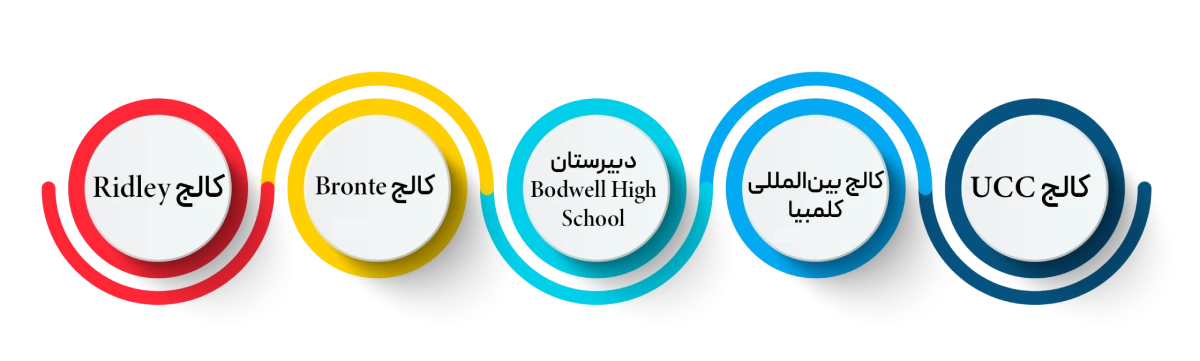
Bronte College, Mississauga, Ontario
Bronte College is another international boarding school, offering both the IB and the OSSD. Its admissions process is well supported and turnaround is usually quick. Tuition with residence for international students is around CAD 36,000, and every student has access to career and university advising for the years after graduation.
Ridley College, St. Catharines, Ontario
For grades 9 to 12, Ridley College, a boarding school in St. Catharines, offers the IB programme with full academic and athletic facilities across all year groups.
Admission is manageable for international families: the student body is genuinely international and the admissions team is used to working with applicants abroad. Fees are around CAD 53,000 a year, and senior students in grades 11 and 12 get individual university application advising.
Why these schools work for international students
The schools listed above are worth looking at because their admissions teams handle international applications routinely and their staff know what overseas families need. They also run recognised programmes such as the OSSD and the IB, which university admissions offices understand.
Because these schools take international students year after year, they have built the support around it: language support and university application advising, plus academic and pastoral help while a student settles into a new country.
A study permit issued for school can normally be extended for university study, subject to a new application and an IRCC decision each time, and parents can apply for a visitor visa to visit. Neither extension nor a visitor visa is automatic.
The full list of schools is longer than this shortlist. Contact Aval Visa and we can send a fuller list along with the admission documents each school asks for.
Read more: The best fields of study for moving to Canada
Applying for a school study permit with Aval Visa
Sending a child to school in Canada is a long process with a lot of moving parts, and the school you pick shapes what the rest of it looks like. A school that is set up for international students makes the application cleaner, and its academic advising feeds straight into the university application later.
Aval Visa works on the admission first, then the documents and forms for the study permit itself. We also handle permit extensions and visitor visa applications for parents and other family members. Advice is given by a Regulated Canadian Immigration Consultant (RCIC, CICC member), and the decision on every application is IRCC’s alone.
Frequently asked questions
- How much money do you have to show for a Canada study permit? Outside Quebec you must show CAD 23,448 in living costs for a single applicant, for applications submitted on or after 1 September 2026 (CAD 22,895 before that date), for the first year, on top of tuition and travel, with higher amounts for accompanying family members. IRCC updates this figure annually, so use the amount published when you apply rather than one quoted in an older article.
- Does every student need a PAL or a CAQ? No. Primary and secondary school students are currently exempt from the provincial attestation letter requirement that applies to most post-secondary applicants. Quebec operates its own CAQ system with separate rules. Check the current requirement for the province before you apply, since these rules have changed more than once.
- Can a high school student work while studying in Canada? No. The off-campus work rules apply to post-secondary students at designated learning institutions. Secondary school students are not authorised to work, and working without authorisation can affect a future extension or a permanent residence application.
This article is general information, not legal advice, and it describes published official rules rather than any individual case. Hadi Imani is a Regulated Canadian Immigration Consultant, licence R522575, practising in Toronto; that licence covers Canadian immigration only.