New Brunswick, on Canada’s east coast, has become a serious option for international students. Living costs are well below the national average, the province is small enough to settle into quickly, and its universities have solid academic reputations and active research programs. This guide covers the requirements, the costs and how admission works if you want to study in New Brunswick.
The province combines a range of programs with a lower cost base than Ontario or British Columbia, which is what makes it worth looking at for higher education in Canada. If you want advice on a study permit, complete our assessment form and we will review your situation.
Universities in New Brunswick: your options
Start with the universities themselves, what each is known for and what admission involves. The study permit process comes after you hold a letter of acceptance.
University of New Brunswick (UNB)
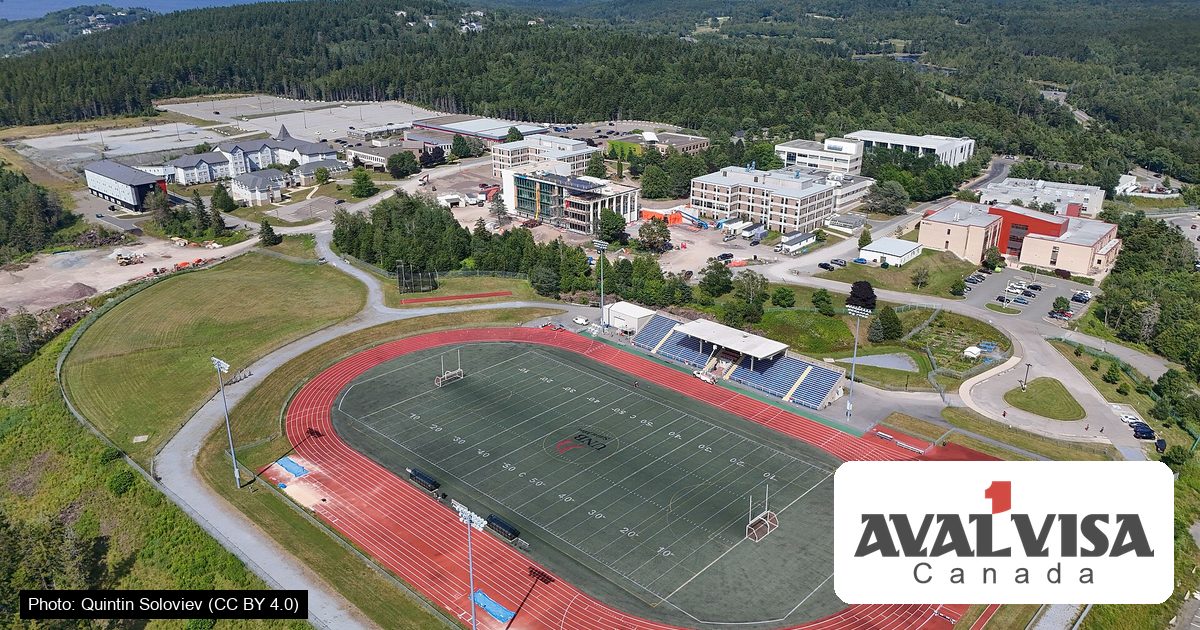
The University of New Brunswick has campuses in Fredericton and Saint John and is the most established university in the province. Founded in 1785, it is one of the oldest English-language universities in North America, and it sits in the 600-700 band of the main global rankings.
UNB admits students across most disciplines and is best known for engineering, computer science and law. Tuition for international students generally runs between 15,000 and 20,000 CAD a year depending on the program, and funding and scholarships are available to applicants with strong academic records. Check the current figure for your specific program on the university’s website, since tuition is set annually.
Admission requirements at UNB
Apply before the program deadline and pay the application fee. That fee covers the assessment of your file and is not refunded if you are not admitted.
You will need your academic documents, transcripts and an accepted English test result such as IELTS Academic or TOEFL. For graduate study, contacting potential supervisors before you apply is worth the effort. UNB accepts applications at the bachelor’s, master’s and doctoral levels. Once you hold a letter of acceptance you can move on to the study permit application.
If you are applying for funding at the master’s or doctoral level, prepare your transcripts and research background for the departmental funding review, and approach supervisors whose grants can support an international student.
Université de Moncton
Université de Moncton is the largest French-language university in Canada outside Quebec, with campuses in Moncton, Edmundston and Shippagan. It is strongest in the humanities, arts, language studies, social sciences, management, business and marketing.
International tuition runs roughly 14,000 to 18,000 CAD a year depending on the faculty, program and level. Applicants with strong records and a good French test result, such as DELF or DALF, can apply for the university’s scholarships and funding.
Admission requirements at Université de Moncton
Have your documents translated and submitted to the department before the deadline. The department will normally tell you exactly what it needs, which typically means full academic records, transcripts, a language test result and, for some programs, a GRE score. Certain programs also require an interview or an entrance test, and this is set out in the admission conditions. Once you hold a letter of acceptance you can apply for a study permit. Note that a spouse’s open work permit is no longer available to every student’s partner: IRCC now limits spousal open work permits to the spouses of students in master’s programs of at least 16 months, doctoral programs and certain professional programs, so confirm eligibility against the current rule before you plan on it.
Mount Allison University
Mount Allison University, in Sackville, is a small primarily undergraduate university with a long-standing reputation for fine arts, the humanities and the sciences. It has consistently ranked at or near the top of the undergraduate category in Canadian university rankings.
Tuition is higher than at the larger institutions, generally 20,000 to 25,000 CAD a year for international students. Apply before the deadline so that you have your letter of acceptance in time to submit a study permit application, which itself takes several weeks to process.
Admission requirements at Mount Allison
Admission is straightforward in structure: academic documents, transcripts and an English test result such as IELTS Academic or TOEFL. Some programs ask for a portfolio or an audition, and SAT or ACT scores may be considered for applicants from certain school systems, though they are not generally required. Note that Mount Allison focuses on undergraduate education and does not offer doctoral programs, so if you are planning graduate study you should be looking at UNB or Université de Moncton.
St. Thomas University
The fourth option is St. Thomas University in Fredericton. It is known for the liberal arts: social sciences, criminology, history, philosophy, human rights and native studies.
St. Thomas is a primarily undergraduate university, offering bachelor’s degrees in the arts, education and social work to about 1,900 students. It does not offer doctoral programs. Its emphasis is on small classes, interdisciplinary work and subjects connected to human rights, social justice and the environment.
Admission requirements at St. Thomas
Submit your academic documents, transcripts and language test result through the university’s application portal. Small class sizes, direct access to faculty, a well-resourced library, extensive student support and strong links with local organisations make St. Thomas a sensible choice for students who want to settle in New Brunswick rather than pass through it.
Comparing the New Brunswick universities
A short comparison helps. Tuition at St. Thomas and Mount Allison is broadly similar, and in both cases the figure moves with the program and level. Université de Moncton is generally the cheapest of the four.
Tuition across Canadian universities varies by faculty and by degree level, and is revised every year. Check the tuition schedule for your exact program rather than relying on a range.
Université de Moncton teaches in French. The other three teach in English, so French is not a requirement unless you choose Moncton.
All four offer scholarships and bursaries to international students that can reduce costs meaningfully, so submit your academic records with the scholarship application. Admission is handled online at every institution, and you upload transcripts, language scores and, for some programs, reference letters and a personal statement.
Applying for a Canadian study permit: what matters
Canada attracts international students because of the quality of its institutions, the work options during and after study, and a safe multicultural environment. The study permit, however, is assessed on its own terms.
The first requirement is a letter of acceptance from a designated learning institution. Most study permit applications must include a provincial or territorial attestation letter (PAL/TAL) from the province where you will study. From 1 January 2026, students starting a master’s or doctoral program at a public designated learning institution no longer need one. IRCC also caps the number of study permit applications it accepts each year, and each province and territory receives an allocation. Your application then needs identity, academic and financial documents.
Applications are submitted to IRCC, not to an embassy. Beyond the money, the officer has to be satisfied that you are a genuine student and that you will leave Canada at the end of your authorised stay. A clear study plan explaining why this program, why Canada, and what you intend to do afterwards is what addresses that, along with police certificates and a medical exam where required.
Documents for a Canadian study permit
| Document | Details |
|---|---|
| Official letter of acceptance | From the university or educational institution |
| Proof of funds | Bank letter and other proof of financial capacity; IRCC sets a cost-of-living amount that is updated annually - check the current figure on the study permit page |
| Academic credentials | Originals and translations |
| Transcripts | Originals and translations |
| Language test result | IELTS Academic or TOEFL |
| Identity documents | Passport + birth certificate and national ID card |
| Marriage certificate | For married students |
| Completed visa application forms | Online |
| Payment of visa and processing fees | Online |
Cost of living and studying in New Brunswick
Budget is a large part of the decision. Living costs in New Brunswick are lower than in most Canadian provinces, and they move a good deal with your choices. Fredericton is cheaper than Moncton or Saint John, and a student can live reasonably on 1,500 to 2,000 CAD a month there.
Studying in New Brunswick with Aval Visa
Aval Visa is a Toronto-based immigration consultancy led by a Regulated Canadian Immigration Consultant. We work with students from the admission stage through to the study permit application: shortlisting programs, preparing the documents, drafting the study plan and submitting a complete file.
We can also advise once you are in Canada, on extending your status and on the Post-Graduation Work Permit, whose eligibility now depends on your level of study and, for most college programs, on the field of study and a language test result. Every decision rests with IRCC, and no consultant can promise a result, but a well-prepared application is assessed on its merits rather than refused for gaps.
Frequently asked questions
1- Do I need a language test to study in New Brunswick?
Yes. Canadian universities require proof of language ability. Without it you will usually be refused or given a conditional offer tied to completing a language program, and you will still have to sit a recognised test. IELTS Academic and TOEFL are the standard English tests; Université de Moncton requires French.
2- Is New Brunswick a good place to study?
It is a reasonable choice. The province has four publicly funded universities, two public college systems with campuses across the province, and a number of private career colleges. Costs are lower than in the larger provinces and the student population is small enough that support services are accessible.
3- Is studying in New Brunswick expensive?
Less than in Toronto or Vancouver. Tuition varies by institution and program, and living costs vary by city. Check the published tuition schedule of the institution you are applying to, and budget at least the cost-of-living amount IRCC requires for a study permit, which is revised each year.
This article is general information, not legal advice, and it describes published official rules rather than any individual case. Hadi Imani is a Regulated Canadian Immigration Consultant, licence R522575, practising in Toronto; that licence covers Canadian immigration only.