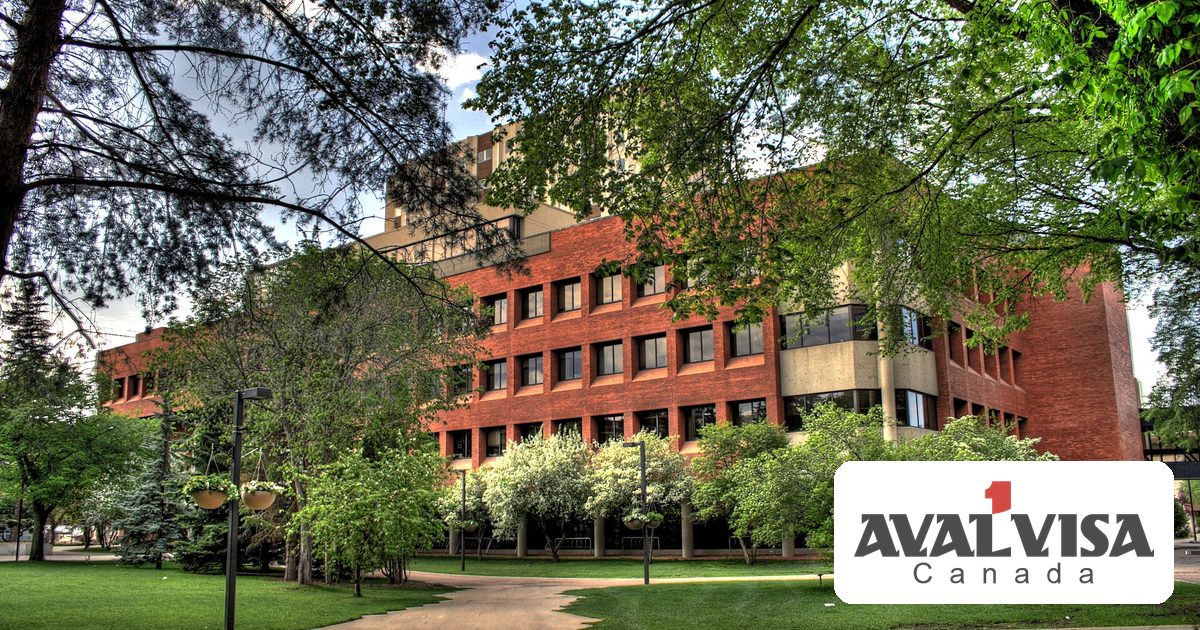
The University of Alberta is one of the oldest and most established universities in Alberta, Canada, known for the strength of its teaching and its research output. It offers a broad range of programs and a large international community, which makes it a common choice for anyone considering studying in Canada.
Well-equipped facilities, a deep research base and a substantial amount of student funding are the practical advantages. If you want a demanding academic environment in a large Canadian city, the University of Alberta is worth a close look.
An overview of the University of Alberta
The University of Alberta describes its purpose as building a better future through teaching and research. It is committed to equity, diversity and inclusion, and it recognises the identities, languages, cultures and worldviews of Indigenous peoples. The university sits among the top five in Canada and inside the leading group of research universities worldwide, and it generates roughly CAD 19.4 billion in annual economic impact in the province of Alberta alone.
More than 44,000 students and 13,000 staff work across five campuses, including one rural campus and one francophone campus, in learning, research, creative work, innovation and community engagement.
The university runs undergraduate, graduate and professional programs across 17 faculties and 3 colleges, holds more than CAD 550 million in sponsored research revenue, and has over 300,000 alumni around the world.
Campuses and addresses
1. North Campus, the main campus
Address: 11011 – 88 Avenue, Edmonton, Alberta, Canada T6G 2G5
North Campus on Google Maps:
This is the largest and principal campus, with more than 150 buildings, set along the North Saskatchewan River.
2. Campus Saint-Jean
Address: 8406 – 91 Street, Edmonton, Alberta
Campus Saint-Jean on Google Maps:
A French-language campus in the Bonnie Doon neighbourhood, about five kilometres southeast of North Campus, delivering programs in French.
3. South Campus
Near Fort Edmonton Park, home to research centres and the university’s main athletics facilities.
4. Enterprise Square
Address: 104 Street and Jasper Avenue, downtown Edmonton
A restored heritage building used for specialised programs and professional education.
5. Augustana Campus
Address: 4901 – 46 Avenue, Camrose, Alberta
A small campus in Camrose, about 100 kilometres southeast of Edmonton, offering arts and sciences in a close-knit setting.
The University of Prince Edward Island and McMaster University are two other Canadian universities international students often shortlist.
University of Alberta rankings
The University of Alberta continues to place among the leading universities in Canada and internationally. The table below sets out its position in the major global and national rankings.
| Ranking / indicator | World rank (2025-2026) | Rank in Canada |
|---|---|---|
| QS World University Rankings | 94 | 4 |
| Times Higher Education (THE) | 116 | 4 |
| Academic Ranking of World Universities (ARWU) | 106 | 5 |
| Petroleum engineering ranking | 2 | 1 |
| Mining engineering ranking | 16 | — |
| Sport science ranking | 10 | — |
| Nursing ranking | 14 | — |
| Most international universities (THE) | 46 | 4 |
Programs at the University of Alberta
The University of Alberta is one of the largest universities in Canada, with more than 400 programs at bachelor’s, master’s and doctoral level. They are grouped into five broad areas:
- Health sciences: medicine, dentistry, nursing, pharmacy, physiotherapy and kinesiology
- Natural and applied sciences: engineering, computing science, mathematics, physics, chemistry, biology and environmental science
- Social sciences and humanities: psychology, sociology, philosophy, political science, history and linguistics
- Agriculture and life sciences: agriculture, nutrition, ecology, forestry and natural resources
- Education: elementary and secondary education, educational psychology and educational leadership

The university offers bachelor’s, master’s and doctoral degrees along with shorter certificate and diploma programs. For the full list, see the official University of Alberta website.
University of Alberta admission requirements
Undergraduate admission
- Completion of the required senior secondary subjects, usually Grade 12, with grades that meet the standard for your chosen program
- Proof of English proficiency through an accepted test such as IELTS or TOEFL
- An admission average that meets the competitive cut-off for the program
- A non-refundable application fee, which differs for Canadian and international applicants; check the current amount on the University of Alberta admissions site
Graduate admission
- A bachelor’s degree for master’s entry, and normally a master’s degree for doctoral entry
- A strong grade average, typically at least 3.0 on a 4.0 scale for master’s programs and 3.5 for doctoral programs
- Supporting documents such as a CV, letters of reference and, for some programs, GRE or GMAT scores
- Proof of English proficiency, as at undergraduate level
How to apply to the University of Alberta
If you want to study at the University of Alberta, work through these steps in order.
Step 1: choose a program and check the requirements
Start with the program. The university offers more than 400 of them across every level. Before you go any further, read the specific admission requirements for that program: the required subjects, the admission average, the language test scores accepted and any additional documents. Applying to a program you clearly do not meet the requirements for wastes the fee.
Step 2: assemble your documents
You will need official academic transcripts, an English test result, a CV, a statement of intent, letters of reference and, in some programs, a portfolio or a research proposal. These documents are the basis on which you are assessed, so they need to be accurate and complete.
- Official academic transcripts
- English language test results (TOEFL, IELTS, Duolingo and others)
- Curriculum vitae (CV)
- Statement of intent
- Letters of reference
- Portfolio or research proposal, for certain programs
Step 3: register in the right application system
Graduate applicants apply through the university’s GSMS system. Undergraduate applicants apply through ApplyAlberta or the university’s own admissions site. These systems are where you submit and track everything.

Step 4: pay the application fee
The application is not processed until the fee is paid. The amount differs for international and Canadian undergraduate applicants and for graduate applicants. The fee is non-refundable and the university updates it from time to time, so check the current amount on the university’s application-fee page before you pay.
Step 5: upload documents through Launchpad
Once the application is submitted, upload your documents in Launchpad. The same portal shows the status of each document and lets you supply anything further the university asks for.
Step 6: monitor the application
Check Launchpad regularly. If the university requests additional documents or emails you a question, respond quickly. Slow replies are the most common cause of a delayed decision.
Step 7: receive and accept the offer
If you are admitted, the offer arrives through Launchpad. Read the conditions attached to it, then accept it to move to registration and, for international students, to the deposit and study permit stage.
Tuition and living costs
Tuition for international students depends on the program and the faculty. The table below gives a general picture of costs at the University of Alberta. All figures are in Canadian dollars (CAD).
| Cost type | Approximate amount (CAD) |
|---|---|
| Tuition | 33,968 - 42,707 |
| Housing and meal plan | 14,199 - 17,967 |
| Books and study supplies | 1,200 |
| Health insurance | 600 |
| Public transit (U-Pass) | 360 |
| Personal and leisure expenses | 2,400 |
| Total costs | 52,727 - 65,234 |
These are first-year estimates. Your actual cost will vary with the program, your housing choice and how you live.
Renting a home in Canada as a newcomer is the other large cost to budget for, and rent in Edmonton varies widely by neighbourhood.
University of Alberta scholarships
| Scholarship type | Value (CAD) | Conditions and notes |
|---|---|---|
| International Admission Scholarship | Up to 5,000 | Automatic assessment based on high school admission average. |
| Regional Excellence Scholarship | Up to 5,000 | For students from designated regions with a high admission average. |
| Gold Standard Scholarship | Up to 6,000 | For the top 5% of students in each faculty, based on admission average. |
| President's International Distinction Scholarship | Up to 120,000 | Paid over 4 years, for students with outstanding academic performance and leadership qualities. |
| International Leader Scholarship | Up to 10,000 | For students with outstanding leadership qualities. |
| International Baccalaureate Global Citizen Scholarship | Up to 40,000 per year | For International Baccalaureate diploma students; renewable for 4 years. |
| Schulich Leader Scholarship | 100,000 or 120,000 | For students with entrepreneurial qualities in STEM fields, over 4 years. |
| Loran Award | 100,000 | A 4-year award for students with leadership qualities and community service. |
Is the University of Alberta a good choice?
The University of Alberta combines solid teaching, a serious research base and a wide range of internal funding, which makes it a workable option for international students. The admission process is published in detail and the range of programs is broad enough to suit most academic goals.
Tuition and living costs in Canada are significant, but scholarships in Canada and departmental funding can reduce them, particularly at graduate level where assistantships are common. Student services, housing support and a large alumni network are practical advantages once you arrive.
One planning point for anyone applying from abroad: admission to a university is a separate decision from a study permit. Canada now caps the number of study permits it issues and requires most applicants to include a provincial attestation letter with the permit application. Being admitted does not mean a permit will be issued, and IRCC decides each case on its own facts.
Frequently asked questions
- How long does a University of Alberta admission decision take?
Most applications from Canadian high school students are assessed within one to two weeks, provided every required document is in. International applications and graduate applications usually take longer, and graduate decisions depend on the department and on supervisor availability. - Why do international students choose Alberta?
Alberta has strong universities, a labour market with real demand, lower personal income tax than most provinces, and easy access to the Rocky Mountains. Graduates of eligible programs may also qualify for a Post-Graduation Work Permit, although eligibility now depends on the institution, the level of study and, for many college programs, the field of study. Check the criteria against your specific program before you enrol. - How much is the tuition deposit?
Most new international students pay a tuition deposit of CAD 5,000 to confirm their place and to trigger the provincial attestation letter they need for the study permit application. Students already in Canada normally pay CAD 1,000. Confirm the current amount with the university, as deposits are reviewed periodically.
This article is general information, not legal advice, and it describes published official rules rather than any individual case. Hadi Imani is a Regulated Canadian Immigration Consultant, licence R522575, practising in Toronto; that licence covers Canadian immigration only.