


Canada Family Sponsorship

Canada Family Sponsorship

Bring your spouse, children or parents to live in Canada

If you are a Canadian citizen or a permanent resident, Canada family sponsorship lets you support a close relative so they can live in Canada as a permanent resident. You must meet the eligibility rules, show you can support them financially and sign a binding undertaking. Each family category has its own conditions, and every decision rests with IRCC.

Family application

Assessed as one family unit

Language test

Not required

Typical processing

8 to 24 months

Government fees

CAD 1,260 plus CAD 85 biometrics

Other ways to immigrate to Canada

آیکون مهاجرت تحصیلی

Work routes

A job offer from a Canadian employer, or a Canadian work permit, is another way into Canada. Canadian work experience also counts towards several federal and provincial permanent residence programmes.

آیکون مهاجرت تحصیلی

Business and investment routes

This group covers self-employed, business investor and entrepreneur programmes. Applicants are expected to run or invest in a Canadian business in manufacturing, services or technology, or to contribute financially to the Canadian economy.

آیکون مهاجرت تحصیلی

Study routes

Canada is a leading destination for international students, with strong universities and colleges and post-graduation work options.

Canada family sponsorship at a glance

Who can sponsor a family member to Canada?

  • At least 18 years old
  • A Canadian citizen, a permanent resident, or a person registered under the Indian Act
  • Living in Canada, or, if you are a citizen abroad, able to show you will return once the sponsored person is approved
  • Able to support the sponsored person financially, on top of your own household costs
  • Not receiving social assistance, except for a disability
  • No removal order, no undischarged bankruptcy and no conviction that bars you from sponsoring
  • No immigration debt in default and no earlier sponsorship undertaking left unmet

What are the benefits of Canada family sponsorship?

  • Living in Canada with your spouse, children, parents or grandparents
  • Canadian permanent residence for the sponsored person if the application is approved
  • Access to public healthcare, schooling and social benefits, subject to provincial rules
  • No language test, job offer or work experience required
  • A defined family route to permanent residence in Canada

Canada sponsorship document checklist

  • All sponsor and applicant forms, completed and signed
  • Proof of income and of where that income comes from
  • Notices of Assessment for the last three tax years
  • The signed undertaking
  • The sponsorship agreement
  • Passports and identity documents
  • Recent photographs and biometrics
  • Proof of the family relationship, such as a marriage certificate or birth certificates
  • Immigration medical examination results
  • Police certificates
  • Receipts for the government and biometric fees

The route to permanent residence:

  • The sponsorship and permanent residence applications are filed together
  • IRCC assesses the sponsor first, then the applicant’s documents
  • Further documents, an interview or a new medical may be requested
  • A decision is made on the file
  • If approved, Canadian permanent residence (PR) is issued to the sponsored person
  • Your family begins life together in Canada

Transparent government fees

Sponsorship application fee (CAD)

CAD 90

Processing fee for the sponsored adult (CAD)

CAD 570

Right of permanent residence fee, per adult (CAD)

CAD 600

Processing fee for a dependent child under 22 (CAD)

CAD 180

Biometrics fee (CAD)

85$

How we work with you

  1. 1Assessment of your case and the right route

  2. 2Written retainer agreement and file opening

  3. 3Document preparation, certified translation and biometrics booking

  4. 4Decision, arrival and settlement support

Frequently asked questions

Can the sponsored person work in Canada while the application is processed?

Not automatically. A spouse or common-law partner who applies from inside Canada under the Spouse or Common-Law Partner in Canada class can apply for an open work permit, which is normally issued once the application passes the first eligibility check. Applicants outside Canada have no such entitlement and must qualify for a work permit in their own right, usually an employer-specific permit supported by an LMIA or an LMIA-exempt job offer.

Yes. Applications are refused for income below the minimum necessary income where that test applies, for a relationship an officer does not accept as genuine, for incomplete forms, or for medical, criminal or security inadmissibility. Submitting false financial documents is misrepresentation and normally carries a five-year bar under section 40 of the Immigration and Refugee Protection Act. A refused family class sponsor usually has a right of appeal to the Immigration Appeal Division; judicial review at the Federal Court is work for a Canadian lawyer rather than a consultant.

Yes. Once they hold permanent residence, they can apply for Canadian citizenship after being physically present in Canada for at least 1,095 days in the five years before applying, provided they have filed the required tax returns and meet the language and knowledge requirements for their age group.

Quebec runs its own selection. As well as meeting the federal requirements, the sponsor signs a separate undertaking with the Quebec ministry (MIFI), which sets its own income scale and its own undertaking periods. Quebec must issue a Certificat de selection du Quebec before permanent residence can be granted.

Do you meet these requirements?

Have your situation reviewed before you file. A careful check of your status, your income and your relationship evidence shows where the weak points are and what an officer will look for. No representative can promise an outcome, but a well-prepared file avoids the errors that lead to avoidable refusals and repeat fees.

A complete guide to Canada family sponsorship

Family sponsorship lets eligible Canadian citizens, permanent residents and people registered under the Indian Act support a close relative to come to Canada as a permanent resident. It is not an invitation letter. It is a formal application in which you take on a legal and financial undertaking, and in which IRCC assesses both you and your relative. The guide below sets out the Canada family sponsorship requirements as they stand in 2026.

Canada family sponsorship

Who can be a sponsor?

To sponsor a close family member, you must meet all of the following:

  • Be at least 18 years old
  • Be a Canadian citizen, or
  • Be registered under the Indian Act, or
  • Hold Canadian permanent residence (PR)

Permanent residents must be living in Canada when they apply and when the decision is made. A Canadian citizen living abroad may sponsor a spouse, partner or dependent child, but has to show they will live in Canada once that person becomes a permanent resident. You also have to show you can cover the sponsored person’s living costs on top of your own, which is why people receiving social assistance for a reason other than disability cannot act as a sponsor.

Who cannot sponsor?

You cannot apply as a sponsor if any of the following applies to you:

  • You are in prison, on parole or on probation
  • You are subject to a removal order
  • You are an undischarged bankrupt
  • You receive social assistance for a reason other than disability
  • You have been convicted of a violent or sexual offence, or of an offence causing bodily harm to a relative
  • You have failed to pay court-ordered support, such as child maintenance
  • You are in default on an immigration loan, a performance bond or a previous sponsorship undertaking
  • You sponsored a spouse or partner and fewer than three years have passed since they became a permanent resident
  • You became a permanent resident yourself through spousal or partner sponsorship less than five years ago

Who cannot sponsor a family member to Canada

Which family members can you sponsor?

Sponsorship starts with the sponsor. You apply to IRCC for approval to support your relative, and the relative’s permanent residence application is normally filed at the same time. Your relative will need police certificates, an immigration medical examination and biometrics. Only certain relatives qualify, and they are listed below.

Sponsoring a spouse, common-law or conjugal partner

You can sponsor a legally married spouse, a common-law partner you have lived with continuously for at least 12 months, or a conjugal partner with whom you have been in a committed relationship for at least a year but could not live together or marry. The 12-month rule applies to common-law partners only, not to a married spouse. You must show IRCC that:

  • The relationship is genuine and was not entered into mainly to gain status in Canada
  • If you live outside Canada, that you will live in Canada once your partner becomes a permanent resident
  • Any waiting period left over from an earlier sponsorship has passed

Sponsoring dependent children

You can sponsor your own or your partner’s dependent children, biological or adopted, provided the child is under 22 and has no spouse or common-law partner.

Note: a child aged 22 or over qualifies only if they have depended substantially on a parent’s financial support since before the age of 22 and cannot support themselves because of a physical or mental condition.

Important update: IRCC is not accepting new parent and grandparent sponsorship applications. Until further notice the interest to sponsor form is closed and no new invitations are being issued; only applications already in the system are being processed. The pause does not affect spouse, partner or dependent child sponsorship, which remain open. If you want your parents to spend time in Canada meanwhile, the super visa is the practical option: a multiple-entry visa valid for up to 10 years, allowing a stay of up to 5 years per entry and an extension of up to 2 further years from inside Canada.

Sponsoring parents and grandparents

When the programme is open you can sponsor your parents or grandparents, provided that:

  • You meet the minimum necessary income for each of the three tax years before you apply
  • You sign the undertaking and accept financial responsibility for them for 20 years
  • You are selected in the randomised Parents and Grandparents Program invitation round

Sponsoring other relatives

Other relatives, such as a brother, sister, nephew or niece, sit outside the usual family class. They can only be sponsored in one narrow case, where:

  • You have no living spouse, partner, child, parent, grandparent, aunt or uncle who is a Canadian citizen or permanent resident
  • There is no other relative you could sponsor instead

Family class sponsorship to Canada

Related reading: while parent sponsorship is paused the super visa is the practical route, and its income rule has just been relaxed: the new super visa income rules

Benefits of sponsoring a family member

Alongside a route to Canada, family sponsorship offers the following.

  • Living in Canada with your parents and other close family
  • Permanent residence for the sponsored person if the application is approved
  • Access to healthcare, schooling and other public services, subject to provincial rules
  • No language test and no job offer, unlike a study permit or a work permit

Income requirements for a Canadian sponsor

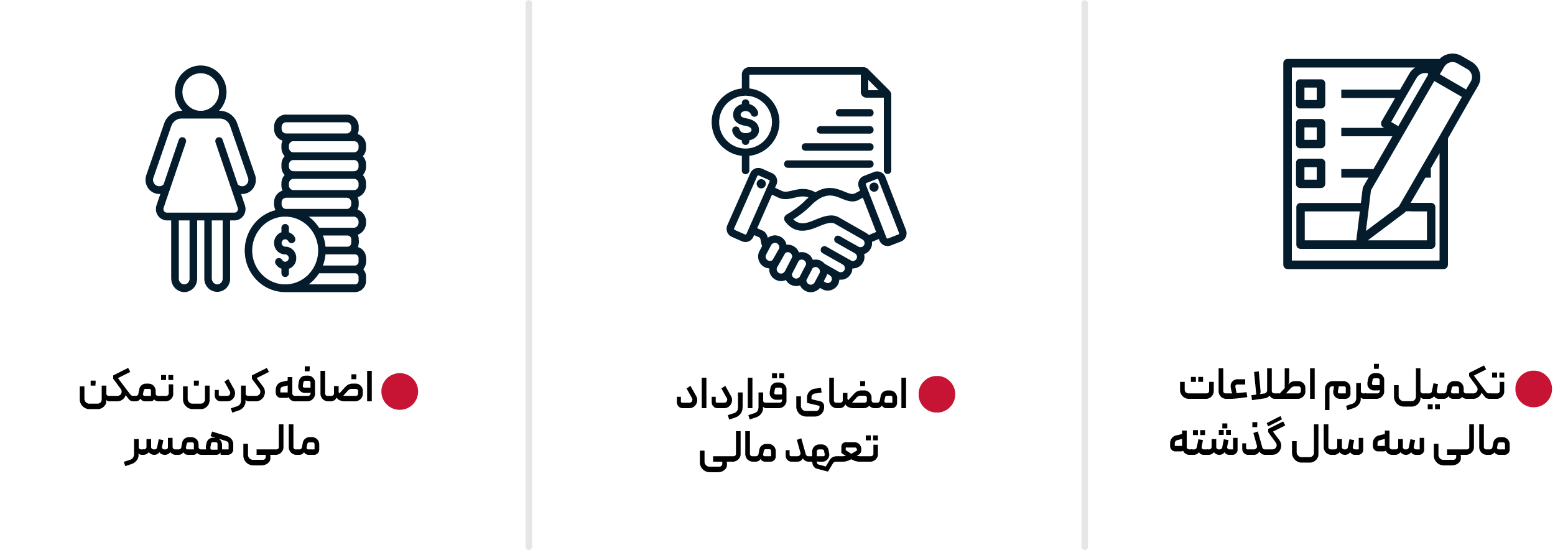
Income is one of the main tests in Canada family sponsorship. A sponsor bringing parents or grandparents must show they can cover their living costs, which means meeting the minimum necessary income (MNI) that IRCC sets for the size of the household. For the parents and grandparents programme the threshold is the low income cut-off plus 30 per cent, and it has to be met in each of the three tax years before the application.

You prove this with the Notice of Assessment issued by the Canada Revenue Agency for those three years, and by signing the undertaking. The undertaking commits you to supporting the sponsored person for between three and 20 years, depending on the relationship, while still covering your own household. Quebec applies its own income scale.
Income requirements for a Canadian sponsor

Note: there is no minimum necessary income test when you sponsor a spouse, partner or dependent child, unless that child has dependent children of their own. You must still show that you are not receiving social assistance and that you can meet the undertaking.

What does the sponsorship undertaking commit you to?

The undertaking is a binding contract with the Government of Canada. For parents and grandparents it runs for 20 years, and it commits you to paying for:

  • Basic needs such as housing, food, clothing and other day-to-day costs
  • Health and dental care that public health insurance does not cover

Once signed, the undertaking stands even if the relationship breaks down, if you divorce, if your income falls or if you become bankrupt. If the sponsored person claims social assistance while the undertaking is running, the province can recover that money from you. The table below sets out how long the undertaking lasts outside Quebec; in Quebec the undertaking is signed with MIFI and runs for different periods, including 10 years for a parent or grandparent:

Family relationshipLength of financial undertaking
Spouse or common-law partner3 years
Child under 2210 years or until age 25, whichever comes first
Dependent child aged 22 or over3 years
Parents or grandparents20 years

How to apply for Canada family sponsorship

If you are eligible, start by gathering your documents, particularly the financial ones, and completing the forms. The relationship evidence has to be strong enough to leave no doubt about the family tie, because gaps in the documents and unexplained circumstances are a common reason for refusal.
Next, file the sponsorship and permanent residence applications together. If you are planning to sponsor parents or grandparents, note that intake is currently closed and nothing can be filed until IRCC announces a new round.

Once IRCC receives the application it assesses the sponsor first, then the applicant. An officer may ask for further documents, an interview or a new medical, and the decision is communicated in writing. Timelines depend on the office handling the file.

Canada family sponsorship processing times

Processing time depends on the relationship and on where the application is handled:

Family relationshipApproximate processing time
Spouse or common-law partner10 to 12 months
Dependent child8 to 10 months
Parents or grandparents20 to 24 months

Note: these figures are IRCC estimates. They move with application volumes, the country the applicant is in and how complete the file is when it arrives.

Canada sponsorship fees

Fee typeFee in Canadian dollars
Sponsorship application feeCAD 90
Right of Permanent Residence Fee, adultCAD 600
Processing fee for the sponsored personCAD 570
Dependent child under 22CAD 180
BiometricsCAD 85

Documents for a Canada sponsorship application

  • All forms, completed and signed
  • Proof that you meet the income requirement
  • Evidence of where your income comes from
  • The signed undertaking
  • The sponsorship agreement
  • Passports and all identity documents
  • Recent photographs and biometrics
  • The permanent residence application of the sponsored person
  • Proof of the sponsor’s status, such as a PR card, a Canadian birth certificate or a Canadian passport
  • Proof of the family relationship, such as a marriage certificate or birth certificates
  • Documents from any previous marriage, where one applies
  • Military service records, where these apply
  • Immigration medical examination results
  • Police certificates
  • Receipts for the government and biometric fees

Sponsoring parents, grandparents and siblings: forms, fees and filing

The points below apply to parent and grandparent files. They add the IRCC form numbers, two fee details, the filing sequence and the Quebec processing figure that the sections above describe only in general terms.

Which IRCC forms you complete

The sponsor completes:

  • IMM 1344, the sponsorship application
  • IMM 5768, financial and undertaking information

The parent or grandparent being sponsored completes:

  • IMM 0008, the permanent residence application
  • IMM 5669 (Schedule A), personal and security history
  • IMM 5406, the family information form

Two fee details to note

  • If the Right of Permanent Residence Fee is deferred and paid later, the amount payable at filing is CAD 660 per sponsored parent or grandparent.
  • The biometrics fee is capped at CAD 170 for a family of two or more applying together.

How a parent or grandparent application is filed

When IRCC announces a registration period, the sequence is:

  1. Complete the Interest to Sponsor form and upload it to the IRCC portal during the registration period.
  2. Wait for IRCC to send an invitation to apply. Only with this invitation can you proceed.
  3. Complete the online permanent residence application in the Permanent Residence Portal, pay the fees and submit all required supporting documents.

Processing time in Quebec

For parents and grandparents, the processing time for files destined for Quebec is 48 months, double the figure for the other provinces.

Your own parents only

Sponsorship is limited to your own parents or grandparents. Parents of a spouse must be sponsored separately, after the spouse gains permanent residence.

Divorced or remarried parents

Can divorced grandparents still be sponsored? Yes. Divorced grandparents must submit separate applications.

If divorced parents remarry, can the new spouse also be sponsored? Yes. The current spouse of a remarried parent can apply for sponsorship through the same programme.

Two questions come up often and are not answered directly in the sections above: whether a brother or sister can ever be sponsored, and what a sponsor should do if their finances change after the application has been filed. Both answers are short.

Can you sponsor a brother or sister?

Under the regular family sponsorship programme, siblings do not qualify. There is one exception. You may sponsor a brother or sister only if they are:

  • orphaned,
  • under 18, and
  • not married.

All three conditions apply together. A brother or sister who is 18 or older, or who is married, does not qualify under this exception, and neither does one who is not orphaned. Otherwise, a sibling can only be considered through the narrow “other relatives” case set out earlier on this page.

One practical note on that route: applications for other relatives may require detailed documents and can take a long time, so allow for this when you plan.

What happens if your financial situation changes after applying?

Filing the application does not end your responsibilities as a sponsor. You must continue to meet your obligations while the file is being processed. If you lose your job during that time, you should provide one of the following:

  • evidence of savings, or
  • evidence of new employment.

Failure to meet your financial responsibilities can lead to the application being refused. Keep your proof of savings or of the new job ready so that you can provide it.

In short

  • Siblings: not eligible under the regular programme, except an orphaned brother or sister who is under 18 and not married.
  • Other relatives: expect detailed documents and a long processing time.
  • Job loss after filing: keep meeting your obligations and provide evidence of savings or new employment; otherwise the application can be refused.

Sponsorship support from Aval Visa

Family sponsorship is a demanding application with a long financial commitment attached, and the rules change from year to year. If you are not sure whether you meet the current requirements, speak to the Aval Visa team.
Hadi Imani is a Regulated Canadian Immigration Consultant (RCIC #R522575), authorised by the College of Immigration and Citizenship Consultants to advise and represent clients on Canadian immigration matters.
We assess your eligibility, prepare and check the documents, complete the forms, arrange biometrics and stay with the file until a decision is issued. We cannot influence or guarantee that decision. It rests with IRCC, and with the Quebec ministry for files destined for Quebec.

Leave a Reply

Your email address will not be published. Required fields are marked *

Free assessment
Hadi Imani — Regulated Canadian Immigration Consultant — RCIC #R522575 · licence covers Canadian immigration only  ·  Verify this licence on the CICC Public Register ↗
Weekly immigration newsletter
One email a week. Unsubscribe anytime.
Team sign-in — Work Desk