The Netherlands Blue Card is the EU work and residence permit for skilled professionals moving to the Netherlands for work. Applicants who qualify are specialists in fields such as IT, engineering, medicine and comparable disciplines.
To use it you need a recognised university degree or its equivalent and a job offer from a Dutch employer. What the card buys you is a long-term residence path, a straightforward route for your family and access to Dutch social and economic protections. Here is how it works, and where it fits in the wider picture of immigrating to the Netherlands.
What is the Netherlands Blue Card?
The Dutch Blue Card is a work permit issued to nationals of countries outside the European Union. It lets skilled professionals live and work in the Netherlands. It is worth being precise about one thing: the Blue Card is a temporary work and residence permit tied to your employment, not a permanent status, so the comparison people often draw with a US green card does not hold.
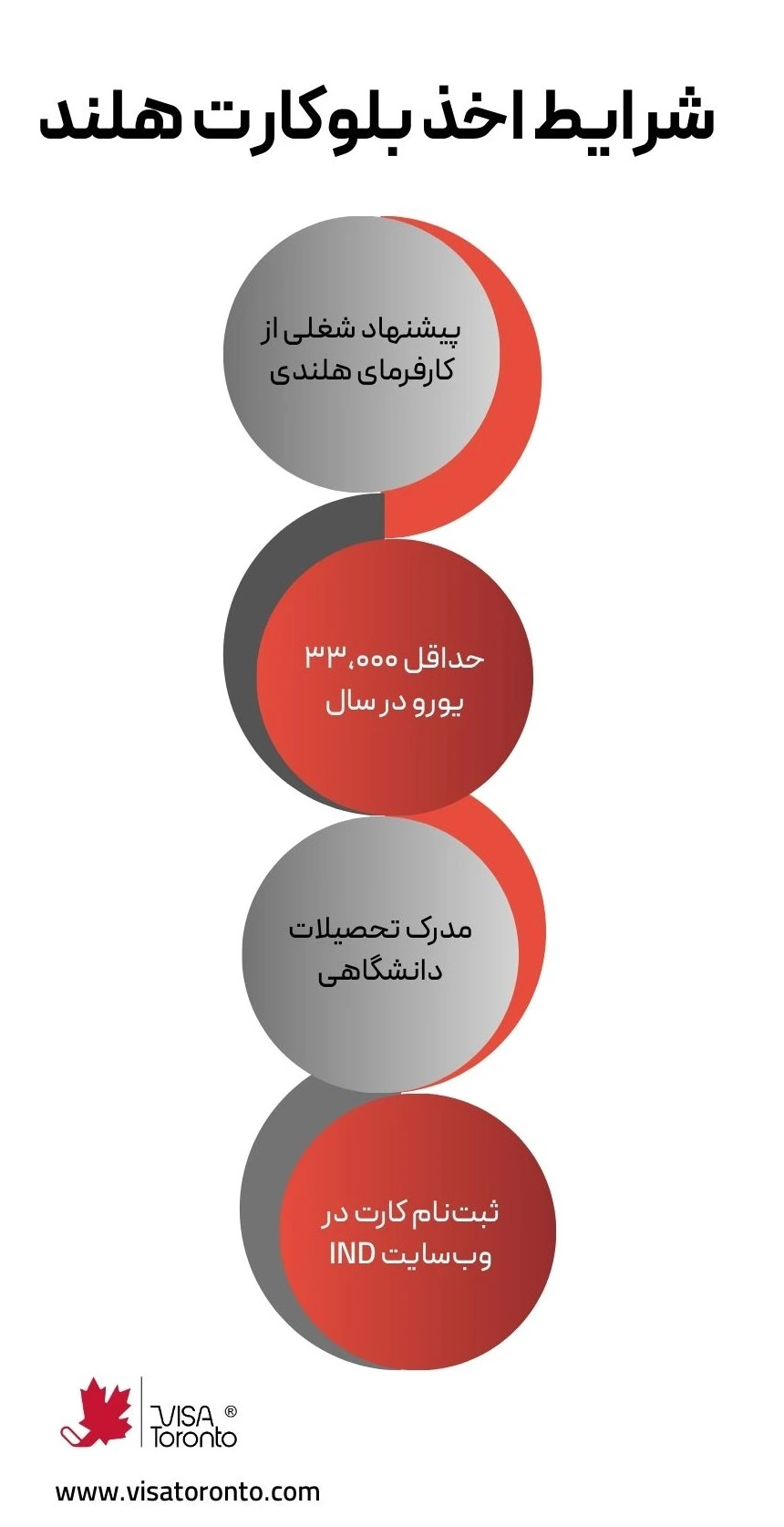
The card suits applicants with a specialist skill set and a university education who want to work in the Netherlands. It requires a job offer from a Dutch employer and a gross salary at or above the threshold the Dutch immigration service (IND) publishes.
Applicants in technical fields, engineering, medical science and IT typically have the strongest case.
Netherlands Blue Card requirements
You need a job offer from a Dutch employer that meets the conditions attached to the card. The employer commits, in the employment contract, to the specific terms on which you will be hired, including the salary and duties that match your professional level.
The salary threshold is the part applicants get wrong most often. The IND sets a gross monthly figure and revises it every January. It currently stands at EUR 5,942.00 gross per month excluding holiday allowance, far above the EUR 33,000 a year that circulates in older guides, so confirm the current figure with the IND before you build a plan on it. Your qualifications must be assessed against European standards, and your work history has to line up with what the employer actually needs. Applications are filed online through the IND. Once the card is approved and issued, you register with your local Dutch municipality and start work legally.
How to apply for the Netherlands Blue Card
Everything starts with a job offer from a Dutch employer that satisfies the Blue Card rules. The application itself goes through the official IND website, and fees are paid online.
The steps run in this order:
- Secure a job offer at or above the current Blue Card salary threshold, in a role that genuinely requires your specialisation.
- Have your academic and professional documents prepared and assessed against European standards.
- File online with the IND, or in some cases in person at a Dutch mission.
- Pay the application fee, currently EUR 423 for a first application or an extension, and check the IND fee schedule for the current amount before you file.
- Receive the Blue Card once the application is approved and your documents have been verified.
- Register with your local municipality after you arrive, so your residence and employment are formally on record.
Netherlands Blue Card rules
The Dutch Blue Card is issued under EU rules, which set the following:
- The job offer must meet European standards for the role.
- Your gross salary must meet or exceed the threshold the IND publishes for the year in which you apply.
- You must hold at least a university degree or an equivalent qualification.
- The card is normally valid for 1 to 4 years and can be renewed if the conditions still hold.
Documents for the Netherlands Blue Card
The document set covers the following:
- A job offer from a Dutch employer
- Certified academic qualifications, assessed for equivalence
- Medical and TB screening, where your nationality requires it
- Identity documents and passport
- Language certificates, where the employer or a regulated profession asks for them
An incomplete or unverified file is refused. The Dutch immigration authorities expect applicants to submit everything: a valid job offer, qualifications assessed against European standards and documentation of relevant work experience. Where documents are missing or the information does not match, the likelihood of refusal is high.
For the neighbouring routes, our guides to the Netherlands startup visa and the Netherlands student visa set out how those work in full.
Benefits of the Netherlands Blue Card
The Dutch Blue Card carries a specific set of advantages:
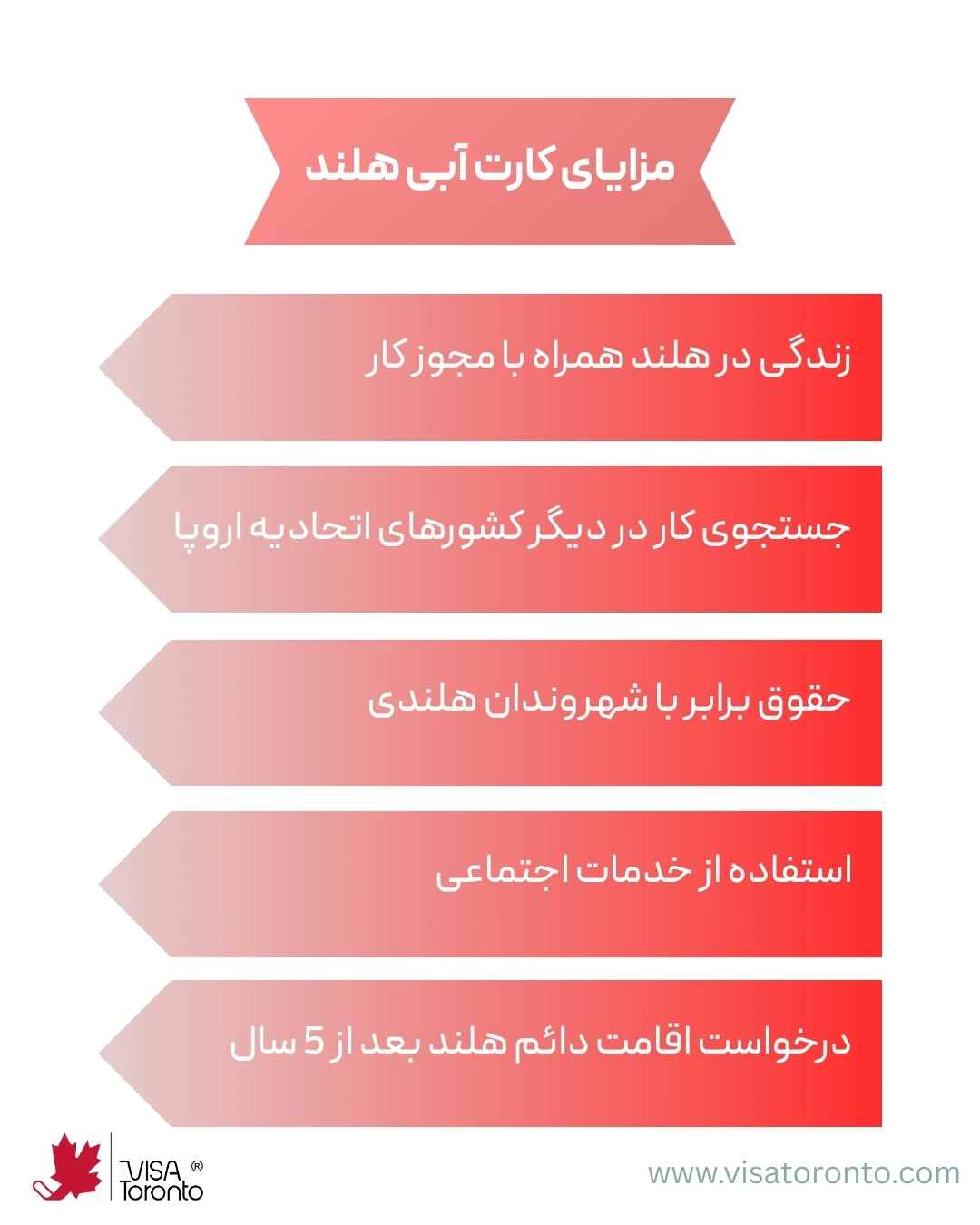
- The right to live and work in the Netherlands legally.
- Mobility rights that let card holders move to and seek work in other EU member states, subject to each country’s rules.
- Access to social services, including health insurance and education.
- Eligibility to apply for Dutch permanent residence after 5 years of residence.
The card has limits worth naming. It depends entirely on a job offer from a Dutch employer: without one, there is no application to make. The salary threshold is high, and it is the condition that removes most otherwise strong candidates.
Applicants working in more general or lower-demand fields also tend to have a weaker case than specialists.
How much does the Netherlands Blue Card cost?
The application fee depends on the permit length and the type of application. The IND fee is currently EUR 423 for a first application or an extension, and it is revised every 1 January, so confirm the current figure against the IND fee schedule. Your own costs will vary with your circumstances.
Netherlands Blue Card challenges, and what to do about them
| Challenges | Solution |
|---|---|
| A valid job offer is required | Use Dutch job boards and network within the target industry |
| Salary threshold (minimum EUR 5,942.00 gross per month, excluding holiday allowance; revised each January) | Salary threshold (minimum EUR 5,942.00 gross per month, excluding holiday allowance; revised each January) |
| Qualifications and work experience equivalent to EU standards | Have qualifications and professional experience assessed against EU standards and consult credential-evaluation specialists |
| Online application and complex forms | Follow the official online guidance and use immigration specialists to complete the application accurately |
| High fees | Review available funds for the application fee and plan finances so fees are paid on time |
| Incomplete or incorrect documents | Check documents against the requirements before submitting the application |
| Municipal registration after arrival | Register promptly after arriving in the Netherlands to obtain the residence card and access legal rights |
Getting proper advice is the part that decides it
The Netherlands Blue Card is a strong opportunity for professionals with a specialist skill set and qualifications that stand up to European assessment. What it opens is long-term residence, access to the European labour market and a considerably wider set of career options.
The Dutch work permit process has genuine complexity in it. The legal requirements have to be met exactly and the documents have to be right. If you have a question about the Blue Card, or about any other route into the Netherlands, the advisers at Aval Visa will go through your case with you. Our team reviews your documents, tells you plainly whether the salary and qualification tests are within reach, and prepares the file if they are.
Frequently asked questions
- Who can apply for the Netherlands Blue Card? Professionals with a specialist skill set, a university degree, a job offer from a Dutch employer and a gross salary at or above the IND’s published threshold for the year of application.
- How long is the Netherlands Blue Card valid? It is normally issued for 1 to 4 years and can be renewed where the conditions are still met.
- Can Blue Card holders work in other EU countries? Yes. Dutch Blue Card holders can move to certain other EU member states to look for work for a limited period, though each country applies its own conditions.