The Netherlands is one of Europe’s most developed countries, with a strong welfare system. Plenty of families, drawn by the quality of life and the standard of healthcare, would like their child to be born there, in the hope that the birth opens a path to Dutch residence.
So here is the question that matters: does having a baby in the Netherlands lead to residence for the parents, or even for the child? To answer it properly you need the Dutch nationality and residence rules, which is where this guide starts.
Dutch nationality law: soil or bloodline?
In countries such as Canada and Brazil, birth on the territory gives the child citizenship, and in time that can support a parent’s application. The Netherlands does not work that way.
Dutch nationality follows descent, jus sanguinis. Being born on Dutch soil does not by itself create any right to Dutch residence. If either parent is a Dutch national, the child is Dutch. Where the parents are not married, the father must acknowledge the unborn child before the birth for the baby to acquire Dutch nationality through him.
A child born in the Netherlands to non-Dutch parents still needs five continuous years of lawful residence before permanent residence, and later a Dutch passport, come into view. Birth in the Netherlands on its own does not give residence or nationality to the child or to the parents.
Can parents get residence after the birth?
The birth of a child in the Netherlands does not on its own give the parents residence. Parents need a legal route of their own: a work permit, a study permit or the start-up permit.
Dutch work permit
With a job offer from a Dutch employer you can apply for a work permit and, after several years, for residence. The offer has to set out:
- The full name and details of the employer and the company
- A detailed description of the role and its duties
- Minimum weekly hours and whether overtime applies
- The minimum and maximum salary
- Why the role is being filled from outside the Netherlands and the European Union
- A term of at least one year
To extend the permit you supply a current offer for the new year, with updated terms and salary.

Dutch study permit
With an offer of place from a recognised university or college you can apply for a Dutch student visa and live in the Netherlands. As a student from outside the EU or EEA you may work either up to 16 hours a week during the year or full time in June, July and August, and your employer arranges the work permit. After graduating you can move to a work permit or the EU Blue Card, or use the orientation year for graduates. Converting the permit works the same way as above: a genuine job offer with full detail, filed with the application to switch from study to work.
Dutch start-up visa
The Dutch start-up visa is one of the routes our team handles day to day. Send your idea and business plan to our advisers and we will tell you where it stands.
The start-up permit is granted for one year. Before it expires, founders whose business is trading move on to a self-employed residence permit, and that is the permit that leads to longer-term residence, and to a settled base if you later plan to have your child in the Netherlands. The Dutch start-up route has become one of the more straightforward ways into the country in recent years.
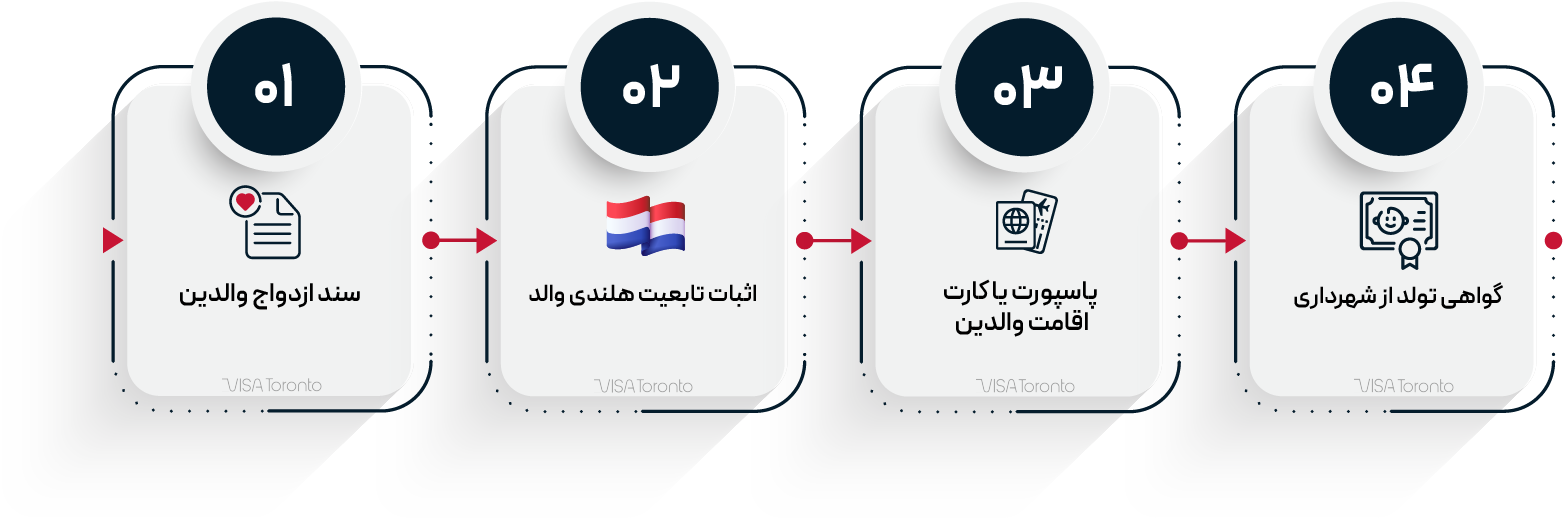
Documents for registering a birth and applying for residence
To register a birth in the Netherlands and file a residence application you need:
- The birth certificate issued by the municipality where the child was born
- Parents’ identity documents, passport or residence card
- Evidence of a parent’s Dutch nationality, where that applies
- Marriage documents, where required
What it costs to have a baby in the Netherlands
Costs depend on the type of delivery, natural or caesarean, and where it takes place, hospital or home. On average a hospital birth runs between EUR 3,000 and EUR 5,000, covering antenatal and postnatal care, essential supplies and specialist appointments.
Maternity insurance in the Netherlands
Which raises the obvious question about insurance. Dutch healthcare makes cover compulsory for every resident, and the basic policy, Basisverzekering, covers a substantial share of pregnancy and delivery costs. For fuller cover you can add supplementary insurance, Aanvullende verzekering, which picks up extras such as baby care supplies and postnatal care at home, Kraamzorg.
Moving to the Netherlands through the birth of a child
Having a child on Dutch soil does not allow parents to apply for permanent residence or to settle in the Netherlands permanently. The exception is a baby with one Dutch parent.
If the Netherlands is where you want to be, the order matters: secure a study, work or start-up permit first, then plan the birth from a settled position. Your child then builds towards residence over five continuous years in the country, while you live there lawfully and apply for permanent residence in your own right after several years.
If you are considering studying in the Netherlands or launching a start-up there, contact the Aval Visa team for an assessment of your position.
Frequently asked questions
- Can a child born in the Netherlands get Dutch nationality?
Only if one parent is a Dutch national, in which case the child is Dutch at birth. Birth on Dutch soil does not give the parents nationality or residence. - When must a birth be registered?
Within 3 working days of the birth, at the municipality where the child was born, with the supporting documents attached. - Does Dutch basic health insurance cover the birth?
Yes. The basic policy covers a large share of maternity costs. Supplementary cover reduces what is left and extends to care for the baby after the birth.