
Studying somewhere affordable, at a university with real international standing, is what most students are looking for. If that describes you, Russia deserves a place on your shortlist.
With a large number of state-accredited higher education institutions, a wide spread of subjects, solid student housing and tuition well below European or Canadian levels, Russia draws students from across the world. Confirm that any institution you are considering is recognised both in Russia and by the authority that will assess your qualification at home. Moving to Russia opens up study in fields such as medicine, dentistry, engineering, management and the arts.
This guide covers the whole route: student visa requirements, the documents you need, how to apply, how admission works, living costs, the highest-earning fields and the best student cities. If you are weighing up a degree in one of the largest countries in the world, read on.
Two routes into study in Russia
There are two main ways to study in Russia:
- Direct admission to a university programme
- The preparatory faculty, known as the podfak
If you already meet a programme’s language and academic requirements, you apply for admission to your chosen university and then apply for a Russian student visa on the strength of that offer. If you do not speak Russian, you take the second route: the preparatory faculty first, where you learn the language and revise the core subjects for your degree, and then apply for your degree programme and any scholarship. With that in mind, here is how the student visa itself works.
How the process works, step by step
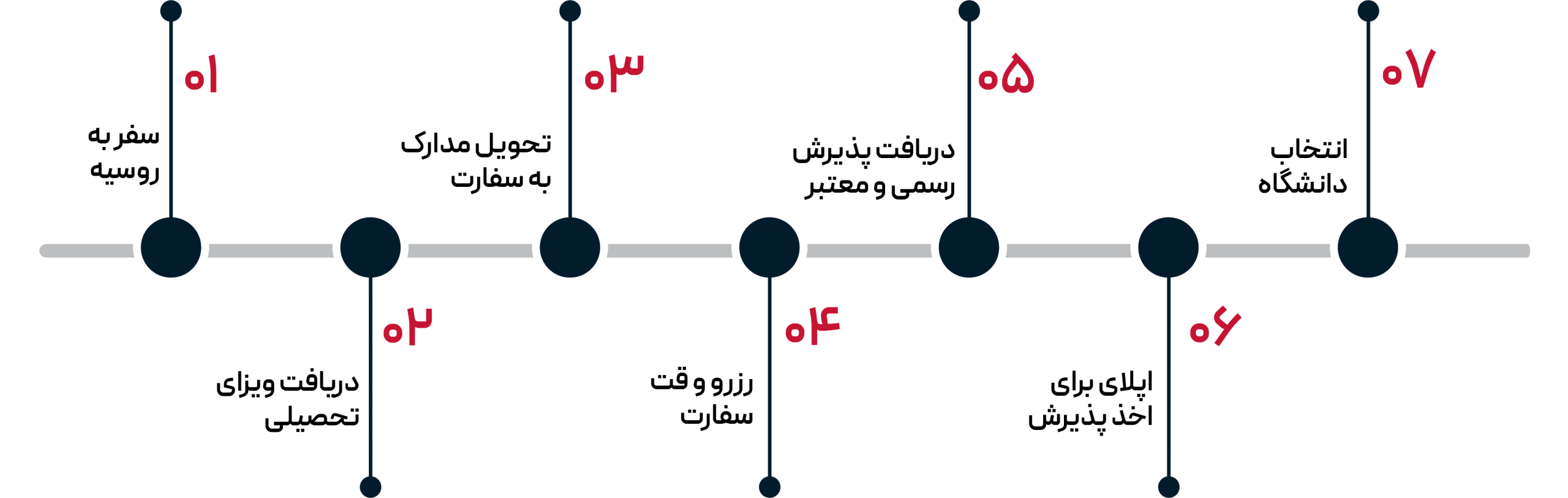
Start by choosing your university. Weigh the city, the university’s international ranking, teaching facilities, faculty, graduate outcomes and tuition.
The Admission section of every university website sets out tuition fees, application deadlines, required documents and entry conditions. Use those to build a shortlist.
Apply to your chosen institutions in line with their deadlines and document lists. Once you hold a formal offer, book your appointment at the Russian consulate. The consulate then issues the checklist for the Russian student visa, and you translate and assemble everything on it.
Any gap in the documents will delay a decision or lead to a refusal.
If you do not hold a scholarship or grant, you must also submit proof that your tuition has been paid. The preparatory faculty course remains compulsory for applicants without a recognised language qualification. Some programmes also set an entrance examination, which the university confirms after you apply.
The cost of studying in Russia
Your total cost breaks down into a few components: university tuition, day-to-day living costs and accommodation, whether that is a dormitory place or a private rental. The table below summarises them:
| Type of cost | Amount |
|---|---|
| University tuition | USD 1,500 to 7,000 |
| Dormitory or rented accommodation | USD 100 to 600 per month |
| Food and transport | USD 200 to 350 per month |
| Insurance, visa and medical checks | USD 30 to 400 |
What drives the numbers
Tuition varies with the subject, the university’s ranking, the city, the teaching facilities and the number of practical modules. Fees typically run from USD 1,750 to USD 10,000 a year for a bachelor’s degree, and from USD 2,100 to USD 4,600 a year for a master’s.
Russia is not an expensive country to live in. Your monthly outgoings cover transport, food, rent and everyday costs. Moscow is the most expensive city; Kazan, Tomsk, Novosibirsk and Belgorod are among the cheapest. City-by-city living costs are available on Numbeo.
Some Russian universities offer funding and scholarships to international students; others award free places through competitive entrance examinations. Ask the university about both when you apply.
The preparatory faculty course teaches you Russian and takes you through the core subjects for your degree. It is compulsory for applicants without a recognised language qualification.
Why students choose Russia
A Russian student visa gives you the right to live and study in a large, well-resourced country without a heavy price tag, in English or in Russian. The main advantages:
- Programmes taught in English as well as Russian
- Free tuition through scholarships or competitive entrance examinations
- Low tuition and living costs
- Well-equipped teaching facilities
- A range of career options after graduation
- A possible route to Russian residence after graduation, subject to the rules in force at the time
- Good student accommodation and well-stocked libraries
Russia student visa requirements
Once you understand how admission works, the visa side is straightforward. As noted above, the consulate issues your document checklist when you book your appointment.
Translate and prepare everything on that checklist and bring it with you on the day. The core list is below, though your university or the consulate may ask for more:
- A valid passport and a recent biometric photograph
- A formal offer of admission from an accredited university
- Translated and certified academic transcripts and certificates
- A medical certificate and an HIV test result
- International health insurance covering the period of study
- Proof of funds, typically in the region of USD 5,000 to USD 6,000 a year
The highest-earning fields of study in Russia
If you intend to stay and work in Russia after graduating, it pays to choose a field with strong demand in the Russian economy. The table below sets out the highest-earning options:
| Field of study | Job prospects after graduation | Income |
|---|---|---|
| General medicine | High | Varies by employer and region - check current local salary data |
| Dentistry | High | Varies by employer and region - check current local salary data |
| Pharmacy | High | Varies by employer and region - check current local salary data |
| IT engineering | High | Varies by employer and region - check current local salary data |
| Data science and AI | High | Varies by employer and region - check current local salary data |
| Oil and gas engineering | High | Varies by employer and region - check current local salary data |
| Business administration (MBA) | High | Varies by employer and region - check current local salary data |
The best universities in Russia
| University | City | World ranking | Popular fields of study |
|---|---|---|---|
| Lomonosov Moscow State University (MSU) | Moscow | 94 | Medicine, physics, law, basic sciences, linguistics |
| Saint Petersburg State University (SPbU) | Saint Petersburg | 242 | Humanities, law, economics, languages, biology |
| Moscow Institute of Physics & Technology (MIPT) | Moscow | 477 | Physics, IT, mathematics, data science |
| Bauman Moscow State Technical University (BMSTU) | Moscow | 298 | Mechanical, electrical, computer and aerospace engineering |
| RUDN University (People's Friendship University) | Moscow | 295 | Medicine, engineering, social sciences, law |
| Institution to be confirmed (row duplicated in error) | Kazan | Check current ranking | Medicine, pharmacy, engineering, chemistry |
Is Russia the right choice for you?
Studying in Russia means good universities, modern cities and a culture worth experiencing first hand. Between the relatively low costs, the availability of scholarships and grants, the established academic system and the teaching facilities, it is a serious option for international students.
Graduates can look for work in Russia and, under the rules in force, may be able to apply for residence on that basis. If you plan to return home instead, check in advance that your home authority recognises the Russian institution and the qualification, because recognition rules differ from country to country. If you want advice on studying elsewhere in Europe, on securing admission or on student residence permits, the Aval Visa team is ready to help. Book a consultation and we will review your profile.
Frequently asked questions
- Can I study in Russia without a language qualification? Yes. The preparatory faculty course teaches you Russian first, and you then enter your degree programme.
- Which are the best Russian cities for student life? Moscow has the strongest universities, including Lomonosov and Sechenov. Saint Petersburg is the second city and the cultural capital, home to ITMO and SPbU. Kazan, Novosibirsk and Tomsk are established student cities with lower living costs.
- How long does a student visa take? Processing usually takes two to four working weeks once the file is lodged.
- Can students work in Russia? Yes. Students holding a study residence permit may take part-time work.