
Anyone looking at studying in Europe has probably heard of the Italian regional scholarship, one of the most substantial funding routes available to international students.
The regional scholarship in Italy, known as the DSU (Diritto allo Studio Universitario) or simply the regional scholarship, waives university tuition and adds support for accommodation, meals, transport, books and study materials, so a student can attend a recognised university at very little cost.
Below we set out the scholarships available so you can start the next chapter, applying for an Italian student visa, on solid ground.
Why study in Italy?
Italian universities hold a strong position among the world’s institutions. Every year they offer a large number of fully funded places so that students in the humanities, the arts, engineering and medicine (MBBS) have a secure route to a degree.
Italy combines a welcoming population, deep history and long-established academic and cultural institutions, which is a large part of its appeal to international students. Its other advantages include:
- Reasonable living costs
- Affordable tuition
- High teaching standards
- A wide range of international scholarships, particularly in medicine and engineering
- The option to work after graduating and apply for a work visa
- A route to Italian residence after several years of living and working there
- An internationally recognised degree and European work experience, which strengthen later applications elsewhere
Studying in Italy
Beyond the landscape and the historic cities, Italy offers international students a full range of study options at bachelor’s, master’s and doctoral level.
Higher education institutions divide into university and non-university sectors. Information technology, medicine, art, architecture, biotechnology and the natural sciences are among the most popular fields.
Three of the most sought-after Italian universities:
| University | Known for |
|---|---|
| Politecnico di Milano | Italy's leading university for art and design and civil engineering |
| Scuola Superiore Sant'Anna Pisa | Italy's second-ranked university for applied sciences |
| Università di Bologna | Suitable for all fields and research areas |
Types of scholarship
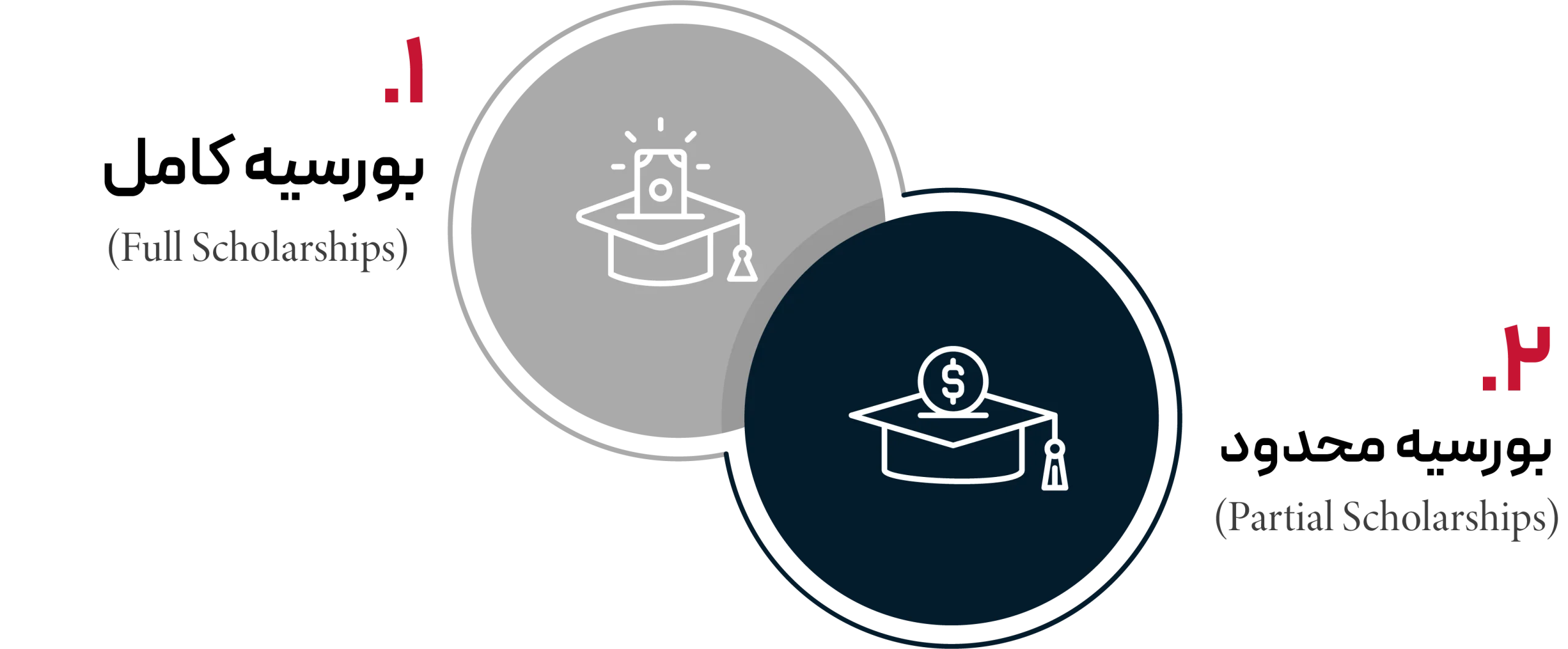
To study in Italy you can apply for full funding or partial funding, each with its own conditions:
Full scholarships
With a full scholarship, tuition and accommodation are paid in full. These awards usually cover travel, health cover and other living costs as well, although the exact terms depend on the scholarship, the subject and the university.
Partial scholarships
A partial scholarship covers part of the tuition or living costs and leaves the rest to the student. That is why applicants for partial funding must show acceptable proof of funds for items such as healthcare.
Studying in Italy without a scholarship
Given how moderate living and study costs are in Italy, attending university without a scholarship is a realistic plan. Many Italian universities charge low tuition, and some waive fees entirely for students on low incomes. Average costs:
- Mid-ranked universities: EUR 2,000 to EUR 3,000 a year
Highly ranked universities: EUR 5,000 to EUR 7,000 a year - Accommodation and living: EUR 800 to EUR 1,400 a month, and up to EUR 1,500 a month in Rome
- Food: up to EUR 200 a month
- Transport, a bus or train pass: EUR 25 to EUR 30
- Utility bills: up to EUR 200
Italian government scholarships
With that in mind, here are the best-known regional and national scholarships in Italy and the conditions attached to them. The first is open to international students at postgraduate level:
MAECI scholarships (Italian Ministry of Foreign Affairs)
These awards go to international students and to Italian citizens resident abroad (IRE) at master’s and doctoral level, and on Italian language courses. They cover tuition, a monthly allowance and health insurance.
Students in all of the following fields can apply, provided they hold a language certificate at B2 level:
- Humanities: literature, philosophy, linguistics, history, art and archaeology
- Social sciences and economics: economics, management, law and international relations
- Engineering and technical subjects
- Natural and life sciences
- Music, fine arts and design
- Italian language and culture
Read more: A full guide to engineering universities in Italy
Invest Your Talent in Italy
This scholarship supports master’s students on English-taught programmes and includes a monthly allowance of around EUR 1,000. The subjects covered are:
- All branches of engineering
- Information technology and computer science
- Management, economics and finance
- Architecture and industrial design
Erasmus Mundus
A competitive joint EU scholarship for master’s programmes run in partnership with Italian universities. It covers full tuition, a travel allowance and living costs, and it is funded by the European Commission. Eligible fields include:
- Engineering
- Information technology and artificial intelligence
- Life sciences and medicine
- Environmental science and agriculture
- Cultural studies, law and international relations
- Humanities and social sciences
- Linguistics
- Architecture, design and art
University scholarships
Alongside the government schemes, international students can apply for scholarships offered by the universities themselves. The table below summarises them:
| University | Scholarship terms |
|---|---|
| University of Bologna | Competitive scholarships for master's programmes; numbers and amounts are set in the annual call |
| University of Milan | 60 scholarships of EUR 8,000 plus a full tuition waiver for international master's students |
| University of Padua | Full scholarships for talented bachelor's and master's students in English-taught programmes |
| University of Turin | Competitive scholarships for English-taught master's programmes; numbers and amounts are set in the annual call |
| University of Trento | Merit-based scholarships for students at various degree levels |
| University of Brescia | 18 scholarships for master's programmes for non-EU students |
| University of Macerata | Scholarships for international students on study and research programmes in Italy |
Read more: The University of Milan
Italian regional scholarship requirements
So what exactly does the Italian regional scholarship require, and who can apply?
- An offer of admission from a public university
- A strong grade average in your previous degree, broadly equivalent to 70 per cent for a bachelor’s, 75 per cent for a master’s and 80 per cent for a doctorate
- A full CV showing a strong academic record
- Italian at B2 level (the CILS, CELI and PLIDA exams are accepted)
- For English-taught courses, IELTS Academic at 6 or 6.5
- Proof of funds, particularly for partial funding

Documents for the Italian regional scholarship
Once you hold an offer from your chosen university, you apply for the scholarship. These are the documents required:
| Documents | Details |
|---|---|
| Identity documents | Birth certificate National ID card Valid passport with at least two blank pages Recent biometric photo |
| Academic documents | Transcripts of all study levels School-leaving certificate of the previous level Degree certificate and diploma of the previous level Admission letter from the Italian university Statement of purpose Letters of recommendation |
| Financial documents | Payslip of the head of the family Lease agreement or title deed for the family home Proof of funds with bank statement and balance |
| Language certificate | IELTS Academic or an Italian-language certificate |
| Other documents | Additional documents differ by region; check with the regional scholarship (DSU) office of the region where you will study |
How to apply for the Italian regional scholarship
As set out above, you first secure an offer from the university where you will study, then submit the documents above with your scholarship application.
Before you apply you have to give the scholarship office your family’s financial details along with the supporting documents. That means calculating your ISEE figure, the Italian indicator of household economic status, and then registering for the scholarship. Results are usually published in November or December, and students must be in Italy before the term begins.
Applying for an Italian student visa with Aval Visa
If studying in Italy is the plan, this is the moment to take a serious step towards it. The regional scholarship is a genuine opportunity to study at very low cost, or at no cost at all, but the process takes time and a substantial set of documents. At Aval Visa we work through it with you so that you move forward with confidence. Complete the consultation form today or contact our team, and take the first step towards a regional scholarship and an Italian student visa properly prepared.
Frequently asked questions
- Does every student get the Italian regional scholarship?
No. You have to show your family’s financial situation to the scholarship office of the region where you will study, because the award is intended for students who could not otherwise fund study abroad. - When does the Italian regional scholarship open for applications?
Applications generally open in late July and run to the last week of September, though the dates vary by region. - Which international students can apply for the regional scholarship?
If your household income is below roughly EUR 23,000 a year, you can register for a regional scholarship once your ISEE figure has been calculated. The threshold is set regionally, so confirm the figure for your region.
Official source: Italian Ministry of University and Research — right to study and student grants
This article is general information, not legal advice, and it describes published official rules rather than any individual case.