For students with strong English and Dutch who can meet the cost of living in Europe, studying medicine in the Netherlands is a serious career investment. Dutch medical faculties are among the oldest and best-established centres of modern medical education anywhere.
Admission is not easy. It takes excellent grades, documented language ability and a well-prepared application. This guide covers the requirements and documents needed to study medicine in the Netherlands, the leading faculties, the cities that suit students, and the visa costs that go with it.
Why study in the Netherlands?
Studying medicine in the Netherlands puts you in a strong position professionally, with the option of building a long-term life in one of Europe’s most liveable countries. The wider advantages include:
- Visa-free travel across the Schengen area and the EU
- Programmes taught in English or in Dutch, depending on the faculty
- Access to scholarships and research funding
- A high standard of living
- Low crime and a stable social environment
- A wide range of roles in hospitals and clinical centres
- Good salaries and stable employment in healthcare
- Well-funded teaching and research facilities
With that in mind, here is what an international applicant needs in order to study medicine in the Netherlands.
Read more: a complete guide to Netherlands permanent residence
Requirements for non-EU applicants to study medicine in the Netherlands
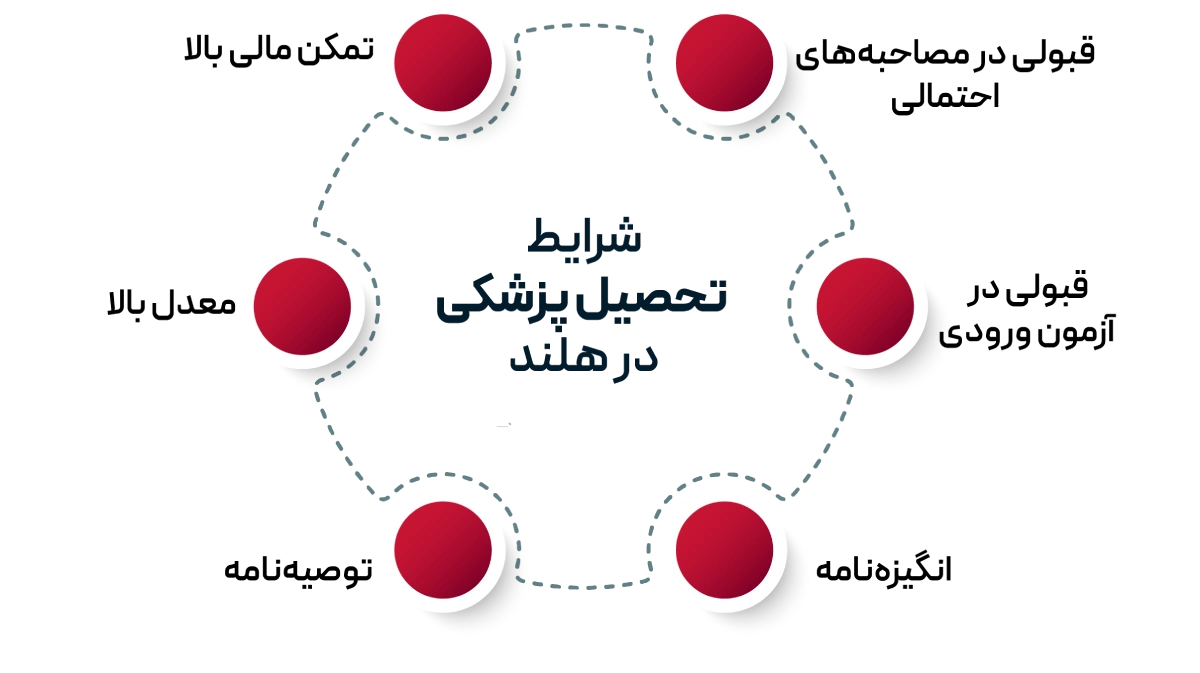
To apply for medicine in the Netherlands you need 12 years of general education and a secondary school leaving certificate. English or Dutch at B2 level is required for admission, depending on the language of instruction. Faculties also look for:
- Evidence that you can cover tuition and living costs
- A strong academic record, with a recommendation letter
- A motivation letter explaining why you want to study in the Netherlands and where you want the degree to lead
- Success in the faculty’s selection procedure under numerus fixus
- An interview, where the faculty runs one
Applicants have to apply for admission and submit every document before the deadline the faculty publishes. Once admitted, the next step is to apply for a Netherlands student visa.
Deadlines vary from one university to another, and applicants must submit documents and attend any interview before the official closing date. For current information, follow the announcements of Nuffic, the Dutch organisation for internationalisation in education, and check admission conditions with each faculty.
Selection for medical programmes
Dutch medicine has no single national admissions test of the kind used in some other countries. Every medical bachelor’s programme is a numerus fixus programme with a capped number of places, and each faculty runs its own decentralised selection procedure.
Applications go through Studielink, and the deadline for numerus fixus programmes is earlier than for other subjects, normally in mid-January for a September start. Selection typically weighs school grades in science subjects, a motivation statement, and selection activities set by the faculty, which can include written tests, online assignments, a sample lecture with an exam, or an interview. The point of the exercise is for the faculty to satisfy itself that the applicant has the knowledge, judgement and resilience needed to train as a doctor.
Criteria differ between faculties, and each one publishes its own weighting. A Dutch medical degree takes six years in total: a three-year bachelor’s, largely theoretical, followed by a three-year master’s built around clinical rotations and hospital placements.
Also worth reading: our guide to the best universities in the Netherlands.
Documents for a medical application in the Netherlands
| Document | Requirements |
|---|---|
| High school diploma and pre-university certificate | Certified translation into English or Dutch; equivalent to the Dutch VWO |
| English language certificate | IELTS Academic 7 or equivalent TOEFL 90+ |
| Dutch language certificate (for applicants without English) | B2 minimum |
| Motivation letter | Explaining your interest in medicine and your goal in studying in the Netherlands |
| Academic reference letter | At least one letter from a recognised academic |
| Academic CV | Standard format, with relevant experience |
| Application fee | Varies by university |
Leading medical faculties in the Netherlands
| University | City | World ranking |
|---|---|---|
| University of Groningen | Groningen | Varies by ranking system and edition |
| Maastricht University | Maastricht | Varies by ranking system and edition |
| Leiden University | Leiden | Varies by ranking system and edition |
| Utrecht University | Utrecht | Varies by ranking system and edition |
| Erasmus University Rotterdam | Rotterdam | Varies by ranking system and edition |
| University of Amsterdam | Amsterdam | Varies by ranking system and edition |
Cost of studying medicine in the Netherlands
| Cost | Amount | Notes |
|---|---|---|
| Medicine tuition (Bachelor/Master) | Up to EUR 32,000 per year | Varies by university |
| Medicine tuition - UvA (Bachelor) | EUR 34,000 per year | For non-EU students |
| MVV fee (long-stay student visa) | Set by the IND - check the current fee | Paid by the student; the IND re-indexes the fee each January |
| Proof of funds | EUR 1,130.77 per month | IND amount for university and hbo students; revised each year - use the figure set for your academic year |
What to know about the costs
Studying medicine in the Netherlands is expensive, and applicants need either a scholarship or substantial documented funds; without them the residence application is at real risk. Some faculties also charge an application fee for each admission request.
Students must hold health insurance for the whole period of study. Cover costs up to EUR 1,400 a year, depending on the policy. For tighter budgeting, take basic cover and leave out the optional add-ons.
Read more: the cost of living in the Netherlands
Scholarships for medical study
International students can apply for scholarships and grants to study medicine in the Netherlands, although competition for them is intense.
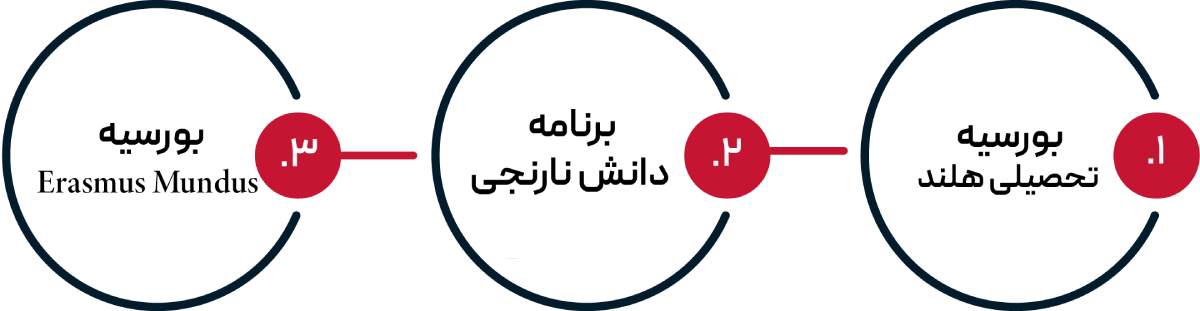
The first is the Holland Scholarship for students from outside the European Economic Area, worth up to EUR 5,000 in the first year. The second was the Orange Knowledge Programme, a Dutch government scheme for professionals from selected countries that funded short courses in health; it ran from 2017 to 2024 and has now ended, so it is no longer a funding option, and you should check Nuffic for current scholarship schemes. Erasmus Mundus joint master’s scholarships are also available to international students, including in health-related fields.
Comparing student cities
Given the cost of medical study in the Netherlands, the choice of city matters. It affects both day-to-day spending and the clinical and research environment you train in. The table below compares the main Dutch student cities:
| City | Monthly living costs (EUR) | Advantages |
|---|---|---|
| Amsterdam | EUR 1,500-1,800 | Top-tier university, wide cultural scene |
| Groningen | EUR 900-110 | Student city, medicine taught in English |
| Rotterdam | EUR 1,000-1,200 | Wide range of openings in modern hospitals |
| Maastricht | EUR 900-1,100 | Close to Germany and Belgium, medicine taught in English |
| Leiden | EUR 1,000-1,200 | Long-established university with a long medical teaching tradition |
Career options after graduation
The Dutch labour market for healthcare is active and varied. Graduates can move into clinical work or compete for a place in specialist training, which is itself a selective process.
Some graduates also use a Dutch degree as a step towards a second move, to Canada, the United States, Australia or New Zealand. The most common routes after a Dutch medical degree are:
- General practice, after obtaining BIG registration, the Dutch professional register for healthcare workers
- Applying for the one-year orientation year permit after graduation
- Working as a research assistant or clinical researcher in a university or medical institute
- Continuing in funded research positions in the basic medical sciences
- Working in pharmaceutical or biotechnology companies, in advisory roles, clinical trials or product development
Getting a Dutch medical student visa with Aval Visa
This guide has covered the route from first application to working as a doctor in the Netherlands. If you have the language certificate, the funds and the academic record, the Aval Visa team can advise on your options and manage the file from start to finish.
From administrative work such as forms and appointment booking, to the academic side including admission and drafting formal letters, our advisers handle the process so you can focus on preparing for one of the most demanding medical systems in the world. We work with you from university selection through admission and the visa decision.
Frequently asked questions
- Is medicine taught in English in the Netherlands? Only in part. A small number of faculties, Groningen and Maastricht among them, have offered English-taught bachelor tracks, but availability changes from year to year and the clinical years and professional practice are in Dutch.
- Is there an entrance exam for medicine in the Netherlands? There is no single national exam. Faculties use numerus fixus with decentralised selection, weighing school grades, a motivation statement and their own selection activities, which may include tests or interviews.
- Are scholarships available for medicine? A limited number are open to non-EEA students, competition is very strong, and most international students fund their studies themselves.
- Do I need Dutch to study medicine? Yes for the clinical stage. Dutch is required for the master’s years, clinical rotations and any work in Dutch hospitals.
This article is general information, not legal advice, and it describes published official rules rather than any individual case.