People all over the world dream of a better life in Europe: a continent known for its culture, its public services and the range of work it offers. Every year large numbers of people move to a European country to start again, to study, or to take a job that suits them.
Choosing between them is not simple, because the rules differ in every country. This article looks at the best European countries to move to and at the things worth knowing before you commit, so you can pick the right place to begin.
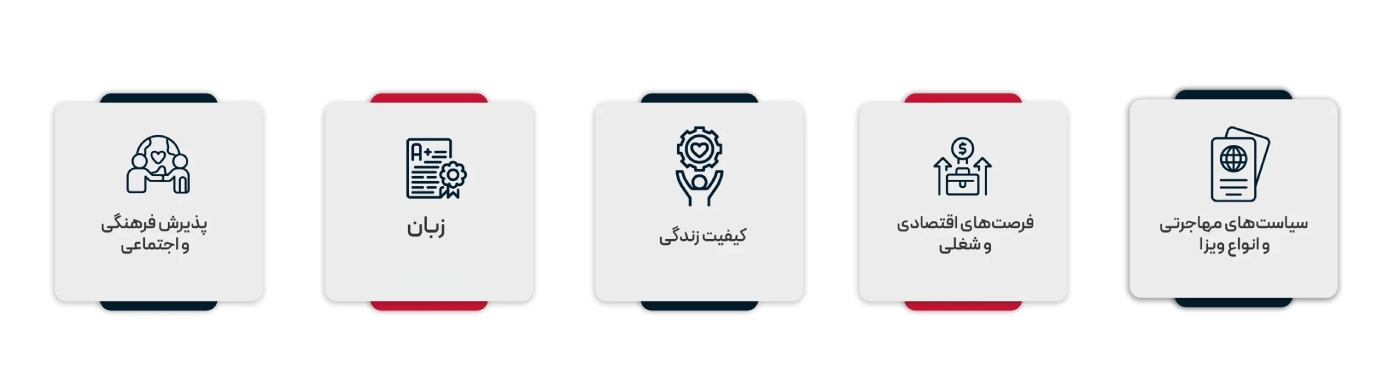
What makes moving to a European country easier?
Relocating is demanding wherever you go, but some factors make the path considerably smoother.
- Immigration policy and visa options
Countries with a broad range of visas and a fast, straightforward application process are easier to move to. Dedicated routes for students, employees and investors give applicants real choice. - Economic and job opportunities
An active labour market with genuine vacancies, especially in shortage occupations, makes a country far more attractive to newcomers. - Quality of life
Good healthcare, strong schools, social security and a decent environment all weigh heavily in the decision. - Language
Countries where English is widely spoken, or where language courses are well funded, make settling in much easier. - Social and cultural openness
Open, diverse societies help new arrivals find their footing and adapt more quickly.
Which are the best European countries to move to?
Now that we know what makes a country a good destination, here are the countries that consistently come out well:
1. Sweden
Sweden is regularly ranked among the best European countries to move to, live and work in. Its labour market has developed strongly, it competes well with the rest of Europe, and it actively supports people starting companies.
| Advantages | Challenges |
|---|---|
| Job opportunities in technology, engineering, education and healthcare | High living costs, especially in cities such as Stockholm and Gothenburg |
| Excellent work-life balance (5 weeks' annual leave, 480 days' parental leave) | High tax rates (up to 55% on high incomes) |
| High-quality healthcare, tax-funded and free at the point of use | Lengthy process to obtain a personal identity number (personnummer) |
| Advanced public transport with nationwide coverage | Swedish language needed for professional and social integration |
| High safety, beautiful nature, high quality of life | Building social connections can be hard given Swedes' private culture |
| Collaborative workplaces and a flat organisational culture | Cultural differences and social distance in the early stages of migration |
| Free schooling for children | High rents and difficulty finding housing in large cities |
2. Portugal
Portugal puts work-life balance first, which is why it ranks second in the EU on that measure and appears on most shortlists of the best European countries to move to.
| Advantages | Challenges |
|---|---|
| Affordable cost of living compared with other European countries | Stricter citizenship rules - the required residence period changed under the 2026 nationality law; check the current rule with the IRN |
| Mild climate and beautiful landscapes | Portuguese language and culture test required for citizenship |
| Investment opportunities and the Golden Visa program | The NHR tax-exemption scheme is closed to new applicants |
| Good-quality public healthcare system | Recent immigration law changes have made the process more complex |
| Welcoming culture and a society open to immigrants | New restrictions on immigration programs |
3. The Netherlands
The Netherlands is among the best European countries to move to, live and work in, and it is particularly popular with skilled migrants from India. Its flexible working culture supports a genuine balance between work and life. Moving to the Netherlands has the following advantages and drawbacks:
| Advantages | Challenges |
|---|---|
| Good job opportunities for specialists in technology and engineering | Rising housing and rental costs in the larger cities |
| 30% tax ruling for highly skilled migrants | Possible changes to tax policy that could reduce the benefit |
| High quality of life, with healthcare, education and public transport | Competition from other European countries offering similar conditions |
| Social security and advanced infrastructure | Need to learn Dutch for better social and professional integration |
4. Spain
Spain has become a serious destination for people moving to Europe. There are openings in technology, construction, healthcare and tourism, particularly for specialists. Its immigration policy is relatively open, and the large-scale regularisation of migrants since 2021 has supported the economy and cut unemployment in some regions.
Spain also runs a digital nomad visa, which lets remote workers live in the country on a reduced tax rate. It appeals to people whose income comes from abroad.
There are trade-offs. Living costs in Madrid and Barcelona are high and the housing market in both is competitive. Non-EU residents must hold private health insurance. One of the most sought-after routes into the country is the Spanish digital nomad visa, which large numbers of people use every year.
5. Denmark
Denmark is one of the strongest destinations in Europe. High living standards, a comprehensive welfare system and solid job opportunities make it an obvious candidate.
| Advantages | Challenges |
|---|---|
| Very high quality of life; consistently among the top-scoring countries in wellbeing surveys | High cost of living, especially in Copenhagen |
| Comprehensive welfare system with free healthcare | Relatively high income tax |
| Generous parental leave and free education | Danish language needed for integration |
| Active job market in technology, engineering and healthcare | Housing hard to find in the big cities |
| Balanced work culture with shorter hours and more holiday | - |
| Free language courses for newcomers | - |
6. Germany
Germany protects work-life balance through firm limits on working hours and proper payment for overtime. Moving to Germany for work also opens up part-time and remote roles.
| Advantages | Challenges |
|---|---|
| Plentiful job opportunities in technology, engineering, healthcare and finance | High cost of living, especially in Berlin and Munich |
| Open and streamlined immigration policies | Competitive and difficult housing market in the larger cities |
| Residence permit for self-employed or freelance work under section 21 of the Residence Act (there is no digital nomad visa) | Health insurance is compulsory; employees normally join the statutory scheme and private cover applies only to certain groups such as higher earners, the self-employed and some students |
| High-quality healthcare services | Complex administrative procedures at some stages of the immigration process |
| Strong education system and language-learning opportunities | German needed for better integration into the labour market and society |
| Multicultural society and a dynamic working environment | Cultural differences and adapting to a new environment can be challenging |
7. Belgium
Belgium sits at the centre of Europe and combines a high standard of living, a broad job market and a strong social system, which makes it a natural choice for qualified professionals. Technology, engineering, healthcare and finance all recruit steadily.
The advantages include good healthcare, affordable public transport, a varied labour market and the special expatriate tax regime for experienced international hires.
That regime brings tax relief, a housing allowance and support for school fees. Belgian working culture is formal but measured, with generous leave that protects both physical and mental health.
There are real drawbacks too. Rents in the larger cities have risen sharply, and income tax plus social security contributions can take close to half of a salary. Non-EU residents must arrange health insurance, and the first residence permit can be slow and complicated to obtain.
8. France
France is one of Europe’s major countries by economy, university system and quality of life. Its universities and higher education institutions attract very large numbers of international students, which makes it worth considering for anyone looking at a European student visa. There are also good openings in certain specialist professions. Living costs depend heavily on the city: Paris is significantly more expensive than smaller towns.
| Advantages | Challenges |
|---|---|
| World-class healthcare, largely free at the point of use | Heavy bureaucracy and lengthy procedures |
| High quality of life, rich culture and varied environments | High living costs in the major cities |
| Advanced transport infrastructure | Competitive rental market; an employment contract or guarantor is usually needed to rent |
| Attracts a high volume of foreign investment projects each year (Business France publishes the annual figures) | Heavy taxation and levies, including VAT of up to 20% |
| Job opportunities in technology, engineering and R&D under government support schemes | French is essential for social and administrative integration, and hard to learn |
| Business and Talent Passport visa options for professionals | Occasional strikes and city protests disrupt daily life |
| Strong educational choice; respected national and international schools and universities | Job insecurity and easier dismissal of experienced staff in some sectors |
9. Norway
Norway is one of the best countries anywhere for work-life balance. Strong social provision, personal safety and a varied labour market have made it popular with skilled workers and with families. Good healthcare, generous leave entitlements and genuinely unspoilt countryside underpin the quality of life.
There are challenges. The cost of living is high, taxes are heavy, housing in the larger cities is competitive, and learning Norwegian matters for integrating socially. Administrative processes can be slow, and the cold, dark winters in parts of the country take some adjusting to.
On balance, Norway suits people who want quality of life, safety and strong social support, provided they are ready for the costs, quoted in NOK, and the climate.
10. Finland
Finland is one of the happiest countries in the world. Living costs are higher than in most countries, but the Finnish state has invested seriously in welfare, safety and the development of its residents. If a high standard of public provision is what you are after, moving to Finland is worth a close look.
| Advantages | Challenges |
|---|---|
| Work-based residence permit obtainable within about 4 months | Relatively high cost of living, especially in cities such as Helsinki |
| Access to public healthcare through Kela coverage | Health insurance is mandatory for the visa and residence application |
| Tuition-free education within a world-class education system | Cold seasons and long, dark winters; personal adjustment required |
| Family support: spouse and children may join, with the right to work | Finnish or Swedish needed for full integration |
| Clear pathway to permanent residence | Substantial taxes |
| Active labour market in technology, healthcare, green energy and startups | Administrative process for freelance and self-employment options is complex |
| Unspoiled nature, healthy environment and top rankings in global happiness indices | Citizenship route has become harder: 8 years' residence for applications submitted on or after 1 October 2024 (5 years in defined cases, such as proven language skills) |
11. Italy
Italy is especially attractive to international students. Long-established universities, a rich culture and history, and a number of funded study opportunities keep it on the list. Tuition and living costs depend on the university and the city, and some cities cost noticeably more than others.
12. Austria
Austria is one of Europe’s high quality-of-life countries. Cities such as Vienna score well on public services, transport and liveability. For qualified professionals, students and anyone who meets the conditions for its residence routes, Austria is a strong option.
Read more: The best universities in Europe
Europe as a stable place to live and work
Every European country offers something different, and the right one depends on what you need. Some of the shortest routes from residence to citizenship are in Portugal and Ireland, with Greece often mentioned alongside them, which makes them worth studying if a European passport is the goal.
Investment-based residence routes have changed considerably. Portugal still operates one, although the property option was withdrawn, while Spain closed its golden visa scheme in 2025. Check the current position before you build a plan around any of them. For skilled professionals, north-western European countries such as Germany and the Netherlands are among the best European countries to move to.
Several things deserve thought before you decide: how much capital a route requires, how long residence takes to obtain, and what kind of life you want.
Whether you are an experienced professional, a founder, a young investor or approaching retirement, Europe has a route built for that situation. For further detail, see the European Commission’s official portal, which sets out practical information on legal migration to the EU for stays of more than 90 days.
Frequently asked questions
Which Western European countries are cheapest to live in?
Portugal and Greece are among the more affordable countries in Western Europe, with lower costs for housing, transport and food.
Which European countries offer the best work-life balance for professionals?
The Nordic countries, Sweden, Denmark and Finland, rank at or near the top on work-life balance year after year.
Which European countries are best for moving with a family?
Finland, the Netherlands and Ireland are strong choices for families. All three offer a safe environment, good schools and family-friendly provision such as subsidised childcare, parental leave and inclusive education.
Which European country receives the most immigrants?
Germany takes the largest share of new arrivals in Europe, with Spain, France, Italy and the Netherlands also receiving significant numbers. Where people go depends on their own circumstances and on the visa route available to them.
Which country is the cheapest to move to?
No single country is the cheapest for everyone. The cost depends on the route you take, tuition, living costs, rent, insurance and your own finances. For students, countries such as Germany and Italy are worth examining on tuition alone.
Which European country has the most job openings?
Germany is one of Europe’s largest labour markets, with steady demand in engineering, technology, healthcare and the skilled trades. The Netherlands and Ireland are also good options for certain specialists, particularly in technology.
Which countries offer a job seeker visa?
Germany and Austria are the best known countries with job search routes for people who qualify. The conditions, points systems, documents and permitted length of stay differ, and the rules change, so check the current regulations for your destination before you apply.
This article is general information, not legal advice, and it describes published official rules rather than any individual case.