Spousal sponsorship in Canada is one of the most direct ways to join a spouse or partner in the country. If you are a Canadian citizen or permanent resident, you can sponsor your spouse, common-law partner or conjugal partner for Canadian permanent residence. The route looks simple on paper, but it turns on evidence and on legal detail that has to be handled properly. This guide sets out the steps, the eligibility rules, the documents and the traps for anyone looking at a Canada spouse visa.
What is spousal sponsorship in Canada?
Spousal sponsorship sits inside the family class, one of the main streams of immigration to Canada. It allows Canadian citizens and permanent residents to sponsor a spouse or partner for permanent residence, so that families can live together in Canada. The sponsor takes on a legal undertaking to support the person financially; the applicant is assessed for admissibility and for the genuineness of the relationship.
Which relationships qualify for spousal sponsorship
According to the Government of Canada website, the first thing to settle is what kind of relationship you are in, because each category carries its own requirements and its own evidence:
1. Spouse: someone you are legally married to. The marriage must be valid both under the law of the place where it was performed and under Canadian law, and both of you must have been physically present at the ceremony. Marriages conducted at a distance are not accepted. That includes:
- Proxy marriage, where someone stands in for one of the parties
- Marriage by telephone, fax, email or over the internet
- Marriage by letter or correspondence
- Self-declared marriage with no authorised officiant
2. Common-law partner: someone you have lived with continuously in a conjugal relationship for at least 12 months, without being married. Evidence usually includes:
- A shared address and shared household documents
- Mutual emotional and financial support
- Being recognised as a couple by friends, family and the wider community
- Children you have together, if any

3. Conjugal partner: someone you have been in a genuine, committed relationship with for at least one year but could not live with or marry because of a serious barrier. This category is narrow and is only available to partners living outside Canada. You have to show that:
- The relationship involves mutual interdependence and a serious level of commitment
- A real obstacle, such as an immigration barrier, a marital status that cannot be dissolved, or religious or cultural prohibition, made marriage or cohabitation impossible
Each category has its own eligibility test and its own document list, and choosing the wrong one is a common reason applications go wrong.
Read more: Renting a home in Canada as a newcomer
Bringing a spouse on a Canadian study permit
Studying in Canada while your spouse joins you is a separate route from sponsorship, and the rules changed sharply in January 2025. A spouse can apply for a temporary resident visa and, in some cases, an open work permit, but the open work permit is no longer available to the spouse of every student. It is limited to the spouses of students enrolled in a master’s program of at least 16 months, a doctoral program, or one of the professional and eligible programs IRCC lists. If your program falls outside that list, your spouse may still be able to come as a visitor, or apply for a work permit in their own right under a different category. Check the current rules for your exact program before you plan around a study permit for you and your spouse.
Whichever combination applies, the documents carry the case: a marriage certificate or proof of a common-law relationship, proof of funds for the whole family, the letter of acceptance and evidence that both of you will leave Canada at the end of the authorised stay. Studying in Canada can later open economic routes to permanent residence, through the Post-Graduation Work Permit and then Express Entry or a provincial program, but nothing about a study permit leads to permanent residence automatically. Each stage is a separate application with its own test.
Who can be a sponsor
Before you can bring a spouse or partner to Canada, you have to qualify as a sponsor. IRCC sets the bar to make sure the newcomer is supported and does not fall back on public funds. The main requirements are:
- Be at least 18 years old
- Be a Canadian citizen, a permanent resident, or a person registered under the Indian Act
- Be able to meet the basic needs of yourself and the person you sponsor
- Not be receiving social assistance, other than for a disability
- Not be in default on a previous sponsorship undertaking or an immigration loan, not be an undischarged bankrupt, not be in prison, and not be subject to a removal order
There is one point applicants often get wrong. In most cases there is no minimum necessary income to sponsor a spouse, common-law partner, conjugal partner or dependent child, and the income test that applies to parent and grandparent sponsorship does not apply here. The exception is where the person you sponsor has a dependent child who themselves has one or more dependent children: in that case you must meet the income requirement. You still sign a financial undertaking in every case.
If you are a permanent resident, you must be living in Canada when you apply. If you are a Canadian citizen living abroad, you have to show that you will return to Canada to live once your spouse becomes a permanent resident.
One further trap: a spouse or partner who existed at the time of your own permanent residence application, but who was not declared and examined then, is generally barred from being sponsored later. If that describes your situation, get advice before you file.
Read more: A complete guide to parent sponsorship in Canada
The sponsor’s financial undertaking
When you sponsor a spouse or partner, you sign an undertaking to provide for their basic needs for three years from the day they become a permanent resident. Basic needs means food, shelter, clothing and the health care that public services do not cover.
The undertaking is binding. If the relationship ends during those three years, whether through separation or divorce, the financial obligation continues and cannot be withdrawn. If the person you sponsored receives social assistance during the undertaking period, the government can require you to repay it, and being in default blocks you from sponsoring anyone else until it is cleared.
How spousal sponsorship works, step by step
If you are a Canadian citizen or permanent resident and want to bring a spouse, common-law partner or dependent child to Canada, the family sponsorship program is the route. The steps, documents and fees are set out below.
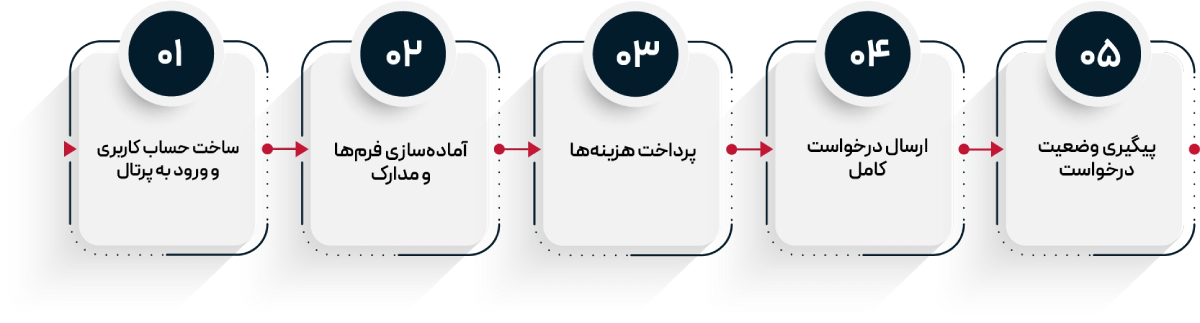
Step 1: create an account and open the portal
Start by signing in to the Permanent Residence Portal or creating an account. Two applications are filed together:
- The sponsorship application, completed by you as the sponsor
- The permanent residence application, completed by your partner
Both are submitted as a single online package by the principal applicant.
Step 2: documents needed for spousal sponsorship in Canada
The application package contains:
- Document checklists for you and for the person you are sponsoring
- The core immigration forms, which must be complete with no blank mandatory fields
- Country-specific forms for the applicant’s country of residence
- A photograph for each applicant meeting IRCC’s photo specification
Everything is scanned, uploaded and signed electronically. Documents in another language need a certified translation with the translator’s declaration.
Step 3: pay the fees
Fees are paid online and the receipt is uploaded with the application. All amounts are in Canadian dollars (CAD).
| Fee type | Approximate amount (Canadian dollars) | Notes |
|---|---|---|
| Spouse or partner sponsorship | CAD 1,260 | Includes the processing fee, sponsorship fee and right of permanent residence fee |
| Dependent child sponsorship (per child) | CAD 180 | Per dependent child, unmarried and under 22 |
| Biometrics (fingerprints and digital photo) | CAD 85 (per person) / CAD 170 (family maximum) | Required for most applicants |
| Medical exam | About CAD 100 to 300 | Cost varies; paid to an IRCC panel physician |
| Police certificate | Varies by country | Required for applicants aged 18 and over |
Step 4: submit the complete application
Before the principal applicant submits, check that:
- Every form is complete
- The application is signed electronically, using the full name as it appears in the passport
- The fee receipt is attached
- Supporting documents are complete and legible
An incomplete application is returned rather than assessed. Nothing is refused on the merits, but you lose the time and have to file again from the start.
Step 5: track the application
After submission you receive an acknowledgement and a file number, which you use to follow progress online. If you live in Quebec, there are additional provincial forms and an undertaking with the Quebec government, because the province runs its own selection of family class applicants.
Spousal sponsorship is a well-established route for reuniting families in Canada. Following the steps carefully, assembling complete evidence and paying the fees on time keeps the file moving. It does not, by itself, decide the outcome. IRCC assesses every application on its own merits.
How long does spousal sponsorship take?
IRCC’s service standard for spousal sponsorship is around 12 months. That target covers both types of application:
- Inland, where the spouse is already in Canada
- Outland, where the spouse is outside Canada
Actual times vary. Inland files have often run longer than outland ones, and the visa office handling the case, the completeness of the evidence and any follow-up request from IRCC all affect the total.
Check your online account regularly and respond quickly to any request from IRCC. Several things reliably slow a file down:
- Unclear or poor-quality scans of documents
- Information or documents that need to be verified
- A medical condition that requires further tests or a specialist opinion
- Criminality or security concerns
- The need to consult another immigration office inside or outside Canada
What happens after you submit
Once the application is filed, Immigration, Refugees and Citizenship Canada (IRCC) communicates through your online account. Without an account, messages go to your email or postal address, which is slower and easier to miss. Linking the application to an account is worth the few minutes it takes.
During processing, IRCC may ask for additional documents or information, and may call one or both of you to an interview about the relationship. Deadlines in those letters are firm; missing one delays the file or ends it. Processing is also file-specific, so do not read anything into someone else’s case moving faster than yours. Check your email and your account often so nothing is missed.
Read more: A full guide to having a baby in Canada
How to build a strong spousal sponsorship file
A complete, consistent application is the part you control. These points matter most:
- Document the relationship from several angles: photographs across time, messages, travel records, a joint lease or joint accounts.
- Show that you can meet the undertaking, with an employment letter, bank statements and tax records.
- Answer every question honestly. Misrepresentation carries a five-year bar, and it is a far worse outcome than a refusal.
- Organise the upload clearly, with documents named and grouped so an officer can follow them.
- Get advice on complicated files, such as a previous marriage, an earlier refusal, or a spouse who was not declared in an earlier application.
- Review every form, document and receipt before you submit.
Frequently asked questions
- How old does my spouse or partner have to be?
The person you sponsor must be at least 18 years old. - What happens while the permanent residence application is still being processed?
If your spouse is in Canada and moves, tell IRCC the new address so the later stages are not delayed. In most cases a spouse who is in Canada with valid temporary status and has an inland sponsorship application in progress can apply for an open work permit and work while they wait. They must keep their temporary resident status valid throughout. - Can my spouse stay in Canada while the application is assessed?
Yes, as long as they hold valid temporary resident status. Temporary status has an expiry date. To stay longer, apply to extend it, usually with a visitor record, before the current status runs out. Applying before expiry is what preserves the right to remain while the extension is decided.
This article is general information, not legal advice, and it describes published official rules rather than any individual case. Hadi Imani is a Regulated Canadian Immigration Consultant, licence R522575, practising in Toronto; that licence covers Canadian immigration only.