Arriving in Canada for the first time is a step most travellers find stressful, because a visa or an eTA is permission to travel to Canada, not permission to enter it. The final decision is made at the port of entry by a border services officer, and it rests on the documents you carry and the answers you give. The questions an officer asks are there to confirm that your entry meets the requirements of Canadian law.
Knowing what is likely to be asked makes the process straightforward rather than intimidating. Below are the questions you can expect, how to answer them and the documents to have with you, so that your arrival and the rest of your immigration to Canada go as smoothly as possible.
What happens when you land in Canada
On a first arrival you should be ready to answer questions at the border. They are put to you by an officer of the Canada Border Services Agency (CBSA), the federal agency responsible for enforcing the rules on people and goods entering and leaving Canada. If you are not a Canadian citizen or permanent resident, a CBSA officer examines your documents and decides whether you may enter, and on what terms.
Common types of Canadian immigration officer questions
Because your entry to Canada is decided by the officer in front of you, it is worth knowing the categories the questions fall into. There are four.
Identity questions
The first group is about who you are:
- What is your full name and date of birth?
- What is your citizenship?
- Is your passport valid, and does your travel document match it?
These questions confirm that you are the person named in the documents you have presented.
Questions about the purpose of your trip
The next group covers why you are coming and how long you will stay:
-
- What is the purpose of your trip? For example tourism, study, work or visiting family.
- How long do you plan to stay in Canada?
- Do you have a travel plan and supporting documents, such as an invitation letter or a letter of acceptance?
- Do you plan to visit other cities or provinces?
- Do you have a return or onward ticket?
- Is this your first trip to Canada?
- Do you intend to work or study while you are here?
- Do you plan to extend your stay once your current status expires?
- Can you show proof of funds or evidence of the purpose of your trip?
Answer consistently with your documents. If you are travelling on a study permit, say that you intend to complete your program and describe your plans accurately. Officers compare what you say against what is in your file, and inconsistencies are what create problems, not the questions themselves.
Questions about where you will stay are also standard border questions in Canada. The officer wants to know the address and contact details of your accommodation, and whether you are staying in one province or travelling more widely. Have the address written down rather than relying on memory.

Questions about funds and your circumstances
The third group is about your financial means:
- How much cash do you have with you, and do you hold credit cards?
- Can you show proof of funds or a recent bank statement?
- Are you able to cover your stay in Canada and your return travel?
Related questions cover employment or study for people arriving on a study permit or a work permit. The officer will ask which institution you are attending or which employer you will work for, what your plans are, and whether you hold a letter of acceptance or a job offer. The purpose is to confirm that the stated reason for your stay is genuine and matches the permit you were issued.
Customs and travel history questions
The final group covers your travel history and what you are bringing in:
- Have you travelled to Canada or other countries before?
- Have you ever been refused a visa or removed from any country?
- Do you have an open or ongoing immigration application?
- When do you plan to return home, and under what circumstances?
- Are you carrying food, animals, plants or agricultural products, firearms, or currency and monetary instruments worth CAD 10,000 or more?
- Are you carrying commercial goods or gifts of significant value?
- Do you intend to sell or distribute anything in Canada?
How to answer Canadian immigration officer questions
Answer with complete honesty. Do not give partial or false information. Misrepresentation at the border has consequences well beyond the trip itself, including a finding of inadmissibility and a bar on returning. Keep your answers short, direct and responsive to what was actually asked.
Keep your passport, letter of acceptance, job offer and any supporting documents together and within reach so you can produce them immediately. If a discrepancy comes up, stay calm and do not argue. You may be sent to secondary inspection, which is routine and not in itself a sign that anything is wrong.
Questions at a Canadian airport exist to enforce the law and protect public safety, not to catch you out. If you intend to extend your status later, or apply for permanent residence, a clean and consistent entry record helps you. Note that CBSA officers can also examine phones and laptops at the border. The Government of Canada’s official page on preparing for arrival sets out the current rules.
Documents to have with you when entering Canada
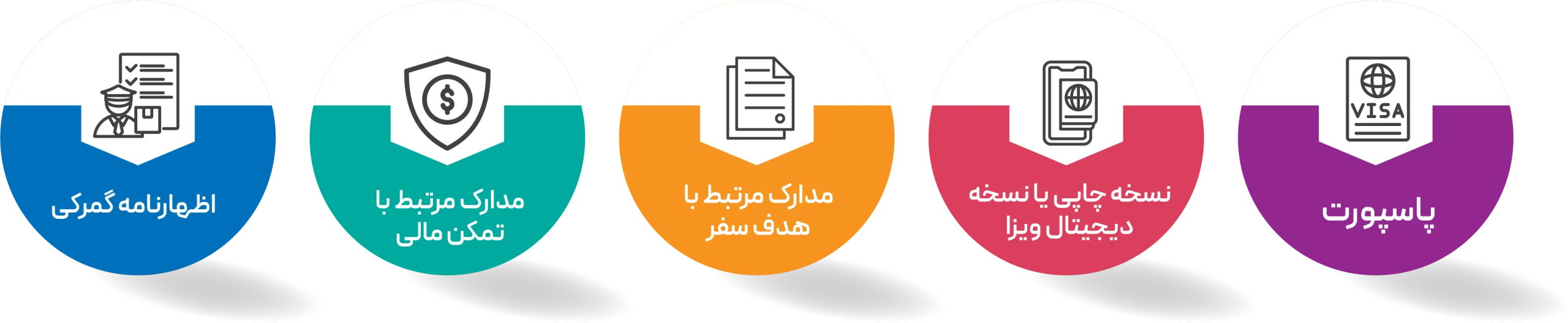
Carrying complete, valid documents is what makes the border interview short. Officers expect you to be able to explain the purpose of your trip and your circumstances with paperwork rather than assertions, and to show that you will leave Canada at the end of your authorised stay if you are a temporary resident. Have the following with you:
- A passport valid for your stay, plus your visa or eTA confirmation
- Your letter of introduction, if you were issued a study permit or work permit approval
- A letter of acceptance from your school, or your job offer and employment contract
- Proof of funds: bank statements, a scholarship letter or evidence of sponsorship
- Your accommodation details, or an invitation letter with the host’s address and contact details
- Your return or onward ticket and travel itinerary
- Medical exam confirmation, police certificates or any other document referenced in your application
Practical points about your documents
Keep everything organised in one folder in your hand luggage so you can hand it over without searching. Save digital copies on your phone, but carry printed copies as well, since you may not have connectivity in the arrivals hall.
Never present false or altered documents. That is misrepresentation under the Immigration and Refugee Protection Act and carries a bar on entering Canada. If your visa is electronic, bring the confirmation and the passport it is linked to.
Match the documents to the purpose of your trip: a letter of acceptance for a study permit, a job offer and contract for a Canadian work permit, and a purpose-of-trip letter with hotel bookings or host details for a Canadian visitor visa.
Read more: Biometrics and fingerprinting for Canada
Applying for a Canadian visa with Aval Visa
Aval Visa is a Canadian immigration consultancy based in Toronto and led by a Regulated Canadian Immigration Consultant, regulated by the College of Immigration and Citizenship Consultants. We advise on visitor, study, work, business and permanent residence applications.
If you are considering a move to Canada, contact us and we will assess your background, explain which programs you actually qualify for and prepare your application to the standard IRCC expects. Every decision rests with IRCC or the province concerned, and no consultant can promise an outcome, but a properly documented application gives you a fair hearing on the merits.
Frequently asked questions
- What if the officer asks something I am not prepared for? Say calmly that you need a moment, check your documents, and then give an accurate answer. A short pause is far better than a guess that later turns out to contradict your file.
- Does being polite look suspicious? No. Straightforward, courteous answers and normal eye contact are exactly what officers expect. Jokes, particularly about anything security related, are what create problems.
- What if I am carrying CAD 10,000 or more? Declare it. There is no limit on the amount you may bring into Canada, but currency and monetary instruments worth CAD 10,000 or more, in any currency, must be reported. Failing to report can lead to seizure and a penalty.
- What questions does a Canadian border officer ask, in English? Common ones include “What is the purpose of your visit?”, “How long will you stay in Canada?”, “Where will you be staying?”, “Do you have a return ticket?” and “How much money are you carrying?”. They are asked to establish the purpose of the trip, the intended length of stay and whether you can support yourself. Keep your answers short, honest and consistent with your documents.
This article is general information, not legal advice, and it describes published official rules rather than any individual case. Hadi Imani is a Regulated Canadian Immigration Consultant, licence R522575, practising in Toronto; that licence covers Canadian immigration only.