
Having a baby in Canada is a decision a number of families make every year, including parents who are citizens or residents of another country. It has real consequences, and they are worth understanding before you book anything.
A child born on Canadian soil is a Canadian citizen from birth. That gives the child lifelong status in one of the safest and most developed countries in the world, with access to publicly funded health care and schooling while they live there.
The decision does not end with the birth itself, though. There is no maternity visa for Canada, so you need to understand which temporary resident visa actually applies, what a birth costs a non-resident, what status the parents hold, and how the child’s documents are registered. This article sets out what to expect, and what having a baby in Canada does and does not do for a family’s immigration to Canada.
The law on being born in Canada
In Canada, a child born on Canadian soil is automatically a Canadian citizen, even if the parents hold no permanent residence or citizenship. This follows the principle of citizenship by place of birth. The only exception applies to children of accredited foreign government representatives, such as diplomats, who do not acquire citizenship this way.
For that reason some families choose to give birth in Canada so the child holds Canadian citizenship from birth. The child can then use that status for the rest of their life. It cannot be revoked because of where the parents live, and it gives the child the right to enter Canada, to attend publicly funded school and to be covered by a provincial health plan once resident in a province.
Advantages of being born in Canada
What a Canadian birth actually gives the child is worth setting out plainly:
- Lower cost than the United States: the Canadian dollar generally trades below the US dollar, so the same care converted into a foreign currency usually costs less. Exchange rates move, so price the hospital in CAD and convert at the current rate.
- Access to public health care: the child qualifies for a provincial or territorial health plan on the same terms as any other citizen, once they live in that province and meet its residency rule. Coverage is tied to living in a province, not to the passport alone.
- Publicly funded schooling: a child born in Canada attends public elementary and secondary school without tuition. University is not free, but citizens pay domestic tuition, which is a fraction of the international rate.
- A strong passport: Canadian citizens can travel to many countries without applying for a visa in advance.
- The right to live and work in Canada: the child can live, study and work anywhere in Canada without a permit. This does not extend to the United States. Canadian citizens still need a visa or status to live, study or work there, although CUSMA opens some professional work categories.
- A safe, developed country: Canadian citizenship gives access to a stable economy, a high level of personal safety and a clean environment.
Rules that apply when you travel to Canada to give birth
Every country has its own rules on birth and travel, and it pays to know them before you go. Canada is no different. Here are the points that matter:
1. You need a temporary resident visa or an eTA
Foreign nationals need a temporary resident visa (TRV) to enter Canada, or an electronic travel authorisation if they are from a visa-exempt country. There is no “birth visa” or “maternity visa” in Canadian law. You are applying as a visitor.
Be truthful about the purpose of your trip. Travelling to Canada to give birth is not in itself unlawful, but misrepresenting why you are coming is a serious matter under the Immigration and Refugee Protection Act and can lead to a refusal and a period of inadmissibility. An officer must be satisfied that you will leave Canada at the end of your authorised stay and that you can pay your own way.
2. Proof of funds
You have to show you can cover everything the trip involves, in Canadian dollars: medical and hospital charges, accommodation, and day-to-day living costs.
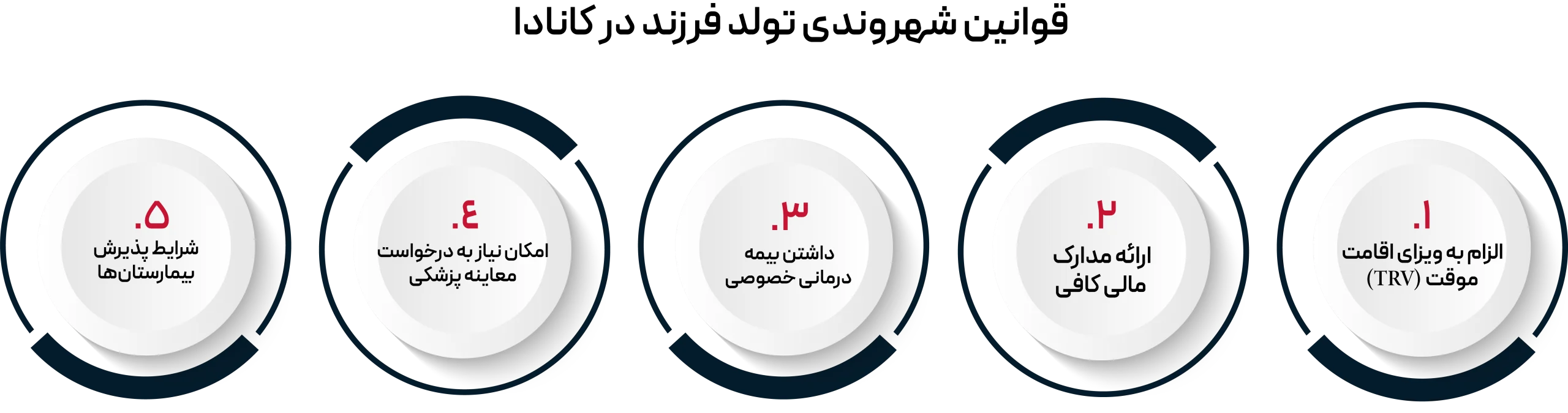
3. Private medical insurance
Visitors are not covered by Canada’s public health insurance, so private cover is important. Read the policy carefully. Many travel policies exclude routine pregnancy and delivery entirely and cover only unforeseen complications, and some exclude pregnancy after a certain number of weeks.
4. A medical examination may be required
Depending on your health, your travel history and how long you intend to stay, IRCC may require an immigration medical examination as part of the application.
5. Hospital admission policies
Not every Canadian hospital accepts non-resident patients for delivery. Contact hospitals before you travel and confirm their policy, their deposit and their fee schedule in writing.
A child born in Canada is a Canadian citizen regardless of the parents’ status. The parents’ status does not change.
Documents you need for a birth in Canada
If you plan to give birth in Canada, prepare your documents before you travel. They fall into a few groups:
Documents for the visitor visa
To enter Canada lawfully you need a temporary resident visa (TRV), or an eTA if you are visa-exempt. You will generally need:
- A valid passport. A visa cannot be issued beyond your passport’s expiry date, so renew it first if it is close to expiring
- The completed application forms
- A digital photo that meets IRCC’s specifications
- Financial documents showing you can pay for travel, accommodation and the birth, such as bank statements or proof of income
- Your travel plan and expected due date
- A letter of explanation setting out the purpose of the trip and your ties to your home country
- Medical documentation, and an immigration medical examination if one is requested
- Biometrics, fingerprints and a photo, given at an authorised collection point
- An invitation letter, if you have a host in Canada
Documents for the hospital
Before you travel, arrange the clinical side:
- Contact the hospital you intend to use and get written confirmation that it will accept you
- Review and sign the service agreement and the schedule of charges
- Buy private medical insurance that actually covers maternity care, if a policy is available to you
Registering the birth
After the birth, register the child with the province. You will need:
- The birth registration form, which the hospital provides and which can usually be completed online
- The parents’ identity documents, passports or residence cards
- A Canadian address, so the certificate can be mailed to you
Documents for the child’s passport
To apply for the child’s Canadian passport:
- The long-form birth certificate
- The passport application form
- Two photos of the baby that meet Canadian passport specifications
- The parents’ identity documents
- The passport fee, payable in Canadian dollars
Certified translations
Any document that is not in English or French must be submitted with a certified translation, together with the translator’s declaration or affidavit.
Cost of giving birth in Canada as a non-resident
The table below sets out what a birth in Canada typically costs a non-resident. All amounts are in Canadian dollars:
| Item | Description / approximate cost (CAD) |
|---|---|
| Prenatal visits | CAD 1,000 to 5,000 |
| Vaginal delivery | Uninsured rate set by the hospital; varies by province - confirm before treatment |
| Caesarean delivery | Uninsured rate set by the hospital; varies by province and delivery type - confirm before treatment |
| Postpartum care | CAD 2,000 to 5,000 |
| Home birth with a midwife | CAD 2,500 to 5,000 |
| Hospital stay, per day | Uninsured hospital rates are set by the provincial health authority and the hospital - request the current rate schedule |
| Laboratory tests | Uninsured laboratory charges vary by province and hospital - request the current rate schedule |
| Neonatal intensive care (NICU) | Charged at the hospital uninsured rate; can reach tens of thousands of dollars - ask for the current rate schedule |
| Birth certificate and infant passport | Separate fees by province and document type |
| Travel/private insurance for pregnancy | Cost and coverage vary; check the policy carefully |
Keep the following in mind:
- Non-residents are not covered by Canada’s public health insurance and pay the full cost themselves.
- You need valid status to enter and stay in Canada.
- Budget carefully before you travel, and allow for complications.
- Costs vary by province, by hospital and by the clinical circumstances.
Hospital rates and government fees change, so confirm current figures with the hospital and on the Government of Canada website before you commit.
Does a Canadian-born child give the parents status?
No. A child born in Canada does not give the parents residence, a visa or any faster route to permanent residence. If you want status in Canada, you apply through the ordinary immigration programs:
- Permanent residence through an economic program: parents can apply through Express Entry or a Provincial Nominee Program on their own merits. Selection rests with IRCC and the provinces.
- Sponsorship by the child later on: once the child turns 18 and meets the requirements, including living in Canada and meeting the income test, they may sponsor their parents for permanent residence.
- Temporary status: while the child is young, parents can apply for temporary status such as a Canadian work permit, a study permit or a visitor visa, each on its own requirements.
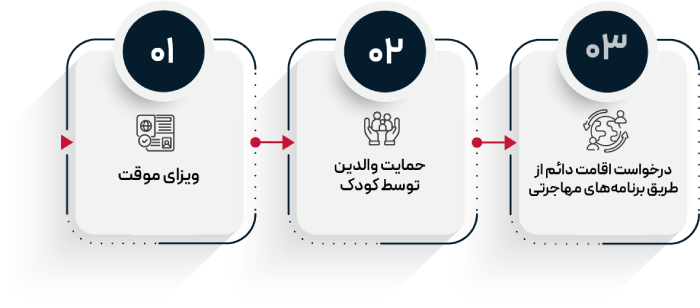
A Canadian birth gives the child citizenship and everything that follows from it. It does not give the parents status. Parents have to qualify under a published immigration program like anyone else, and no adviser can promise an outcome. For advice on which program fits your profile, speak to an RCIC at Aval Visa.
Parent sponsorship: what the child must meet
To use the Parents and Grandparents Program, a Canadian citizen or permanent resident has to meet these conditions:
- Age: be at least 18 years old.
- Status: be a Canadian citizen, a permanent resident, or a person registered under the Indian Act.
- Residence: live in Canada, and remain in Canada from the time of application until a decision is made.
- Income: meet the minimum necessary income for the family size, shown through Canada Revenue Agency notices of assessment, and sign an undertaking to support the parents financially.
Intake to the Parents and Grandparents Program is limited and is managed through an interest-to-sponsor process, so it is not open continuously. If the child is under 18 and cannot sponsor, parents can look at the super visa, a long-stay visitor visa for parents and grandparents that requires private medical insurance and proof that the child in Canada meets an income threshold.
Frequently asked questions
- Can I travel to Canada specifically to give birth?
You can apply as a visitor. There is no maternity visa, so you would enter on a Canadian visitor visa or an eTA. Be honest about your plans, be ready to pay all medical and hospital charges yourself, and expect the officer to assess whether you will leave at the end of your stay. As a non-resident you are not covered by public health insurance. - How do I get my own country’s passport for a baby born in Canada?
Register the birth with your own country’s embassy or consulate in Canada, then follow that country’s process for a passport. Rules differ from one country to another, so check with your consulate before the birth. - Will my baby have dual citizenship?
The child is a Canadian citizen because they were born in Canada. Whether they also hold your nationality depends on the nationality law of your own country. Many countries pass citizenship to a child through a parent, but some do not recognise dual citizenship at all, so confirm the position with your consulate.
This article is general information, not legal advice, and it describes published official rules rather than any individual case. Hadi Imani is a Regulated Canadian Immigration Consultant, licence R522575, practising in Toronto; that licence covers Canadian immigration only.