Dentistry is one of the stronger occupational groups for immigration to Canada. Working in the field takes more than a degree and clinical experience: you also have to pass a set of national examinations so that Canadian regulators can verify your academic knowledge and clinical competence. This article sets out the requirements for dentists immigrating to Canada and looks at what the job market actually offers. Read on with Aval Visa.
This page is about dentists. Physicians follow a different provincial route — the Nova Scotia Defined licence for physicians.
Can a foreign-trained dentist immigrate to Canada?
The question that comes up first in medicine and dentistry is whether someone who trained outside Canada has a realistic chance of practising and earning well here. The answer is yes, with conditions. Dentists who qualified abroad go through the credential recognition process run by the National Dental Examining Board of Canada (NDEB).
A degree earned outside Canada is not invalid, but it is not automatically recognised for licensing either. Graduates of programs accredited by the Commission on Dental Accreditation of Canada, which includes accredited programs in the United States, are treated differently from everyone else. Almost every other applicant goes through the NDEB Equivalency Process, which usually means a series of examinations and, for many candidates, a qualifying program at a Canadian dental faculty.
So immigration to Canada as a dentist is achievable, provided you plan for the licensing pathway alongside the immigration application. With that in mind, here are the routes.
Routes for dentists immigrating to Canada
These are the practical routes into Canada for a dentist. Which one fits depends on your age, language ability, experience and finances, so assess your own position before you commit to one.
Studying dentistry in Canada
The first and most straightforward route is admission to a Canadian program and a Canadian study permit. A candidate who trains inside the Canadian system from the start graduates from an accredited program and does not need to go through the Equivalency Process afterwards. It is the longest and most expensive route, and admission to Canadian dental faculties is highly competitive, but it removes the biggest licensing obstacle.
Credential recognition through the NDEB
The second route is for dentists who have already qualified: you enter the NDEB Equivalency Process and sit its examinations, and many candidates then complete a qualifying program. Once you hold the NDEB certificate you can apply to the dental regulatory authority in whichever province you want to live in.
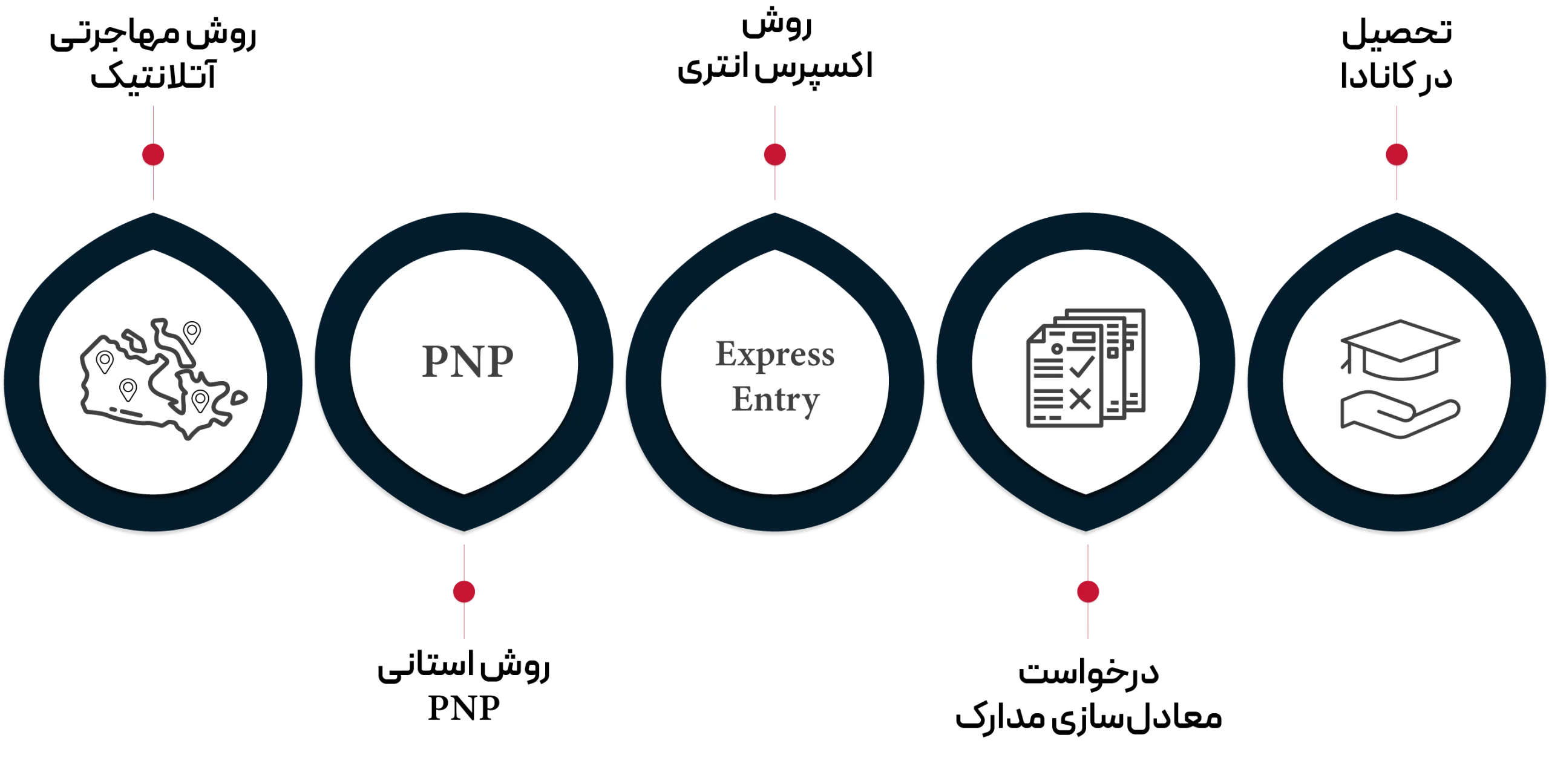
Express Entry
The third route is Express Entry, which can lead to permanent residence before you complete licensing. You need an accepted language test: IELTS General Training, CELPIP-General or PTE Core for English, or TEF Canada or TCF Canada for French. TOEFL is not accepted for Express Entry. On work experience, the Federal Skilled Worker Program asks for at least one year of continuous skilled experience within the past ten years, anywhere in the world, while the Canadian Experience Class asks for one year of skilled work in Canada within the past three years.
Express Entry is not a lottery. Eligible candidates sit in a pool with a Comprehensive Ranking System score, and IRCC invites the highest-ranked candidates in each round, along with candidates who meet the criteria of a specific category-based round. A high CRS score improves your position; it does not guarantee an invitation.
Provincial Nominee Programs
The next route is a Provincial Nominee Program (PNP). Here you apply to a province that needs dentists, such as British Columbia or Manitoba. Each province runs its own expression of interest system on its own website, not through IRCC, and sets its own score thresholds and streams. Enhanced streams are linked to Express Entry, so a profile in the federal pool can be nominated that way; base streams are applied for directly with the province.
Read more: an introduction to the University of Alberta
The Atlantic Immigration Program
The last route is the Atlantic Immigration Program (AIP). It is employer-driven: you need a job offer from an employer designated under the program in one of the Atlantic provinces, plus a settlement plan endorsed by that province. It is not open to every applicant on demand. For candidates whose CRS score is not competitive in Express Entry rounds, a designated employer in Atlantic Canada can be a realistic alternative route to permanent residence, since the region is short of health professionals.
Qualifying programs for internationally trained dentists
After passing the first NDEB examination, many internationally trained dentists apply to a qualifying or degree completion program at one of the Canadian faculties of dentistry. These programs typically run for two years, and tuition for international dentists commonly falls between CAD 50,000 and CAD 100,000 per year, depending on the faculty. Places are limited and admission is competitive.
Graduating from one of these programs makes you eligible for the NDEB certification examinations, and the certificate is what a provincial regulator asks for when you apply for a licence.
The credential recognition process for dentists in Canada
To immigrate to Canada as a dentist through a work visa and go on to practise, the first task is credential recognition. Here is how it works.
Create an account at NDEB-BNED.CA using your own email address. Once the email is verified, enter your details carefully and pay the application fee, currently in the region of CAD 900; the NDEB reviews its fees, so confirm the current amount on its site.
Once the NDEB has verified your documents, you sit the Assessment of Fundamental Knowledge (AFK). After you pass it, you choose between two paths:
- Continue the Equivalency Process examinations and apply for certification directly
- Apply to a qualifying or degree completion program at a Canadian dental faculty
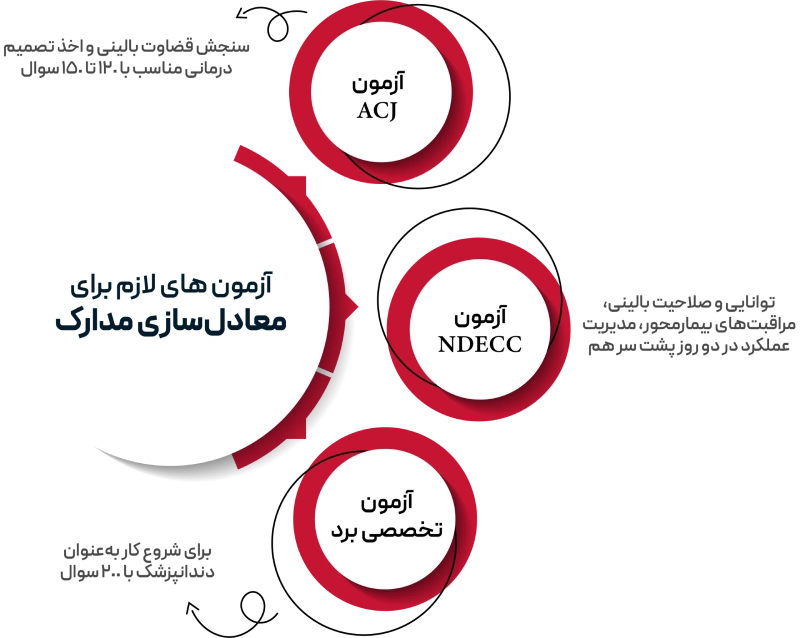
If you take the academic path, the next step is applying for admission. If you continue the examination path, there are further assessments to sit; the table below summarises them.
| Exam | What it assesses | Minimum passing score | Details |
|---|---|---|---|
| ACJ exam | Assessment of clinical judgement and appropriate treatment decisions | 75 | 120 to 150 questions, computer-based |
| NDECC exam | Clinical ability and competence, patient-centred care, practice management | 75 | Held over 2 consecutive days, 6 hours each day |
| NDEB Virtual OSCE (board exam) | Readiness to begin practice as a dentist | 75 | 200 questions: 50 multiple-choice and 150 case-based |
Passing these examinations leads to an NDEB certificate, which you then use to apply for a licence from a provincial dental regulatory authority. Regulators can set their own additional requirements, such as a jurisprudence examination, proof of language ability and a criminal record check. To practise as a specialist, you have to apply separately to a recognised residency program and complete it. Note as well that credential recognition for licensing is not the same thing as an Educational Credential Assessment for immigration; Express Entry requires an ECA from an IRCC-designated organisation, which is a separate report. With the examinations covered, here are the documents you need.
Read more: the best jobs for women in Canada
Documents required for dentists immigrating to Canada
Whether you are applying to work or to study in Canada, each immigration program has its own document checklist and you have to meet it exactly. Alongside your examination results, you will generally need:
- Passport and all identity documents
- Original academic credentials and certified translations
- Original academic transcripts and certified translations
- A certified colour copy of your dental degree in the original language
- A confirmation of degree form issued directly by the university that awarded it
- Proof of every course and grade from your dental program, with an official translation
- A letter or certificate from each licensing body that has registered you, confirming your practice as a dentist
Cost of credential recognition and licensing
Fees are set by the NDEB and by each provincial regulator and are reviewed regularly, so treat the table as indicative and confirm current amounts before you budget. All figures are in Canadian dollars.
| Exam name | Fee in Canadian dollars |
|---|---|
| AFK exam | CAD 1,000 |
| ACJ exam | CAD 1,350 |
| NDECC exam | CAD 3,500 |
| Application fee to open an account | CAD 900 |
| Exam application fee | CAD 450 |
| Virtual OSCE score confirmation | CAD 200 |
| Certificate of successful course completion | CAD 30 per certificate |
| Exam score verification | Set by the NDEB; check the current fee schedule |
| NDSE exam | CAD 6,000 |
How much dentists earn in Canada
Dentists are well paid in Canada. Government labour market data and salary sites put the average at roughly CAD 207,000 a year. Dentists at the start of their careers earn closer to CAD 125,000 a year, while established practice owners and specialists in orthodontics, oral and maxillofacial surgery and cosmetic dentistry earn considerably more. Earnings depend heavily on whether you are an associate or an owner, and on the province.
Once you have completed credential recognition and passed the relevant examinations, you can also compete for residency positions and train as a specialist in British Columbia, Manitoba, Alberta, Saskatchewan, Ontario or Quebec, and then practise in that province.
Immigrating to Canada as a dentist with Aval Visa
The Aval Visa team has years of experience with dental work permits and applications to Canadian dental programs, and can help you at any point on the path, from admission to the NDEB examinations to applying for residency and specialist training. Aval Visa is led by Hadi Imani, a Regulated Canadian Immigration Consultant (RCIC #R522575) regulated by the College of Immigration and Citizenship Consultants. We advise on Canadian immigration only. Contact the Toronto office for an assessment of your file. No consultant can promise a result; what we can do is make sure the application is complete, honest and filed under the right program.
Frequently asked questions
- What can I do for work until I am licensed as a dentist? Some internationally trained dentists work as a dental assistant or dental hygienist while completing the process. Both are regulated occupations in most provinces, so you need the relevant training and registration first, plus work authorisation. Pay commonly starts around CAD 20 to CAD 25 an hour, rising to roughly CAD 27 to CAD 30 with the relevant certification.
- How much tax does a dentist pay in Canada? Income tax is charged on a progressive scale, with a federal portion and a provincial portion, so the rate depends on your income and where you live. If you run a practice you may also have to register for and remit GST or HST. Tax is outside the scope of immigration advice, so speak to a Canadian accountant about your situation.
- Is there a cap on how many candidates the NDEB certifies? The NDEB sets its own rules on how many attempts are permitted at each examination. Check the NDEB’s current regulations before planning your timeline.
Official source: National Dental Examining Board of Canada — equivalency process
This article is general information, not legal advice, and it describes published official rules rather than any individual case. Hadi Imani is a Regulated Canadian Immigration Consultant, licence R522575, practising in Toronto; that licence covers Canadian immigration only.