If you want an undergraduate degree in a country with a strong education system, a safe environment and a lot of open space, Finland is worth a serious look. It is known for the quality of its teaching, the number of programmes taught in English and the support it gives international students. Because information on the Finland student visa and university admission can be hard to find in one place, this guide covers a bachelor’s degree in Finland end to end: the programmes, the application routes, the costs and the requirements.
Bachelor’s programmes in Finland
A bachelor’s degree is a higher education qualification awarded by universities and universities of applied sciences (UAS) after a programme lasting between three and four and a half years. These programmes are designed to give a graduate:
- advanced knowledge of a professional or academic field
- advanced skills and the ability to solve complex problems in that field
- the ability to manage complex technical or professional activities and projects
- responsibility for developing the professional skills of individuals and teams
Because of this, a bachelor’s degree in Finland prepares students both for the labour market and for further study.
How bachelor’s programmes in Finland are structured
Finnish bachelor’s programmes are built to combine subject knowledge with practical skills and communication ability. A university bachelor’s degree is normally about three years, or 180 ECTS credits, and includes:
- basic and advanced courses in the major and minor subjects
- language and communication studies
- other related coursework
- a practical training period
- a bachelor’s thesis

Universities design the content and overall structure of each programme. Within that structure, students have a degree of freedom to choose their own courses, as long as the compulsory studies are completed.
Entry requirements for a bachelor’s degree in Finland
To be admitted to a Finnish bachelor’s programme, you need general eligibility for higher education. The qualifications that establish this include:
- the Finnish matriculation examination
- the International Baccalaureate (IB)
- the European Baccalaureate (EB)
- the German Reifepruefung (RP) or Deutsche Internationale Abitur (DIA)
- vocational qualifications of at least three years
- a Finnish upper secondary vocational qualification or an equivalent
- a foreign qualification that gives access to university studies in the country that issued it
How to apply for a bachelor’s degree in Finland
Once you are eligible, there are two ways to apply to Finnish bachelor’s programmes:
- Joint application: one form lets you apply to several programmes at once, normally up to six. It is the simpler route and most universities and universities of applied sciences use it.
- Separate application: some universities and programmes sit outside the joint application system and run their own process, document list and deadlines.
Before you start, check on the university’s own website which route applies and when the application period for that programme opens and closes.
Documents needed for a bachelor’s degree in Finland
A Finnish university application normally requires:
- a copy of your passport
- academic documents, including your school leaving certificate and transcripts showing the grading scale
- certified English translations, if the originals are not in English or Finnish
- proof of English proficiency (IELTS, TOEFL, PTE or a Cambridge English exam)
Step-by-step guide to a bachelor’s degree in Finland
If you are planning to start an undergraduate degree in Finland, work through the application in this order.
Check the requirements and prepare
Read the admission criteria for the exact programme first. Some subjects require a language test or a subject-specific entrance exam such as the SAT. Book those tests early so you have time to prepare. Find the application deadline for every programme and university on your list so you do not miss an intake.
Submit the online application
Applications to Finnish universities are made through the Studyinfo national application service. The form is only open during a fixed application period, so complete and submit it inside that window. After you apply, check your email regularly, including the spam folder, for updates on your application.
Upload the required documents
Once the form is submitted, you upload the requested documents. Incomplete or irrelevant documents slow the process down or stop it. Some applicants receive a conditional offer, meaning further documents, a higher language score or additional information are needed. Provide anything requested in the format and by the date the university specifies, or the offer can be withdrawn.
If you think you may not be able to start at the beginning of the term, ask the university about deferral before you accept.
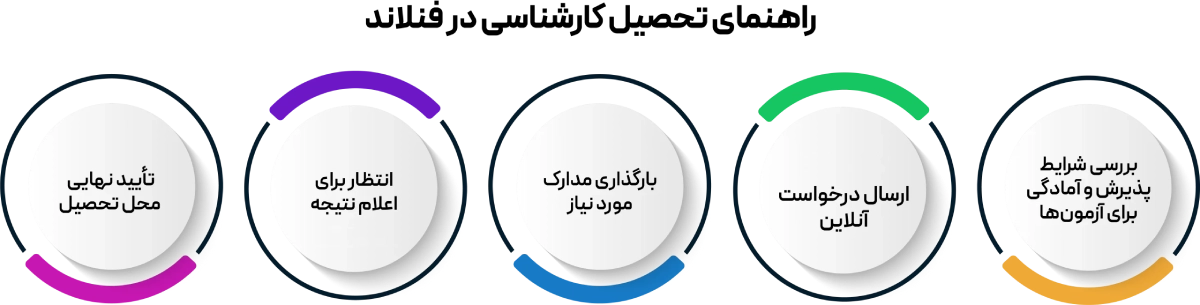
Wait for the results
Universities announce admission results by email, based on the documents and the specific criteria of each programme. This stage takes time, so plan around it.
Accept your study place
If you are admitted to more than one programme, you confirm the study place you want in Studyinfo. That choice is final and cannot be changed afterwards, so decide carefully.
Top universities for a bachelor’s degree in Finland
The institutions below are among the strongest options for undergraduate study in Finland. Check the Admissions section of each university’s site for entry requirements and tuition:
- University of Helsinki
- Aalto University
- Tampere University
- University of Turku
- University of Jyvaskyla
- Lappeenranta-Lahti University of Technology (LUT)
- Satakunta University of Applied Sciences
- University of the Arts Helsinki
Cost of a bachelor’s degree in Finland
If you are a citizen of an EU or EEA country or Switzerland, undergraduate study at Finnish universities and universities of applied sciences is free. Applicants from outside the EEA normally pay tuition, unless one of the following applies:
- If you hold a permanent or continuous residence permit in Finland, or an EU Blue Card, you can study without paying tuition.
- If your programme is taught in Finnish or Swedish, there is normally no tuition fee.
- For non-EU students, English-taught bachelor’s programmes cost between EUR 8,000 and EUR 13,000 a year, and some programmes reach EUR 18,000 a year.
- Non-EU/EEA applicants also pay a EUR 100 application fee.
- Student living costs in Finland, covering housing, food, transport and personal spending, run between EUR 700 and EUR 1,200 a month.
Scholarships for study in Finland
If the tuition looks steep, there are scholarships for international undergraduates in Finland. They are offered by the universities themselves and can take the form of a tuition fee waiver or a cash grant.
Tuition fee waivers
Many universities offer waivers to fee-paying non-EU/EEA students. These typically cover 50 per cent or 100 per cent of tuition. The University of Helsinki, for example, offers scholarships at both levels.
Merit-based scholarships
Some universities award scholarships on academic performance. The University of Eastern Finland, for example, offers a full tuition waiver to the strongest students in each programme. To keep it, you have to maintain your academic progress through the year.
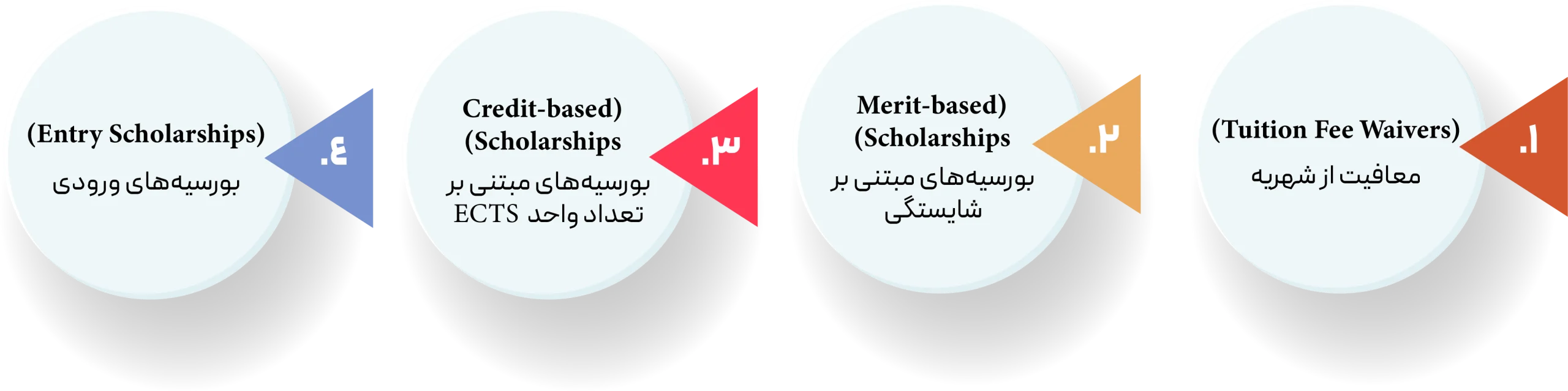
Credit-based scholarships
Some universities award scholarships based on the number of ECTS credits a student completes in an academic year. Tampere University, for example, offers awards of EUR 1,500 to students who reach a set credit total each year.
Entry scholarships
Some institutions award a scholarship at the point of admission. Satakunta University of Applied Sciences, for example, offers EUR 1,500 to first-year students.
Application deadlines for a bachelor’s degree in Finland
Check the deadlines before you start, because missing an application period costs you a full intake.
Joint application deadlines
For programmes starting in autumn (August or September), the joint application normally closes in the second half of January. If you miss the main round and the programme allows it, there is often a September application period for a January start.
Separate application deadlines
Deadlines vary by university and typically run into early spring, often through March. This route is more flexible but requires a separate form for each programme. If places remain unfilled after the main round, some universities run an additional admission round.
Studying in Finland with Aval Visa
One of the most important steps in studying for a bachelor’s degree in Finland is the student residence permit, and the conditions depend on your nationality. Students from the EU and EEA do not need a visa and only register their right of residence after arrival. Students from outside the EU need a student residence permit before they travel.
For immigration to Finland, for work, for undergraduate study or for a short visit, the Aval Visa team can handle the paperwork so you can concentrate on your university application.
Frequently asked questions
- Can I work while studying for a bachelor’s degree in Finland? Yes. International students can work an average of up to 30 hours a week during the academic year and full time during holidays, though Finnish or Swedish improves your chances of finding work.
- Why was my Finnish bachelor’s application cancelled? If you submit more than one application form, only the most recent one counts and the others are removed. Submit one application only.
- Can I stay in Finland after graduating? Yes. You can apply for a post-study residence permit valid for two years to look for work or start a business, and then apply to extend your residence on that basis.
Official source: Study in Finland — bachelor’s and master’s admissions
This article is general information, not legal advice, and it describes published official rules rather than any individual case.