
The Austrian labour market offers a broad range of openings to domestic and foreign jobseekers alike, a sign of a strong economy and an active industrial base. Succeeding in that market, though, means understanding hiring practice, immigration law and where the real demand sits. If you are considering a move to Austria and want to know which occupations are in demand, read on and plan your route.
The state of the Austrian labour market
Austria is dealing with an uneven economy, demographic change and specific shortages across different sectors. Growth and output have slowed, yet unemployment remains low, at around 5.3 percent on the EU-harmonised measure.
The workforce numbers more than 4.7 million people, and women’s participation in the labour market has risen. Even so, shortages are visible in information technology, healthcare and construction.
The advantages of working in Austria
Working in Austria brings real benefits for migrants. The main ones are:
- Comprehensive social insurance
- Solid pay and additional benefits
- High-quality healthcare
- Annual leave and public holidays
- Family benefits and childcare support
- Workplace benefits on top of salary
- Training and career progression
- Support for people with particular needs
- A high standard of living
- A fair tax system
Broadly, the combination of extensive social benefits, decent job opportunities and quality of life is what makes an Austrian work visa worth pursuing.
The list of in-demand jobs in Austria
In broad terms, the occupations Austria needs fall into a handful of groups:
- Tourism and hospitality (Tourism & Gastronomy)
- Information technology (IT)
- Healthcare (Health Care)
- Retail, trade and e-commerce (Retail, Trade & E-commerce)
- Media, culture and entertainment (Media, Culture & Entertainment)
The occupations formally recognised as shortage occupations in Austria are these:
| Occupation | Average salary | Notes |
|---|---|---|
| Tourism staff | Approx. EUR 32,600 per year | Austria has a service-driven economy with steady demand for tourism and hospitality staff. |
| Chef | Approx. EUR 2,450 per month | One of the most in-demand service roles; over 170 active listings on LinkedIn. |
| Software engineer | Approx. EUR 50,246 per year | Among the highest-paying roles, with wide international opportunities. |
| Engineers | Approx. EUR 59,793 per year | Demand in mechanical engineering, industrial manufacturing, automotive and engineering management. |
| Doctors | EUR 60,000 to 130,000 per year | One of the highest-paying professions, especially in large cities and rural areas. |
| Marketing managers | Approx. EUR 59,723 per year | High demand in commerce, e-commerce, media and advertising. |
| Advertising and public relations | Approx. EUR 78,984 per year | Creative roles in online media, social media management and web design. |
| Nurses | EUR 45,817 to 80,000 per year | After doctors, nursing is the second most in-demand health profession. |
| Technicians | Approx. EUR 56,047 per year | Needed across industries from manufacturing to information technology. |
| Administrative assistant | Approx. EUR 35,000 per year | Needed in every industry, though German-language skills are a significant advantage. |
Training and funding in the Austrian labour market
To train specialists for shortage occupations, Austria offers dedicated funding for study and retraining:
- MINT subjects: mathematics, information technology, natural sciences and engineering.
- Health and social services: including nursing assistance, care management and early years education.
- Environment and ecology: technical training with a focus on environmental protection.
- The purpose of these schemes is to raise skills and employment in the areas facing the deepest shortages.
How to find the job you want in Austria
Here is a practical guide to finding work in Austria, and to the occupations the country needs.
1. Online job platforms
- AMS eJob-Room: the official portal of the Austrian public employment service
- Karriere.at: vacancies across a wide range of industries
- StepStone Austria: strongest for roles at larger companies
- Indeed Austria: an aggregator drawing on multiple sources
- Glassdoor Austria: job listings alongside company reviews and salary data
- WORK in AUSTRIA Talent Hub: aimed at international professionals, letting you build an English or German profile that Austrian employers can find
2. Preparing a CV and applying
1. Write your CV around the skills and experience the role calls for, and add a letter that shows your motivation and your fit for the position.
2. German is an advantage, though some roles, particularly in technology, are conducted in English only.
3. Check that your academic and professional qualifications are recognised in Austria.
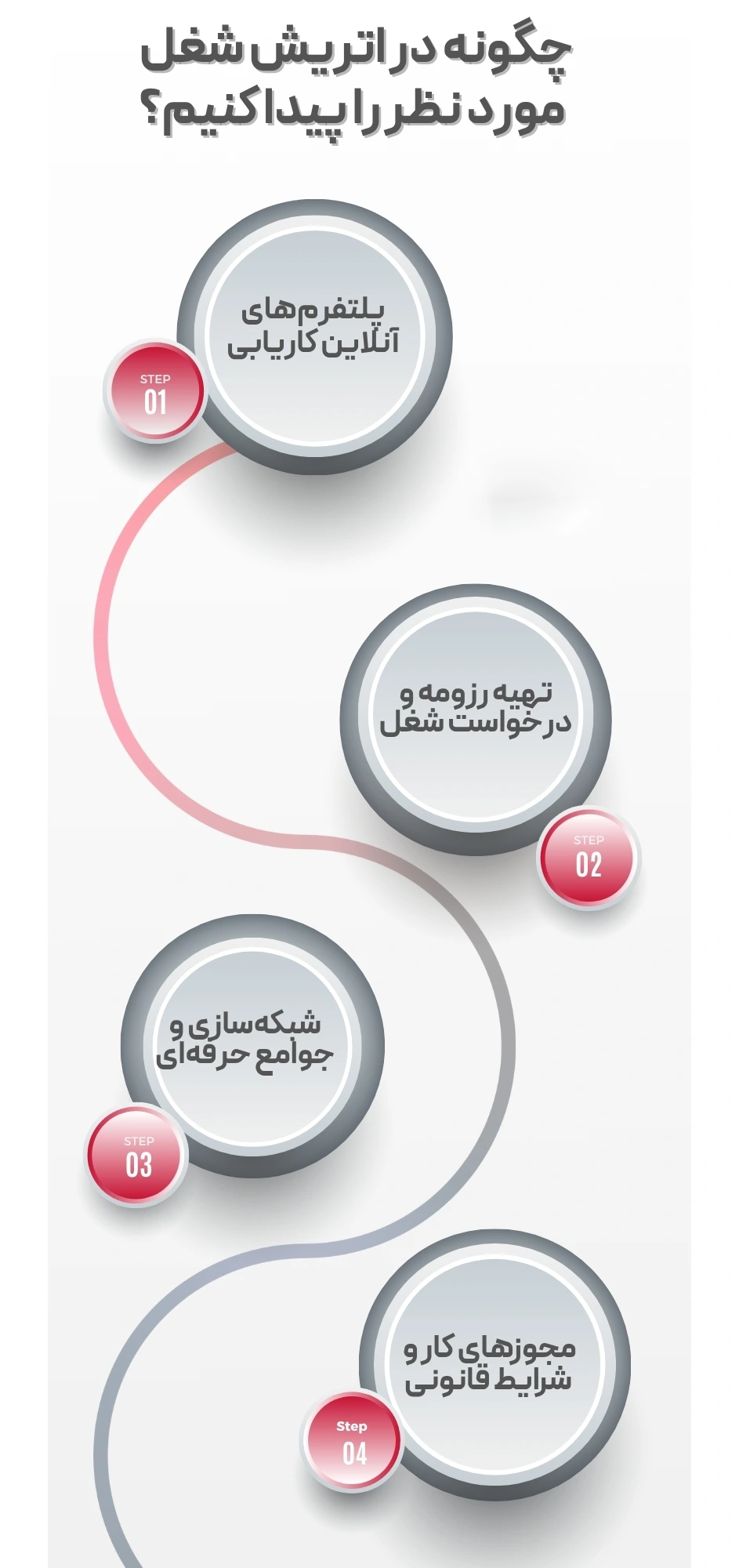
3. Networking and professional communities
- LinkedIn: keep your profile current and connect with people working in your field.
- InterNations: a community for people who have moved abroad, with regular networking events.
- Job fairs and conferences: attend sector events to meet employers directly.
4. Work permits and the legal position
- EU and EEA citizens: no work permit required.
- Non-EU citizens: normally need the Austrian Red-White-Red Card, which is issued on a points system covering qualifications, work experience, language and a job offer in Austria.
Moving to Austria: a stable destination for skilled workers
Austria offers foreign professionals a structured and stable environment, and it faces shortages of skilled staff across several sectors. Good job prospects, strong employment protection and a well-funded health system make it an attractive place to move for work. What makes the difference in practice is knowing the residence rules and knowing which occupations Austria actually needs.
Frequently asked questions
- Can I work in Austria as an intern?
Yes. Third-country nationals can take up internships in Austria. For internships of three to six months connected to your studies, the employer must obtain a notification confirmation (“Anzeigebestatigung”) and you must apply for a national D visa. - Do I need German to work in Austria?
Some roles are conducted in English, but for many positions, particularly in services, German is essential. - How can jobseekers get health insurance?
Voluntary self-insurance in the Austrian health system is available to jobseekers at a monthly contribution set each year by the health insurance fund; check the current rate with the ÖGK.
This article is general information, not legal advice, and it describes published official rules rather than any individual case.