On this page11 sections
- How is dentistry taught in the Czech Republic?
- What do you need to be admitted?
- What is on the entrance exam?
- Which universities teach dentistry in English?
- How much does it cost to study dentistry in the Czech Republic?
- Which documents do you need?
- How does the admission process work?
- What visa do you need to study in the Czech Republic?
- Is a Czech dentistry degree recognised in other countries?
- Frequently asked questions
- Official sources
Five Czech medical faculties teach the five-year Dentistry degree in English: three at Charles University (Prague, Hradec Králové and Pilsen), one at Masaryk University in Brno and one at Palacký University in Olomouc. You apply with a completed secondary school education and must pass the faculty’s entrance exam. For September 2027 entry, applications opened on 1 November 2026 at Charles University’s First Faculty of Medicine in Prague, at its Faculty of Medicine in Pilsen and at Palacký; Masaryk’s e-application for exams abroad opens on 2 January 2027.
Published tuition ranges from EUR 14,000 a year at Palacký to EUR 24,250 at the First Faculty in Prague; the other three faculties charge CZK 400,000 to 410,000 a year. The Czech government’s study portal puts a typical student budget at EUR 500 to 800 a month on top.
This guide is for school leavers and other applicants from outside the EU who want to study dentistry in English in Europe.
How is dentistry taught in the Czech Republic?
Dentistry is a single five-year, full-time master’s programme, not a bachelor’s followed by a master’s. It leads to the title MDDr. (Doctor of Dentistry). The course combines theoretical, pre-clinical and clinical training. Five years is also the EU minimum: Directive 2005/36/EC requires basic dental training of at least five years of full-time study.
Each faculty runs its own admissions, so exams, documents, fees and deadlines differ. The government’s Study in Czechia programme search lists every dental programme, including those taught only in Czech.
What do you need to be admitted?
Secondary education. A completed secondary school education with a school-leaving certificate is the academic requirement. The First Faculty in Prague says it is the only academic qualification it asks for. Both the First Faculty and Palacký let you apply before you finish school.
Recognition of your certificate. If you finished school outside the Czech Republic, your certificate must be recognised before you enrol. Some faculties assess it themselves; at others you apply for nostrification at a Czech regional authority. Masaryk, for example, charges CZK 990 for its recognition procedure, and Pilsen’s fee for assessing foreign school documents is CZK 1,050.
English. The First Faculty in Prague asks for no English certificate and assesses your English during the entrance exam. Palacký asks non-native speakers for a certificate such as IELTS 6, TOEFL 87, PTE Academic 59 or Cambridge FCE, or for its own English test, and exempts applicants whose secondary or university education was in English. Masaryk may require an oral interview in English for applicants from some countries.
Science background. Palacký sets no minimum school grade. The entrance exam decides, and every faculty tests biology and chemistry.
Can you apply straight after high school?
Yes. The faculties ask for completed secondary education, not a previous degree. Choose faculties whose exam subjects match what you studied, and make sure your certificate can be recognised before enrolment.

What is on the entrance exam?
Each faculty sets its own exam. These are the formats published for 2027 entry:
| Faculty | Format | Subjects |
|---|---|---|
| First Faculty of Medicine, Charles University (Prague) | 90-minute written multiple-choice test; those who pass go on to five online mini-interviews, and only the interview points decide admission | Biology, chemistry, general science |
| Faculty of Medicine in Hradec Králové, Charles University | Multiple-choice test (60 points) and oral interview (40 points) | Biology, chemistry, physics or mathematics |
| Faculty of Medicine in Pilsen, Charles University | Written test of 60 questions, 20 per subject; no penalty for wrong answers | Chemistry, biology, physics |
| Faculty of Medicine, Masaryk University (Brno) | Three 50-minute tests of 40 multiple-choice questions; Dentistry pass mark 65% | Biology, chemistry, physics |
| Faculty of Medicine and Dentistry, Palacký University (Olomouc) | Written test | Biology, chemistry, physics or mathematics |
Masaryk’s exam waiver for strong IB or A-level results applies to General Medicine and Clinical Embryology only, not to Dentistry.
How should you prepare?
Study from the syllabus of the faculty you are applying to. Biology and chemistry appear in every exam; physics or mathematics is usually the third subject. Hradec Králové publishes an example test and a reading list, Pilsen publishes a syllabus for each subject, and the First Faculty has a preparation page.
Which universities teach dentistry in English?
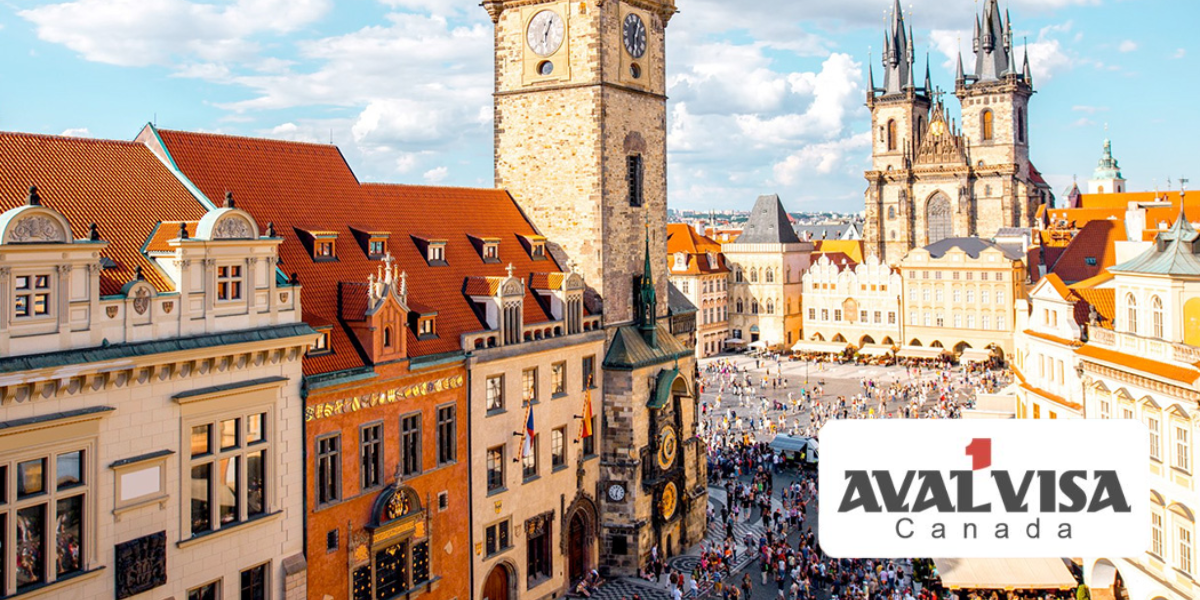
Charles University
Charles University teaches Dentistry in English at three faculties. The First Faculty of Medicine in Prague expects to admit 30 students for 2027/2028, and applications close on 30 April 2027. The Faculty of Medicine in Hradec Králové lists 25 places. Its online written test is on 12 May 2027, it also holds test dates abroad from January 2027, and every application must be submitted and paid by 30 April 2027, even for later exam dates. The Faculty of Medicine in Pilsen takes applications from 1 November 2026 to 30 April 2027 and does not accept late ones. Its exam is on 26 May 2027 in Pilsen, with an alternative date on 28 June 2027.
Masaryk University
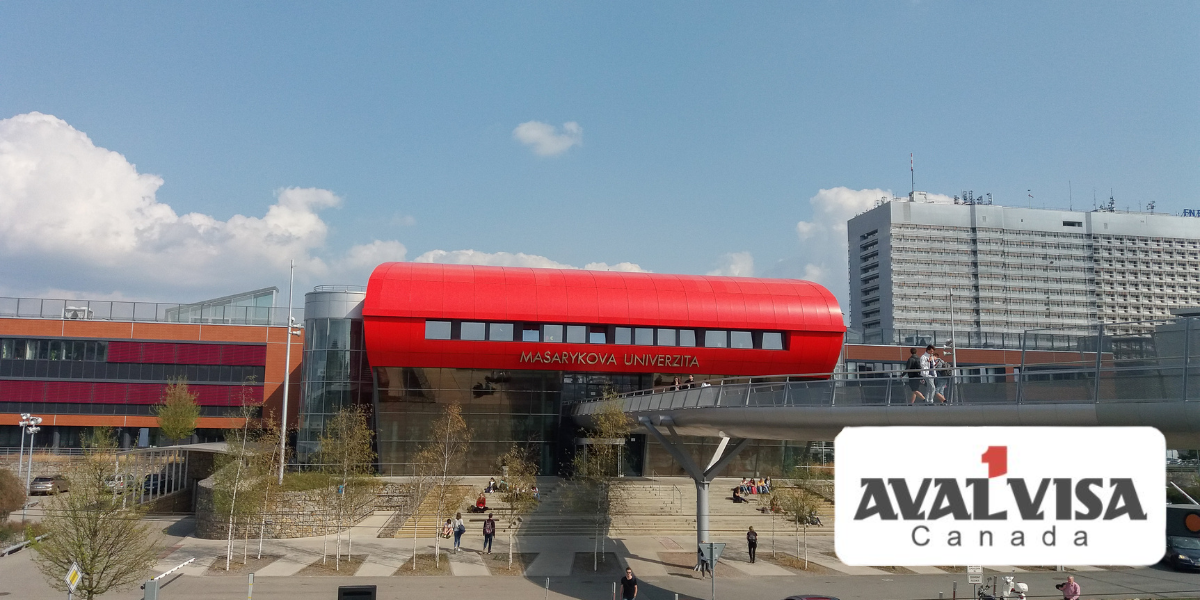
Masaryk University’s Faculty of Medicine in Brno teaches its five-year Dentistry programme in English. For 2027/2028, the e-application for exams held abroad is open from 2 January to 31 July 2027 and is due about two weeks before your exam date. Applicants from outside the EU can sit the exam only from January to April (in exceptional cases May), so that there is time for the visa; the June and July exams are for EU citizens only. Applications for exams abroad go through the faculty’s official representatives in each country. Tuition can be paid in two instalments, one per semester.
Palacký University Olomouc
The Faculty of Medicine and Dentistry in Olomouc teaches its five-year MDDr. programme entirely in English and estimates 20 admissions for September 2027. Applications are open from 1 November 2026 to 31 July 2027 and must be complete two weeks before the exam date you choose.
How much does it cost to study dentistry in the Czech Republic?
These are the fees the faculties publish:
| Faculty | Tuition per year | Application fee |
|---|---|---|
| First Faculty of Medicine, Charles University (Prague) | EUR 24,250 (2027/2028) | EUR 285 |
| Faculty of Medicine in Hradec Králové, Charles University | CZK 410,000 (2026/2027) | CZK 2,500 |
| Faculty of Medicine in Pilsen, Charles University | CZK 410,000 (2027/2028) | CZK 990 (online application) |
| Faculty of Medicine, Masaryk University (Brno) | CZK 400,000 | CZK 0 for English-taught programmes |
| Faculty of Medicine and Dentistry, Palacký University (Olomouc) | EUR 14,000 | EUR 80 |
Where a faculty has not yet published its 2027/2028 fee, the table shows its latest published fee. Budget as well for translations, recognition of your certificate, health insurance, the visa fee and housing.
What does student life cost?
The Study in Czechia portal gives these indicative costs. Prague and Brno are among the most expensive student cities, so expect the upper end there; smaller university towns are cheaper, mainly for rent.
| Item | Indicative cost |
|---|---|
| Dormitory, shared room | EUR 160 to 330 a month |
| Dormitory, single room | EUR 250 to 450 a month |
| Room in a shared flat | EUR 250 to 500 a month |
| Food | EUR 150 to 230 a month |
| Yearly student transport pass | EUR 50 to 100 |
| Typical total budget | EUR 500 to 800 a month |
Which documents do you need?
- secondary school certificate and transcripts
- official translations, where the faculty asks for them
- a valid passport
- an English certificate, if the faculty requires one
- documents for the recognition of your secondary education
- the online application and proof of payment of the application fee
Document deadlines vary. The First Faculty in Prague and the Faculty of Medicine in Pilsen, for example, need them by 31 August 2027.
How does the admission process work?
- Choose faculties and read this year’s rules. Exams, documents and deadlines differ and change each year.
- Prepare your documents, with translations where needed.
- Apply online and pay the fee. At the First Faculty in Prague, you cannot sit the exam until the fee is paid.
- Sit the entrance exam: a written test, interviews, or both.
- Have your secondary education recognised through the route your faculty accepts.
- Enrol and apply for your visa with the faculty’s confirmation of studies.
What visa do you need to study in the Czech Republic?
Non-EU students staying longer than 90 days need a long-term visa for studies or a long-term residence permit for studies. The visa is limited to one year in total, and the Ministry of the Interior says anyone staying longer must apply for the residence permit. You can apply for the permit directly at a Czech embassy.
- You apply in person at a Czech embassy or consulate, usually in your home country. The consular fee is CZK 2,500.
- For either route you need the application form, passport, photograph, proof of accommodation, proof of funds, the faculty’s confirmation of studies and a document similar to a criminal record certificate from your country of citizenship.
- Required funds are a multiple of the Czech subsistence minimum, and the ministry publishes the formula.
- You need travel medical insurance for the first 90 days and comprehensive insurance for the rest of your stay.
- The legal time limit for a decision is 60 days; it stops running while the proceedings are suspended. The permit is issued for up to one year (two in some cases) and then extended.
Our Czech student visa guide explains the process step by step.
Is a Czech dentistry degree recognised in other countries?
Directive 2005/36/EC requires EU member states to recognise dental qualifications that meet its training standards automatically. The Directive applies to EU citizens. If you are not an EU citizen, the country where you want to work decides how it treats your degree, so check with its dental regulator first. Recognition is not a licence either: you still register with the regulator, and the Directive expects you to know the language needed to practise there.
Outside the EU, each country sets its own rules; see the Canada and US answers below. If you are still comparing countries, see our overview of the best universities in Europe.
Frequently asked questions
Can I work as a dentist in Canada or the US with a Czech degree?
Not directly. In Canada, graduates of programmes the Commission on Dental Accreditation of Canada does not accredit go through the National Dental Examining Board’s equivalency process or an accredited qualifying programme before certification and provincial licensing; our guide on immigrating to Canada as a dentist covers this. In the US, every state licenses dentists and sets its own requirements. Florida, for example, requires graduates of non-accredited dental schools to earn a DDS or DMD at an accredited US dental school, or to complete at least two years of an accredited supplemental general dentistry programme, before they can sit its licensing exams.
Do I need IELTS to study dentistry in the Czech Republic?
It depends on the faculty. The First Faculty in Prague asks for no English certificate. Palacký accepts certificates such as IELTS 6, TOEFL 87, PTE Academic 59 or Cambridge FCE, or its own test, and exempts applicants whose secondary or university education was in English.
Can dentistry students work in the Czech Republic?
Yes. Holders of a long-term residence permit for studies can work without a separate work permit. The programme is full-time and demanding, so plan any job around your timetable.
Can I transfer from a dental school in another country?
The faculties’ admission pages describe entry into the first year, and Pilsen says it does not accept transferring students. Elsewhere, whether a faculty accepts you into a later year, and which courses it recognises, is its own decision, so ask its admissions office first.
If you would like our team to look at your situation, fill in the assessment form.
Official sources
- First Faculty of Medicine, Charles University: Admissions 2027/2028
- Charles University: Dentistry, First Faculty of Medicine
- Faculty of Medicine in Hradec Králové: Admission process
- Faculty of Medicine in Hradec Králové: Dentistry
- Faculty of Medicine in Hradec Králové: Tuition fee 2026/2027
- Faculty of Medicine in Pilsen: Admission procedure 2027/2028
- Masaryk University: Dentistry
- Masaryk University Faculty of Medicine: Admission information 2027/2028
- Masaryk University: Admission procedure fees
- Palacký University Olomouc: Dentistry (MDDr.)
- Study in Czechia: Living costs
- Ministry of the Interior: Long-term visa for studies
- Ministry of the Interior: Long-term residence permit for studies
- Ministry of the Interior: Proof of funds
- Public Administration Portal: Recognition of foreign secondary education
- EUR-Lex: Directive 2005/36/EC, all versions including the consolidated text
- National Dental Examining Board of Canada: Equivalency Process
- US Bureau of Labor Statistics: How to become a dentist
- Florida Statutes, section 466.006: Examination of dentists
About this guide
Written by Mobina Fakour of the Aval Visa content team. It is general information, not legal advice; the Czech authorities decide every application.
Found something out of date? Tell us